




Large Cat Breeds
Introduction
Large cat breeds are admired for their impressive size, majestic appearance, and affectionate personalities. While most domestic cats weigh between 8 and 12 pounds (3.5–5.5 kg), some large breeds can easily reach 15 to 25 pounds (7–11 kg) or even more.
These gentle giants are often mistaken for wild cats because of their muscular bodies, long tails, tufted ears, and thick coats. However, despite their intimidating appearance, many of the biggest cat breeds are known for being friendly, intelligent, and loyal companions.
Whether you’re looking for a giant fluffy cat Breed like the Maine Coon, an athletic breed like the Savannah, or a powerful forest cat like the Siberian, there are many wonderful options available. Each breed has its own personality, grooming requirements, exercise needs, and health considerations.
In this complete guide, you’ll discover everything about large cat breeds, including the biggest domestic cats, their size, personalities, care requirements, and how to choose the right giant cat for your home.
What Is a Large Cat Breed?
A large cat breed is a domestic cat that grows significantly bigger than the average house cat.
Large cats generally have:
- Heavier body weight
- Longer body length
- Greater height
- Larger paws
- Stronger muscles
- Bigger bone structure
Their impressive size often makes them look similar to small wild cats, but they remain fully domesticated companions.
Average Cat Size vs. Large Cat Breeds
To understand what makes a cat “large,” it’s helpful to compare average domestic cats with giant breeds.
Average Domestic Cat
- Weight: 8–12 pounds (3.5–5.5 kg)
- Length: 18–20 inches (46–51 cm)
- Height: 9–10 inches (23–25 cm)
Large Cat Breeds
- Weight: 15–25+ pounds (7–11+ kg)
- Length: 30–40 inches (76–102 cm), including the tail
- Height: 10–16 inches (25–40 cm)
Some exceptionally large individuals may exceed these averages while remaining healthy.
Biggest Cat Breed
When discussing the biggest cat breed, one name consistently appears at the top: the Maine Coon.
Known as the “gentle giant” of the cat world, the Maine Coon combines massive size with a friendly personality and luxurious coat.
Other breeds that rank among the biggest domestic cats include:
- Savannah
- Norwegian Forest Cat
- Siberian
- Ragamuffin
- Ragdoll
- Chausie
Each of these breeds reaches an impressive size while remaining affectionate household companions.
Giant Domestic Cats
The term giant domestic cats refers to exceptionally large cat breeds that have been developed through natural evolution or selective breeding.
Unlike wild cats such as lions or tigers, giant domestic cats are fully domesticated and are suitable as family pets when properly cared for.
Common characteristics include:
- Large muscular bodies
- Broad chests
- Thick legs
- Large paws
- Long tails
- Slow maturity (some continue growing for 3–5 years)
Despite their size, many giant domestic cats are known for their gentle nature.
Are Large Cats Better Pets?
Large cats offer many advantages for people looking for a unique companion.
Many owners appreciate them because they are:
- Friendly
- Loyal
- Intelligent
- Calm
- Social
- Playful
- Confident
However, their larger size also means they require:
- More living space
- Larger litter boxes
- Bigger scratching posts
- Larger cat trees
- More food
- Stronger pet carriers
Choosing a large cat should depend on your lifestyle rather than appearance alone.
Do Large Cats Live Longer?
Most large cat breeds live between 12 and 16 years, although some individuals live even longer with excellent care.
Lifespan depends on:
- Genetics
- Diet
- Exercise
- Weight management
- Preventive veterinary care
- Breed-specific health conditions
Maintaining a healthy weight is especially important because excess weight places additional stress on the joints of larger cats.
20 Largest Cat Breeds
Many domestic breeds grow much larger than the average house cat.
Below are some of the biggest and most popular large cat breeds in the world.
1. Maine Coon
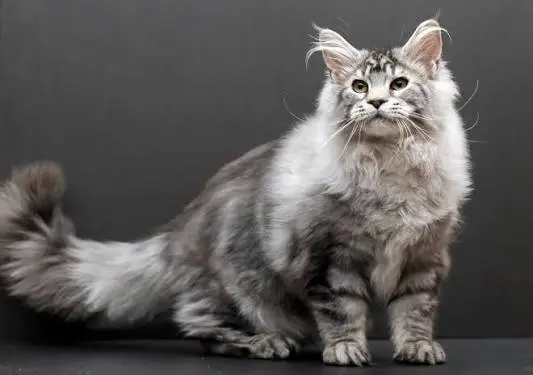
The Maine Coon is widely recognized as the largest domestic cat breed.
Adult males commonly weigh between 15 and 25 pounds (7–11 kg), while females are slightly smaller.
Their long bodies, shaggy coats, tufted ears, and bushy tails give them an impressive appearance.
Characteristics
- Largest domestic cat breed
- Thick water-resistant coat
- Friendly personality
- Highly intelligent
- Excellent family pet
- Moderate grooming
The Maine Coon continues growing until around 3–5 years of age, much longer than most other breeds.
2. Savannah
The Savannah is an athletic breed created by crossing a domestic cat with an African serval in its early development.
It has extremely long legs, a lean body, and large ears that give it a wild appearance.
Characteristics
- Very tall body
- Athletic build
- Highly intelligent
- Energetic
- Excellent jumper
Savannah cats require plenty of exercise and mental stimulation.
3. Norwegian Forest Cat
The Norwegian Forest Cat developed naturally in Scandinavia, where its thick waterproof coat protected it from harsh winters.
It is one of the largest natural cat breeds in the world.
Characteristics
- Large muscular body
- Thick double coat
- Excellent climber
- Independent yet affectionate
- Family friendly
4. Siberian
The Siberian is Russia’s native forest cat and is famous for its dense triple coat.
Although extremely fluffy, it is also powerful and athletic.
Characteristics
- Triple coat
- Strong body
- Excellent jumper
- Friendly personality
- Adapted to cold climates
5. Ragamuffin
The Ragamuffin combines impressive size with one of the gentlest personalities found in cats.
Its soft, plush coat and relaxed temperament make it a wonderful indoor companion.
Characteristics
- Large body
- Plush coat
- Gentle personality
- Affectionate
- Great with children
6. Ragdoll
The Ragdoll is another large breed known for its calm temperament and striking blue eyes.
Despite its size, it is gentle and often relaxes completely when picked up.
Characteristics
- Large frame
- Silky semi-long coat
- Blue eyes
- Relaxed personality
- Indoor companion
7. Chausie
The Chausie has a tall, athletic body inspired by its jungle cat ancestry.
It is one of the most energetic large cat breeds.
Characteristics
- Long legs
- Lean muscles
- Highly active
- Intelligent
- Curious personality
8. Turkish Van
The Turkish Van is a muscular semi-long-haired breed known for its love of water.
Its broad chest and strong body make it one of the larger domestic breeds.
Characteristics
- Strong swimmer
- Semi-long coat
- Intelligent
- Active
- Loyal companion
9. British Shorthair
Although compact rather than tall, the British Shorthair has an exceptionally heavy bone structure.
Its broad body gives it a powerful appearance despite its moderate height.
Characteristics
- Stocky build
- Dense plush coat
- Calm personality
- Loyal
- Easy to groom
10. American Bobtail
The American Bobtail is recognized for its naturally short tail and muscular body.
Its wild appearance contrasts with its affectionate and adaptable personality.
Characteristics
- Short tail
- Strong body
- Friendly
- Intelligent
- Excellent traveler
11. Pixie-Bob
The Pixie-Bob is a muscular cat breed known for its wild bobcat-like appearance. Despite its rugged look, it is a gentle and affectionate companion that enjoys spending time with its family.
Many Pixie-Bobs have naturally short tails and tufted ears, adding to their distinctive appearance.
Characteristics
- Muscular body
- Short or bobbed tail
- Thick double coat
- Intelligent
- Loyal and friendly
12. Bengal
The Bengal is admired for its leopard-like coat and athletic build. Although not the heaviest breed, its muscular body places it among the larger domestic cats.
Bengals are energetic and require plenty of physical and mental stimulation.
Characteristics
- Athletic body
- Spotted or marbled coat
- Highly active
- Extremely intelligent
- Loves climbing
13. Highlander
The Highlander is a relatively modern breed recognized for its curled ears, muscular frame, and playful personality.
Its large body and wild appearance make it one of the more impressive domestic cat breeds.
Characteristics
- Large muscular build
- Curled ears
- Friendly personality
- Active
- Curious
14. Turkish Angora
Although the Turkish Angora is more graceful than bulky, some individuals develop surprisingly long bodies and elegant frames.
Its silky coat and active personality make it one of the oldest natural cat breeds.
Characteristics
- Elegant body
- Silky coat
- Highly intelligent
- Active
- Affectionate
15. Egyptian Mau
The Egyptian Mau is famous for its naturally spotted coat and incredible speed.
While not as heavy as a Maine Coon, its athletic body and long legs give it a larger appearance than many domestic cats.
Characteristics
- Athletic body
- Natural spots
- Fast runner
- Loyal
- Intelligent
16. Selkirk Rex
The Selkirk Rex combines a sturdy body with a thick, curly coat that gives it a plush, teddy bear-like appearance.
Its calm personality makes it an excellent family companion.
Characteristics
- Curly coat
- Medium-to-large body
- Calm temperament
- Friendly
- Moderate grooming
17. Cymric
The Cymric is the long-haired version of the Manx.
Its rounded body, dense coat, and powerful legs create a sturdy, substantial appearance.
Characteristics
- Thick coat
- Strong body
- Tail-less or short tail
- Loyal
- Family friendly
18. Ocicat
The Ocicat resembles a wild ocelot but is entirely domestic.
Its muscular build, long body, and athletic personality place it among the larger active cat breeds.
Characteristics
- Athletic frame
- Spotted coat
- Highly intelligent
- Energetic
- Social
19. Domestic Longhair
The Domestic Longhair is not a specific breed but a mixed-breed cat with long fur.
Some Domestic Longhairs grow surprisingly large, especially when they inherit genes from breeds like the Maine Coon or Norwegian Forest Cat.
Characteristics
- Mixed ancestry
- Long coat
- Friendly personality
- Adaptable
- Moderate grooming
20. Domestic Shorthair
The Domestic Shorthair is one of the world’s most common cats.
Although many are medium-sized, some individuals develop large, muscular bodies depending on their genetics.
Characteristics
- Mixed ancestry
- Short coat
- Easy maintenance
- Friendly
- Adaptable
Large Cat Breed Size Comparison
Different large cat breeds vary in weight, height, coat type, and grooming needs.
| Breed | Average Weight | Coat Type | Grooming |
|---|---|---|---|
| Maine Coon | 15–25 lbs | Long | Moderate |
| Savannah | 12–25 lbs | Short | Low |
| Norwegian Forest Cat | 13–20 lbs | Double | Moderate |
| Siberian | 12–20 lbs | Triple | Moderate |
| Ragamuffin | 10–20 lbs | Long | Moderate |
| Ragdoll | 10–20 lbs | Semi-long | Moderate |
| Chausie | 15–22 lbs | Short | Low |
| Turkish Van | 10–20 lbs | Semi-long | Moderate |
| British Shorthair | 12–18 lbs | Short | Low |
| American Bobtail | 10–16 lbs | Short/Long | Moderate |
Caring for Large Cats
Large cats require slightly different care than average-sized cats because of their size, strength, and slower growth.
Diet
Large breeds need a balanced diet rich in:
- High-quality animal protein
- Healthy fats
- Vitamins
- Minerals
- Fresh water
Avoid overfeeding, as excess weight places additional stress on their joints.
Young giant breeds often continue growing for several years, so they benefit from age-appropriate nutrition.
Exercise
Despite their size, large cats need regular exercise to stay healthy.
Daily activities include:
- Feather wand toys
- Puzzle feeders
- Cat tunnels
- Climbing trees
- Scratching posts
- Interactive play
Aim for 20–30 minutes of active play each day.
Grooming
Grooming depends on coat length rather than body size.
Long-haired large breeds
Examples:
- Maine Coon
- Siberian
- Norwegian Forest Cat
- Ragamuffin
These cats should be brushed 2–4 times each week.
Short-haired large breeds
Examples:
- Savannah
- Chausie
- British Shorthair
- Ocicat
Weekly brushing is usually enough.
Health Considerations
Large cat breeds are generally healthy, but some are more prone to certain inherited conditions.
Common health concerns include:
Hip Dysplasia
This joint condition is occasionally seen in large breeds such as the Maine Coon and Norwegian Forest Cat.
Hypertrophic Cardiomyopathy (HCM)
HCM is one of the most common inherited heart diseases in cats and can affect breeds including:
- Maine Coon
- Ragdoll
- Siberian
Responsible breeders screen breeding cats to reduce the risk.
Obesity
Large cats naturally weigh more than average cats, but they can still become overweight.
Maintaining a healthy body condition through proper diet and regular exercise is essential.
Joint Health
Supporting healthy joints is especially important for giant breeds.
Helpful practices include:
- Healthy weight management
- Daily activity
- Comfortable sleeping areas
- Routine veterinary examinations
Living With Giant Domestic Cats
Although they are large, many giant domestic cats adapt well to indoor life.
Provide them with:
- Extra-large litter boxes
- Tall cat trees
- Strong scratching posts
- Spacious sleeping beds
- Durable carriers
- Plenty of climbing opportunities
Many large breeds are surprisingly gentle and often get along well with:
- Children
- Dogs
- Other cats
- Visitors
Their calm personalities often make them excellent household companions.
Choosing the Right Large Cat Breed
Choosing the right large cat breed is about more than simply picking the biggest cat. Every breed has its own personality, grooming needs, activity level, and space requirements.
Before bringing home a giant cat, consider:
- Your home size
- Your experience with cats
- Grooming commitment
- Daily exercise time
- Budget for food and veterinary care
- Whether you have children or other pets
Matching the breed to your lifestyle will help ensure a happy, healthy relationship.
Best Large Cat Breeds for Families
Many large cat breeds are known as “gentle giants” because of their calm and affectionate personalities.
Some of the best choices for families include:
- Maine Coon
- Ragdoll
- Ragamuffin
- Siberian
- Norwegian Forest Cat
- American Bobtail
These breeds are generally patient, playful, and enjoy interacting with children when properly socialized.
Best Large Cats for Apartments
Large cats can live comfortably in apartments if they receive enough exercise and enrichment.
Apartment-friendly large breeds include:
- British Shorthair
- Ragdoll
- Ragamuffin
- Siberian
- American Bobtail
Provide:
- Extra-large cat trees
- Window perches
- Puzzle feeders
- Interactive toys
- Daily play sessions
Mental stimulation is just as important as physical space.
Best Large Cat Breeds for First-Time Owners
If you’re new to cat ownership, choose a breed with an easygoing personality.
Excellent beginner-friendly large breeds include:
- Maine Coon
- Ragdoll
- British Shorthair
- Ragamuffin
- American Bobtail
These cats are generally adaptable, affectionate, and easier to manage than highly energetic breeds.
Best Large Cats for Seniors
Older adults often prefer calm, affectionate companions.
Recommended breeds include:
- Ragdoll
- British Shorthair
- Ragamuffin
- Maine Coon
- Norwegian Forest Cat
These breeds enjoy companionship while remaining relatively relaxed indoors.
Adoption vs. Buying
When adding a large cat to your family, you have two excellent options.
Adopting a Large Cat
Many wonderful large cats are available through:
- Animal shelters
- Rescue organizations
- Breed-specific rescues
- Adoption centers
Benefits of adoption include:
- Lower adoption costs
- Giving a homeless cat a second chance
- Vaccinations are often included
- Many cats are already spayed or neutered
- Adult personalities are easier to evaluate
Large mixed-breed cats and Domestic Longhairs are commonly available through shelters.
Buying From a Responsible Breeder
If you want a specific breed, such as a Maine Coon or Norwegian Forest Cat, purchase only from a reputable breeder.
A responsible breeder should:
- Perform genetic health testing
- Provide vaccination records
- Raise kittens in a clean home environment
- Properly socialize kittens
- Answer questions honestly
- Offer ongoing support after adoption
Avoid buying kittens from pet mills or sellers who cannot provide health documentation.
Pros and Cons of Large Cat Breeds
Like every pet, large cats come with both benefits and responsibilities.
Pros
- Impressive appearance
- Friendly personalities
- Highly intelligent
- Strong bonds with owners
- Excellent family pets
- Many are gentle with children
- Available in both long-haired and short-haired varieties
- Playful and entertaining
- Adapt well to indoor living
- Long lifespan with proper care
Cons
- Require more food than average cats
- Need larger litter boxes
- Require stronger scratching posts
- Large cat trees can be expensive
- Long-haired breeds need regular grooming
- Some breeds have inherited health conditions
- Veterinary costs may be higher
- Larger carriers and beds are needed
- Active breeds require daily exercise
- Bigger cats take up more space in the home
Fun Facts About Large Cat Breeds
Large cats are full of fascinating surprises.
Here are a few interesting facts:
- The Maine Coon is widely considered the largest natural domestic cat breed.
- Some Maine Coons continue growing until they are 3–5 years old.
- Savannah cats are among the tallest domestic cat breeds.
- Norwegian Forest Cats developed waterproof coats to survive Scandinavian winters.
- Siberians evolved in Russia’s cold forests and have dense triple coats.
- Ragdolls often become completely relaxed when picked up, giving the breed its name.
- Many giant cats are surprisingly gentle despite their size.
- Large cats are often slower to mature than average-sized breeds.
Final Verdict
Large cat breeds combine impressive size with affectionate personalities, making them some of the most rewarding companions for cat lovers.
Whether you’re interested in the biggest cat breed, the majestic Maine Coon, the athletic Savannah, the fluffy Siberian, or the gentle Ragdoll, each breed offers unique qualities that suit different lifestyles.
Although giant domestic cats require more food, larger equipment, and sometimes additional grooming, they often reward their owners with loyalty, intelligence, and a calm, loving nature.
When choosing among big cat breeds, consider more than just size. Think about grooming needs, activity level, health, available space, and your daily routine. Selecting a breed that matches your lifestyle will lead to a happier experience for both you and your feline companion.
With proper nutrition, regular exercise, routine veterinary care, and plenty of affection, large cat breeds can enjoy long, healthy, and fulfilling lives as beloved members of the family.
Frequently Asked Questions (FAQs)
1. What is the biggest cat breed?
The Maine Coon is widely recognized as the largest natural domestic cat breed. Adult males commonly weigh between 15 and 25 pounds (7–11 kg).
2. What are large cat breeds?
Large cat breeds are domestic cats that grow significantly larger than the average house cat in terms of weight, height, and body length.
3. What are giant domestic cats?
Giant domestic cats are exceptionally large cat breeds such as the Maine Coon, Savannah, Norwegian Forest Cat, Siberian, Ragamuffin, and Ragdoll.
4. Are large cats friendly?
Yes. Many large breeds are known for being affectionate, gentle, and highly social with both people and other pets.
5. Do large cats eat more?
Generally, yes. Because of their larger body size, they usually require more food than smaller cats, although portions should always be adjusted based on age, activity level, and your veterinarian’s advice.
6. Which large cat breed is best for families?
The Maine Coon, Ragdoll, Siberian, Ragamuffin, and American Bobtail are excellent family companions.
7. Which large cat breed sheds the most?
Long-haired breeds such as the Maine Coon, Norwegian Forest Cat, and Siberian usually shed more than short-haired large breeds.
8. Which large cat breed is easiest to groom?
Short-haired breeds such as the British Shorthair, Ocicat, and Chausie generally require less grooming than long-haired breeds.
9. Can large cats live in apartments?
Yes. Many large breeds adapt well to apartment living when provided with enough exercise, climbing opportunities, and mental stimulation.
10. How long do large cat breeds live?
Most large cat breeds live between 12 and 16 years, although many can live longer with excellent care.
11. Are large cats more expensive?
They can be. Larger cats often require more food, larger accessories, and in some cases, higher grooming and veterinary costs.
12. Which large cat breed is best for beginners?
The Maine Coon, Ragdoll, British Shorthair, and Ragamuffin are among the best choices for first-time owners.
13. Do giant cats need special exercise?
Yes. Regular interactive play, climbing structures, and puzzle toys help keep large cats physically fit and mentally stimulated.
14. Should I adopt or buy a large cat?
Both are excellent options. Adoption gives a homeless cat a loving home, while purchasing from a responsible breeder is ideal if you’re looking for a specific breed with documented health and pedigree.
15. Which large cat breed is the calmest?
The Ragdoll, Ragamuffin, British Shorthair, and Maine Coon are among the calmest and most relaxed large cat breeds, making them excellent companions for many households.