



Smallest Cat Breed
Introduction
If you’re looking for a cat that stays small throughout its life, you’re not alone. Many cat lovers prefer small cat breeds because they are adorable, easy to handle, and well-suited to apartments and smaller homes.
The smallest cat breed in the world isn’t just tiny in size—it often has a big personality. Many miniature cats are energetic, affectionate, and intelligent, making them wonderful companions for families, singles, and seniors alike.
It’s important to know that a naturally small cat is different from an underweight or unhealthy cat. Some breeds are genetically smaller than average, while others simply grow more slowly or have a lighter body frame.
In this guide, you’ll learn everything about the smallest cat breeds, including their size, personalities, grooming needs, health, and how to choose the perfect tiny feline companion.
What Is the Smallest Cat Breed?
The smallest cat breed is a domestic cat breed that naturally remains smaller than the average house cat throughout adulthood.
Most adult domestic cats weigh between 8 and 12 pounds (3.5–5.5 kg). In comparison, many tiny cat breeds weigh only 4 to 8 pounds (2–3.5 kg) when fully grown.
Although they are smaller in size, these cats are just as active, intelligent, and affectionate as larger breeds.
Average Cat Size vs. Small Cat Breeds
Understanding the difference between an average cat and a naturally small breed can help you choose the right pet.
Average Domestic Cat
- Weight: 8–12 pounds (3.5–5.5 kg)
- Height: 9–10 inches (23–25 cm)
- Length: 18–20 inches (46–51 cm)
Small Cat Breeds
- Weight: 4–8 pounds (2–3.5 kg)
- Height: 6–9 inches (15–23 cm)
- Length: 12–18 inches (30–46 cm)
These measurements vary slightly depending on the breed and the individual cat.
Difference Between Small Cats and Underweight Cats
Many people assume a tiny cat is unhealthy, but that’s not always true.
A naturally small breed has:
- Healthy body weight
- Strong muscles
- Normal energy levels
- Proper body proportions
An underweight cat, however, may have:
- Visible ribs
- Poor muscle condition
- Low energy
- Health problems
- Nutritional deficiencies
A healthy miniature cat should always maintain a proper body condition for its breed.
Are Miniature Cats Different From Small Cat Breeds?
The terms miniature cats and small cat breeds are often used interchangeably, but they are not exactly the same.
Naturally Small Cat Breeds
These breeds have remained small through natural genetics over many generations.
Examples include:
- Singapura
- Cornish Rex
- Devon Rex
- Siamese
- Burmese
Dwarf Cat Breeds
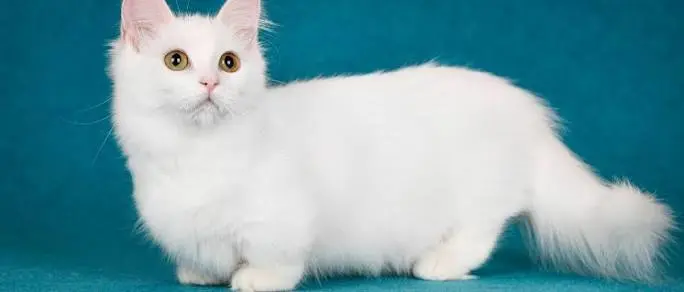
Some breeds, such as the Munchkin, appear smaller because they have naturally short legs caused by a genetic mutation.
Although their bodies are normal-sized, their shorter legs give them a miniature appearance.
Mixed-Breed Small Cats
Many mixed-breed domestic cats also remain small throughout adulthood due to genetics.
These cats can make excellent companions even though they don’t belong to a recognized breed.
Why Choose a Small Cat?
Small cats offer many advantages for different lifestyles.
They are especially popular among apartment dwellers and first-time cat owners.
Benefits include:
- Easier to carry
- Require less space
- Lower food consumption
- Smaller litter boxes
- Easier transportation
- Great indoor companions
- Adapt well to apartment living
- Playful personalities
Despite their size, they often have plenty of energy and confidence.
Do Small Cats Stay Small Forever?
Yes.
Unlike kittens, naturally small breeds remain compact throughout adulthood.
Most reach their full size between 12 and 18 months, although some continue developing until around two years of age.
Even as adults, they remain significantly smaller than average domestic cats.
20 Smallest Cat Breeds
Below are some of the smallest cat breeds in the world.
1. Singapura
The Singapura is widely recognized as the smallest cat breed in the world.
Adult females often weigh only 4 pounds (1.8 kg), while males typically weigh 6–8 pounds (2.7–3.6 kg).
Despite their tiny size, Singapuras are energetic, curious, and highly social.
Characteristics
- World’s smallest cat breed
- Large expressive eyes
- Short silky coat
- Extremely playful
- Highly affectionate
- Intelligent
2. Munchkin
The Munchkin is famous for its short legs and playful personality.
Although its body is similar in size to many other cats, its shorter legs create a miniature appearance.
Characteristics
- Short legs
- Compact body
- Friendly
- Curious
- Active
- Available in both long- and short-haired varieties
3. Cornish Rex
The Cornish Rex is a slender breed with soft, curly fur and an athletic body.
Its lightweight build makes it one of the smallest domestic cats.
Characteristics
- Curly coat
- Slim body
- Very active
- Highly intelligent
- Loves attention
4. Devon Rex
The Devon Rex has oversized ears, large eyes, and a short curly coat.
Its playful personality and compact body make it a favorite among cat lovers.
Characteristics
- Large ears
- Curly coat
- Lightweight body
- Friendly
- Highly social
5. Siamese
The Siamese is known for its elegant, slender body rather than heavy muscles.
Although taller than some breeds, its lightweight frame keeps it among the smaller domestic cats.
Characteristics
- Blue eyes
- Colorpoint coat
- Very vocal
- Intelligent
- Highly affectionate
6. American Curl
The American Curl is easily recognized by its unique backward-curled ears.
It has a medium-small body and a gentle personality.
Characteristics
- Curled ears
- Friendly
- Adaptable
- Moderate activity level
- Easy grooming
7. Japanese Bobtail
The Japanese Bobtail is famous for its naturally short tail that resembles a rabbit’s tail.
It is lightweight, active, and enjoys interactive play.
Characteristics
- Bobbed tail
- Athletic build
- Intelligent
- Friendly
- Playful
8. Oriental Shorthair
The Oriental Shorthair has a sleek body, large ears, and long legs.
Although it appears tall, it remains surprisingly lightweight.
Characteristics
- Slender body
- Large ears
- Intelligent
- Social
- Curious
9. Burmese
The Burmese is compact but muscular.
Its sturdy body gives it surprising strength despite its relatively small size.
Characteristics
- Compact frame
- Short coat
- Affectionate
- Playful
- Family friendly
10. Balinese
The Balinese is the long-haired relative of the Siamese.
Its fine bones and silky coat create an elegant, lightweight appearance.
Characteristics
- Silky coat
- Blue eyes
- Intelligent
- Graceful
- Highly affectionate
11. Havana Brown
The Havana Brown is a rare cat breed known for its rich chocolate-brown coat and medium-small body. It is intelligent, curious, and enjoys interacting with people.
Despite its compact size, the Havana Brown is muscular and surprisingly athletic.
Characteristics
- Medium-small body
- Short glossy coat
- Intelligent
- Affectionate
- Moderate activity level
12. LaPerm
The LaPerm is famous for its curly coat, which ranges from loose waves to tight ringlets.
Although its fluffy appearance makes it look larger, it remains a relatively small breed.
Characteristics
- Curly coat
- Lightweight body
- Friendly personality
- Curious
- Low to moderate shedding
13. Tonkinese
The Tonkinese combines the playful nature of the Siamese with the affectionate personality of the Burmese.
It has a compact, muscular body and enjoys spending time with people.
Characteristics
- Compact build
- Short silky coat
- Very social
- Intelligent
- Active
14. Turkish Angora
The Turkish Angora is one of the oldest naturally occurring cat breeds. It has a graceful body, silky coat, and elegant appearance.
Although its long fur gives it a fuller look, it remains relatively lightweight.
Characteristics
- Silky coat
- Elegant frame
- Highly intelligent
- Athletic
- Affectionate
15. Abyssinian
The Abyssinian is a slender, active breed with a ticked coat and graceful build.
It is known for being one of the most energetic and curious domestic cats.
Characteristics
- Slim body
- Short coat
- Highly active
- Intelligent
- Loves climbing
16. Peterbald
The Peterbald is a unique breed that may have a hairless, velour, or very short coat.
Its long, elegant body remains lightweight, making it one of the smaller cat breeds.
Characteristics
- Slender body
- Hairless or fine coat
- Friendly
- Highly social
- Intelligent
17. Somali
The Somali is often called the long-haired version of the Abyssinian.
Although fluffy, it maintains a lightweight and athletic body.
Characteristics
- Bushy tail
- Semi-long coat
- Active
- Curious
- Highly intelligent
18. Snowshoe
The Snowshoe is recognized for its striking blue eyes and white feet.
Its medium-small body and affectionate personality make it an excellent family pet.
Characteristics
- Blue eyes
- White paws
- Friendly
- Gentle
- Playful
19. Bombay
The Bombay is often described as a miniature panther because of its sleek black coat and golden eyes.
Its compact body makes it smaller than many popular cat breeds.
Characteristics
- Black coat
- Muscular build
- Friendly
- Intelligent
- Family companion
20. Domestic Shorthair (Small Individuals)
The Domestic Shorthair is not a specific breed but a mixed-breed cat.
Many individuals remain naturally small throughout adulthood, making them excellent companions for people who want a tiny house cat.
Characteristics
- Mixed ancestry
- Short coat
- Friendly personality
- Adaptable
- Easy grooming
Small Cat Breed Size Comparison
The table below compares some of the world’s most popular small cat breeds.
| Breed | Average Weight | Coat Type | Grooming |
|---|---|---|---|
| Singapura | 4–8 lbs | Short | Low |
| Munchkin | 5–9 lbs | Short/Long | Moderate |
| Cornish Rex | 5–10 lbs | Curly | Low |
| Devon Rex | 5–10 lbs | Curly | Low |
| Siamese | 6–10 lbs | Short | Low |
| American Curl | 5–10 lbs | Short/Long | Low |
| Japanese Bobtail | 5–10 lbs | Short/Long | Low |
| Oriental Shorthair | 5–10 lbs | Short | Low |
| Burmese | 6–10 lbs | Short | Low |
| Balinese | 5–10 lbs | Long | Moderate |
Caring for Tiny Cat Breeds
Although small cats require less physical space than larger cat breeds, they still need proper nutrition, exercise, grooming, and veterinary care.
Diet
Tiny cats need a balanced diet to maintain healthy muscles and energy levels.
Choose foods that contain:
- High-quality animal protein
- Healthy fats
- Essential vitamins
- Minerals
- Fresh, clean water
Feed measured portions based on your cat’s:
- Age
- Weight
- Activity level
- Overall health
Avoid overfeeding, as even small cats can become overweight.
Exercise
Small cats are often surprisingly energetic.
Daily exercise helps maintain:
- Healthy weight
- Strong muscles
- Mental stimulation
- Good behavior
Great activities include:
- Feather wand toys
- Puzzle feeders
- Laser toys
- Cat tunnels
- Climbing shelves
- Interactive games
Aim for 20–30 minutes of active play every day.
Grooming
Grooming requirements depend on coat length rather than body size.
Short-haired small breeds
Examples include:
- Singapura
- Burmese
- Siamese
- Bombay
- Oriental Shorthair
These breeds usually need brushing once a week.
Long-haired small breeds
Examples include:
- Balinese
- Somali
- Turkish Angora
Brush these cats 2–3 times each week to reduce shedding and prevent tangles.
Health Considerations
Small cats are generally healthy, but some breeds have inherited conditions that owners should understand.
Dental Health
Smaller breeds may develop dental problems if their teeth are not cared for properly.
Brush your cat’s teeth regularly and schedule routine veterinary dental checkups.
Obesity
Because tiny cats require fewer calories, even small amounts of extra food can lead to weight gain.
Maintain a healthy weight through:
- Portion control
- Daily exercise
- Nutritious food
Joint Health
Dwarf breeds, such as the Munchkin, may require extra monitoring for joint and spinal health throughout their lives.
Regular veterinary visits help detect potential issues early.
Breed-Specific Conditions
Some examples include:
- Munchkin – Joint and spinal concerns
- Devon Rex – Skin conditions
- Cornish Rex – Heart disease in some bloodlines
- Siamese – Dental and respiratory issues
- Burmese – Certain inherited genetic conditions
Responsible breeders perform health testing to reduce the risk of inherited diseases.
Living With Miniature Cats
Small cat breeds fit comfortably into many different lifestyles.
They are especially well suited for:
- Apartments
- Small homes
- Single owners
- Seniors
- Families
- Indoor living
Although they require less space, they still need enrichment to stay happy.
Provide:
- Scratching posts
- Climbing shelves
- Window perches
- Puzzle toys
- Interactive play sessions
Small cats may be tiny, but they have the same curiosity and need for stimulation as larger breeds.
Choosing the Right Small Cat Breed
Choosing the right small cat breed involves more than simply finding the tiniest cat. Every breed has its own personality, activity level, grooming needs, and health considerations.
Before bringing home a miniature cat, ask yourself:
- Do I want an active or relaxed cat?
- How much time can I spend grooming?
- Do I live in an apartment or a house?
- Do I have children or other pets?
- Can I provide daily play and enrichment?
- What is my budget for food and veterinary care?
Selecting a breed that matches your lifestyle will create a happier experience for both you and your cat.
Best Small Cat Breeds for Families
Many tiny cat breeds are affectionate, playful, and enjoy spending time with people.
Some of the best choices for families include:
- Burmese
- Munchkin
- Japanese Bobtail
- Devon Rex
- Tonkinese
- Bombay
These breeds are generally friendly, social, and adapt well to family life when properly socialized.
Best Small Cat Breeds for Apartments
Small cats are naturally suited to apartment living because they require less physical space than larger breeds.
Excellent apartment-friendly breeds include:
- Singapura
- Cornish Rex
- Devon Rex
- Siamese
- Oriental Shorthair
- Bombay
Even in a small home, provide enrichment such as:
- Cat trees
- Scratching posts
- Window perches
- Puzzle feeders
- Interactive toys
Daily play helps keep indoor cats mentally and physically healthy.
Best Small Cat Breeds for First-Time Owners
If you’ve never owned a cat before, choose a breed with an easygoing temperament and manageable care needs.
Recommended breeds include:
- Burmese
- Bombay
- Singapura
- Japanese Bobtail
- Tonkinese
These breeds are affectionate, adaptable, and generally easy to care for.
Best Small Cat Breeds for Seniors
Older adults often appreciate calm, loving companions that don’t require excessive grooming.
Great options include:
- Burmese
- Bombay
- Devon Rex
- Cornish Rex
- Singapura
These breeds enjoy companionship while fitting comfortably into quieter households.
Adoption vs. Buying
When you’re ready to welcome a small cat into your home, you have two excellent choices.
Adopting a Small Cat
Many wonderful small cats can be found through:
- Animal shelters
- Rescue organizations
- Breed-specific rescues
- Adoption centers
Benefits of adoption include:
- Lower adoption fees
- Giving a homeless cat a second chance
- Many cats are already vaccinated
- Often already spayed or neutered
- Adult personalities are easier to evaluate
Mixed-breed cats with naturally small frames are common in shelters and can make loving companions.
Buying From a Responsible Breeder
If you’re looking for a specific breed, choose a reputable breeder who prioritizes the health and well-being of their cats.
A responsible breeder should:
- Conduct genetic health testing
- Provide vaccination records
- Raise kittens in a clean environment
- Socialize kittens from an early age
- Answer your questions openly
- Offer support after you bring the kitten home
Avoid purchasing kittens from pet mills or sellers who cannot provide health records.
Pros and Cons of Small Cat Breeds
Like all pets, small cat breeds have both advantages and responsibilities.
Pros
- Compact size
- Apartment friendly
- Easier to carry
- Lower food consumption
- Smaller accessories
- Affectionate personalities
- Intelligent and playful
- Adapt well to indoor living
- Easier travel
- Great companions for many lifestyles
Cons
- Some breeds are highly energetic
- Certain breeds require frequent attention
- Long-haired varieties need regular grooming
- Small size makes them easier to overlook or accidentally step on
- Some dwarf breeds may have joint or spinal issues
- Rare breeds can be expensive
- Smaller kittens may be more delicate than larger breeds
- Veterinary care costs can still be significant
Fun Facts About Tiny Cat Breeds
Small cats may be little, but they’re full of surprises.
Here are some interesting facts:
- The Singapura is widely considered the world’s smallest cat breed.
- Despite their tiny size, many small breeds are extremely energetic.
- The Munchkin is famous for its naturally short legs, not a smaller body.
- Cornish Rex cats have only a soft undercoat, giving them a unique curly appearance.
- Devon Rex cats are often called the “pixies” of the cat world because of their large ears and playful faces.
- Many small breeds are highly intelligent and learn tricks quickly.
- Small cats often have confidence that far exceeds their size.
- A cat’s personality depends more on genetics and socialization than on its size.
Final Verdict
The smallest cat breeds prove that great things truly can come in small packages. Whether you’re drawn to the tiny Singapura, the playful Munchkin, the elegant Siamese, or the affectionate Burmese, each breed offers its own unique charm.
Their compact size makes them excellent companions for apartments, smaller homes, and owners looking for an easy-to-handle pet. However, don’t let their size fool you—these miniature cats are often energetic, intelligent, and full of personality.
When choosing among tiny cat breeds, consider more than appearance. Think about grooming needs, activity level, temperament, health, and how well the breed fits your lifestyle.
With proper nutrition, regular veterinary care, daily exercise, and plenty of affection, small cat breeds can enjoy long, healthy lives while bringing years of companionship and joy to their families.
Frequently Asked Questions (FAQs)
1. What is the smallest cat breed?
The Singapura is widely recognized as the smallest cat breed in the world. Adult females may weigh as little as 4 pounds (1.8 kg).
2. Which cat breed is the smallest?
The Singapura remains one of the smallest naturally throughout adulthood, followed by breeds such as the Munchkin, Cornish Rex, and Devon Rex.
3. What are tiny cat breeds?
Tiny cat breeds are domestic cat breeds that naturally remain smaller than the average house cat, usually weighing between 4 and 8 pounds (2–3.5 kg).
4. Are miniature cats real?
Yes. Some breeds are naturally small, while others, like the Munchkin, appear miniature because of their short legs.
5. Which small cat breed is best for apartments?
The Singapura, Bombay, Cornish Rex, Devon Rex, and Oriental Shorthair are all excellent choices for apartment living.
6. Are small cat breeds healthy?
Yes. Most small cat breeds are healthy when they receive proper nutrition, routine veterinary care, and responsible breeding.
7. Do tiny cats stay small forever?
Yes. Naturally, small breeds remain compact throughout adulthood, unlike kittens that eventually grow into average-sized cats.
8. Which small cat breed is the friendliest?
The Burmese, Tonkinese, Devon Rex, and Japanese Bobtail are well known for their affectionate and social personalities.
9. Are miniature cats expensive?
Some rare breeds, such as the Singapura and Munchkin, can be more expensive than common domestic cats due to limited availability.
10. How long do small cat breeds live?
Most small cat breeds live between 12 and 18 years, with some reaching 20 years or more when given excellent care.
11. Which small cat breed sheds the least?
The Cornish Rex, Devon Rex, and Peterbald are among the lowest-shedding small cat breeds.
12. Are small cats good with children?
Many small breeds are wonderful family pets, especially the Burmese, Japanese Bobtail, Bombay, and Tonkinese, when children interact with them gently.
13. Should I adopt or buy a small cat?
Both are good options. Adoption gives a homeless cat a loving home, while buying from a responsible breeder is suitable if you want a specific breed with documented health and pedigree.
14. What is the smallest hypoallergenic cat breed?
No cat is completely hypoallergenic, but the Cornish Rex, Devon Rex, and Peterbald are often considered better choices for some allergy sufferers because they may produce or spread fewer allergens.
15. Which small cat breed is best for beginners?
The Burmese, Bombay, Singapura, Tonkinese, and Japanese Bobtail are excellent choices for first-time owners because of their friendly personalities, adaptability, and relatively straightforward care needs.