








Blood in Cat Stool
Introduction
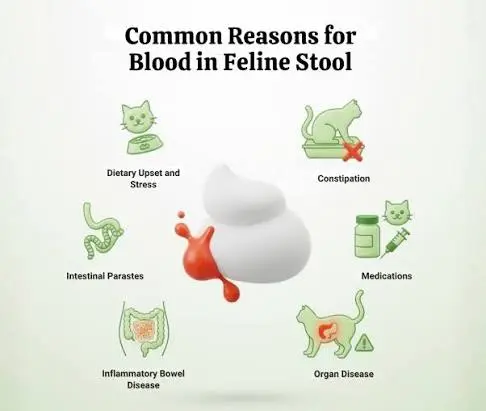
Finding blood in cat stool can be alarming for any cat owner. Blood may appear as bright red streaks on the surface of the stool or as dark, tar-like feces that indicate bleeding higher in the digestive tract. A bloody stool cat may experience this problem because of constipation, parasites, infections, food allergies, inflammatory bowel disease, or more serious medical conditions. In some cases, only a small amount of cat poop blood is present, while other cats may develop additional symptoms such as vomiting, diarrhea, weakness, or loss of appetite. This guide explains the common causes, symptoms, diagnosis, treatment, emergency warning signs, and prevention of blood in cat stool.
Is Blood in Cat Stool Normal?
No.
Blood in cat stool is never considered completely normal.
Although a small amount of blood may occasionally result from minor irritation or constipation, persistent or repeated bleeding always requires veterinary evaluation.
Prompt diagnosis helps identify the underlying cause before complications develop.
While blood in a cat’s stool can indicate digestive or intestinal problems, the Cat Vomit Color Chart can also help you identify other important signs of illness.
What Does Blood in Cat Stool Look Like?
The appearance of the blood often provides clues about where the bleeding originates.
Veterinarians generally describe two common forms.
Bright Red Blood
Bright red blood usually appears:
- On the outside of the stool
- On toilet tissue
- Around the anus
- As small streaks
This often suggests bleeding from the lower digestive tract.
Dark or Black Stool
Dark, sticky, or tar-like stool may indicate bleeding from the stomach or upper intestines.
This type of bleeding requires prompt veterinary attention.
Common Causes of Blood in Cat Stool
Several medical conditions may cause blood in cat stool.
1. Constipation
Hard stools may irritate the rectum during bowel movements.
Small amounts of cat poop blood often appear after straining.
2. Parasites
Intestinal parasites commonly cause digestive irritation.
Examples include:
- Roundworms
- Hookworms
- Whipworms
- Coccidia
Parasites are especially common in kittens.
3. Dietary Changes
Sudden food changes may upset the digestive system.
Temporary inflammation sometimes results in mild bloody stool cat episodes.
4. Food Allergies
Some cats develop intestinal inflammation after eating ingredients that trigger allergic reactions.
Food allergies may cause recurring digestive problems.
5. Bacterial or Viral Infections
Digestive infections may damage the intestinal lining.
Common symptoms include:
- Diarrhea
- Vomiting
- Fever
- Blood in stool
6. Inflammatory Bowel Disease (IBD)
Inflammatory bowel disease causes chronic inflammation of the digestive tract.
Affected cats often experience repeated digestive problems, including blood in cat stool.
7. Colitis
Colitis is inflammation of the large intestine.
It commonly causes:
- Frequent bowel movements
- Straining
- Mucus
- Bright red blood
8. Foreign Objects
Swallowed objects may injure the digestive tract.
Sharp materials increase the risk of internal bleeding.
9. Cancer
Although less common, intestinal tumors may cause persistent cat poop blood, particularly in older cats.
Symptoms That May Accompany Blood in Cat Stool
The symptoms vary depending on the underlying cause.
Common signs include:
- Bright red blood
- Dark stool
- Diarrhea
- Constipation
- Vomiting
- Weight loss
- Loss of appetite
- Lethargy
- Abdominal pain
- Frequent straining
A bloody stool cat may show only one symptom or several at the same time.
Bloody Stool Cat: Other Warning Signs
A bloody stool cat may also develop:
- Dehydration
- Pale gums
- Weakness
- Fever
- Hiding behavior
- Reduced activity
These symptoms may indicate a more serious medical problem.
When Is Blood in Cat Stool an Emergency?
Immediate veterinary care is recommended if:
- Large amounts of blood are present.
- Stool becomes black or tar-like.
- Repeated vomiting occurs.
- Severe diarrhea develops.
- Your cat becomes weak or collapses.
- Your cat refuses food.
- Difficulty breathing develops.
- A foreign object is suspected.
These situations require prompt medical attention.
Cats Most at Risk
Some cats have a greater risk of developing blood in cat stool.
Higher-risk groups include:
- Kittens
- Senior cats
- Outdoor cats
- Cats with intestinal parasites
- Cats with chronic digestive disease
- Cats with weakened immune systems
Routine preventive healthcare helps reduce many of these risks.
Quick Facts
| Feature | Details |
|---|---|
| Condition | Blood visible in stool |
| Common Causes | Constipation, parasites, colitis, infections |
| Emergency Signs | Black stool, collapse, repeated vomiting, heavy bleeding |
| Veterinary Visit | Recommended whenever blood is present |
| Prevention | Parasite control, balanced diet, routine veterinary care |
Why Early Evaluation Matters
Although a small amount of blood in cat stool may result from a minor problem such as constipation, it can also be an early sign of more serious digestive disease. Repeated cat poop blood, persistent diarrhea, or a bloody stool in a cat with additional symptoms should always be evaluated promptly. Early diagnosis allows appropriate treatment, prevents dehydration, and greatly improves the chances of a full recovery.
How Veterinarians Diagnose Blood in Cat Stool
Diagnosing blood in cat stool begins with a complete physical examination and a detailed medical history.
Your veterinarian may ask questions such as:
- When did you first notice the blood?
- Is the blood bright red or dark?
- Has your cat had diarrhea or constipation?
- Has vomiting occurred?
- Has your cat recently changed food?
- Has your cat been dewormed regularly?
These details help identify the most likely cause of the bleeding.
Diagnostic Tests
Several tests may be recommended depending on your cat’s symptoms.
Physical Examination
The veterinarian evaluates your cat’s:
- Abdomen
- Body weight
- Hydration
- Rectal area
- Temperature
- Overall health
This examination helps identify pain, dehydration, or abdominal abnormalities.
Fecal Examination
A stool sample is commonly tested for:
- Parasites
- Worm eggs
- Protozoa
- Bacterial overgrowth
Fecal testing is especially important when a bloody stool cat has diarrhea.
Blood Tests
Blood work may evaluate:
- Infection
- Anemia
- Kidney function
- Liver function
- Electrolytes
These tests help determine whether blood loss has affected overall health.
Urinalysis
Urine testing provides additional information about hydration and organ function.
X-rays or Ultrasound
Imaging studies may detect:
- Intestinal blockage
- Foreign objects
- Tumors
- Thickened intestines
Advanced imaging helps identify structural diseases of the digestive tract.
Colonoscopy or Biopsy
In chronic or severe cases, additional procedures may be recommended to diagnose inflammatory bowel disease, intestinal cancer, or other gastrointestinal disorders.
Blood in Cat Stool Treatment
Treatment depends entirely on the underlying cause.
Treat the Underlying Disease
Successful treatment focuses on correcting the condition responsible for the blood in cat stool.
Examples include:
- Constipation treatment
- Parasite control
- Infection management
- Dietary therapy
- Inflammatory bowel disease treatment
Deworming Medication
If parasites are identified, prescription deworming medication is usually recommended.
All pets in the household may require treatment.
Antibiotics
Bacterial infections sometimes require antibiotic therapy.
Medication should always be completed exactly as prescribed.
Fluid Therapy
Cats experiencing dehydration from diarrhea or vomiting may require intravenous or subcutaneous fluids.
Maintaining hydration supports recovery.
Prescription Diets
Cats with food allergies or digestive disorders may benefit from specially formulated veterinary diets.
Home Care
Owners play an important role in helping a bloody stool cat recover.
Monitor Stool Carefully
Observe:
- Stool color
- Blood amount
- Consistency
- Frequency
Changes should be reported to your veterinarian.
Encourage Hydration
Fresh water should always be available.
Proper hydration supports healthy digestion.
Feed a Consistent Diet
Avoid frequent food changes.
Sudden dietary changes may worsen digestive irritation.
Give Medications as Directed
Complete every prescribed medication exactly as instructed.
Stopping treatment early may delay recovery.
What You Should Never Do
Avoid these common mistakes.
Do not:
- Give human medications.
- Ignore repeated cat poop blood.
- Delay veterinary care.
- Change prescription diets without guidance.
- Stop medications early.
These actions may worsen your cat’s condition.
Recovery
Recovery depends on the underlying cause.
Constipation
Most cats improve quickly after appropriate treatment and increased hydration.
Parasites
Deworming medication usually resolves parasite-related bleeding successfully.
Food Allergies
Dietary management often reduces recurring digestive inflammation.
Chronic Digestive Disease
Cats with inflammatory bowel disease may require long-term management and regular veterinary monitoring.
Can Blood in Cat Stool Be Prevented?
Some cases cannot be prevented, but healthy habits reduce risk.
Maintain Parasite Prevention
Routine parasite control helps prevent many intestinal infections.
Feed a Balanced Diet
High-quality nutrition supports digestive health.
Avoid Sudden Food Changes
Gradually introducing new food helps reduce digestive upset.
Schedule Routine Veterinary Care
Regular examinations help detect illness before serious complications develop.
Daily Care Checklist
A consistent routine supports digestive health.
Every Day
- Provide fresh food.
- Offer clean water.
- Observe stool quality.
- Monitor appetite.
Every Week
- Clean litter boxes thoroughly.
- Check body weight if possible.
- Observe bowel movements.
- Monitor energy level.
Every Month
- Continue parasite prevention.
- Review dietary needs.
- Monitor overall health.
Every Year
- Schedule a veterinary wellness examination.
- Perform recommended fecal testing.
- Discuss digestive health.
- Maintain preventive healthcare.
Care Summary Table
| Care Task | Recommendation |
|---|---|
| Stool Monitoring | Daily |
| Fresh Water | Always available |
| Parasite Prevention | Year-round |
| Veterinary Examination | Whenever blood appears in stool |
| Balanced Nutrition | Daily |
| Follow-Up Testing | As recommended |
Prognosis
The outlook for blood in cat stool depends on the underlying cause and how quickly treatment begins.
Cats with constipation, parasites, or mild digestive irritation often recover completely after appropriate treatment. More serious conditions such as inflammatory bowel disease or intestinal tumors may require long-term medical management, but early diagnosis greatly improves treatment success and overall quality of life.
Blood in Cat Stool vs Minor Rectal Irritation
Not every case of blood in cat stool has the same cause. A small amount of bright red blood may result from minor rectal irritation, while larger amounts or dark stools often indicate a more serious digestive problem.
| Blood in Cat Stool | Minor Rectal Irritation |
|---|---|
| May result from digestive disease, parasites, infections, or colitis | Often caused by constipation or temporary straining |
| Blood may be bright red or dark | Usually only a few bright red streaks |
| May occur with vomiting, diarrhea, or weight loss | Cat often behaves normally otherwise |
| Frequently requires veterinary diagnosis | May improve after the underlying irritation resolves |
| Can become a medical emergency | Usually mild if it happens only once |
Because different conditions can produce similar symptoms, veterinary evaluation is the safest way to determine the exact cause.
Common Myths About Blood in Cat Stool
Several misconceptions may delay proper treatment.
Myth 1: A Small Amount of Blood Is Always Normal
False.
Even a small amount of blood in cat stool should be monitored carefully because it may be the first sign of digestive disease.
Myth 2: Bloody Stool Always Means Worms
False.
Although parasites can cause a bloody stool cat, constipation, infections, inflammatory bowel disease, food allergies, and other illnesses are also common causes.
Myth 3: If My Cat Is Still Eating, There Is No Problem
False.
Some cats continue eating normally even while developing significant intestinal disease.
Myth 4: Blood Will Go Away Without Treatment
False.
Persistent cat poop blood usually indicates an underlying condition that requires veterinary attention.
When Should You Contact a Veterinarian?
Arrange a veterinary examination if your cat develops:
- Repeated blood in cat stool
- Black or tar-like stool
- Large amounts of bright red blood
- Severe diarrhea
- Repeated vomiting
- Loss of appetite
- Weight loss
- Weakness or dehydration
Prompt diagnosis often prevents more serious complications.
Tips for Supporting Digestive Health
Healthy daily habits help reduce the risk of digestive disorders.
Helpful practices include:
- Feed a balanced, high-quality diet.
- Provide fresh water every day.
- Maintain routine parasite prevention.
- Introduce new foods gradually.
- Keep litter boxes clean.
- Monitor bowel movements regularly.
- Schedule routine veterinary checkups.
- Seek medical advice whenever abnormal stool appears.
These habits support healthy digestion and may reduce the risk of future digestive problems.
Final Verdict
Finding blood in cat stool should never be ignored. Whether the blood appears as bright red streaks or dark, tar-like feces, it often indicates irritation or disease somewhere within the digestive tract. A bloody stool in a cat may be affected by constipation, parasites, infections, inflammatory bowel disease, food allergies, or more serious medical conditions.
Early veterinary evaluation is the safest approach whenever blood is noticed in a cat’s stool, especially if bleeding continues or other symptoms develop. Prompt diagnosis and treatment greatly improve recovery and help prevent serious complications.
Frequently Asked Questions (FAQs)
1. What causes blood in cat stool?
Common causes include constipation, parasites, infections, inflammatory bowel disease, food allergies, colitis, and digestive tract injuries.
2. Is blood in cat stool an emergency?
It can be. Heavy bleeding, black stool, weakness, repeated vomiting, or dehydration require immediate veterinary care.
3. Why does my cat have bright red blood in its stool?
Bright red blood usually comes from the lower digestive tract or rectum and may occur with constipation, colitis, or irritation.
4. What does black stool mean?
Black or tar-like stool may indicate bleeding higher in the digestive system and should be evaluated promptly.
5. Can constipation cause cat poop blood?
Yes. Hard stools can irritate the rectum and cause small amounts of bright red cat poop blood.
6. Can worms cause a bloody stool cat?
Yes. Certain intestinal parasites can damage the digestive tract and lead to bloody stool.
7. How is blood in cat stool diagnosed?
Veterinarians may perform physical examinations, fecal testing, blood work, imaging studies, and additional diagnostic procedures depending on the suspected cause.
8. What treatment is available?
Treatment depends on the underlying condition and may include parasite control, medications, dietary changes, fluid therapy, or management of chronic digestive disease.
9. Should I change my cat’s food immediately?
Avoid making sudden dietary changes unless your veterinarian recommends a specific diet.
10. Can food allergies cause blood in cat stool?
Yes. Some food allergies may inflame the digestive tract and contribute to bleeding.
11. How long does recovery take?
Recovery varies depending on the underlying cause. Mild cases may improve within days, while chronic conditions require longer management.
12. Can stress cause blood in stool?
Stress alone is not usually the direct cause, but it may contribute to digestive upset in some cats.
13. How can I help prevent digestive problems?
Routine parasite prevention, balanced nutrition, adequate hydration, gradual food transitions, and regular veterinary care all support digestive health.
14. When should kittens with bloody stool see a veterinarian?
Kittens should be examined as soon as possible because they can become dehydrated and seriously ill more quickly than adult cats.
15. What is the outlook for cats with blood in their stool?
The prognosis depends on the underlying cause. Most cats recover well when the problem is diagnosed early and treated appropriately.