






Cat Eye Colors
Cat eyes can appear in a surprising range of colors, from bright green and golden yellow to deep copper and striking blue. Some cats have two different colored eyes, while others develop eye colors that change as they grow from kittens into adults.
Cat eye colors are influenced by genetics, pigmentation, and the structure of the eye. Coat color and certain genetic traits can also be associated with particular eye colors, although there are exceptions.
Understanding how cat eyes get their color can help explain why some cats have bright blue eyes while others have green, gold, or copper eyes.
What Determines Cat Eye Colors?
The main factor behind feline eye color is the amount and distribution of pigment in the iris.
The iris is the colored part of the eye surrounding the pupil. Specialized pigment-producing cells called melanocytes influence how much pigment is present.
Cats with less pigment in the iris can have lighter-looking eyes, while greater pigmentation can produce deeper colors such as gold or copper.
Cats communicate through their posture, movements, and facial expressions, so check out our Cat Body Language guide to understand what different behaviors and signals may mean.
Genetics controls many of these characteristics, which is why eye color can vary between breeds and individual cats.
Do All Kittens Have Blue Eyes?
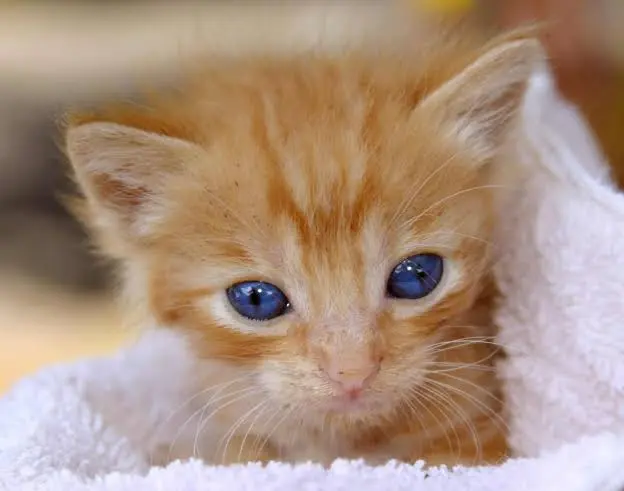
Most kittens are born with blue-looking eyes.
This happens because the pigment in the iris has not fully developed yet. As kittens mature, pigment production increases and their eyes can gradually change to their adult color.
The change usually begins during the early weeks of life and develops over the following months.
By the time a kitten reaches adulthood, its permanent eye color is generally established.
This is why a kitten’s blue eyes should not automatically be considered its final eye color.
When Do Cat Eyes Change Color?
Kitten eye color can begin changing as the eyes mature.
The transition may be gradual, with the eyes moving from blue toward green, yellow, gold, copper, or another adult shade.
Different cats develop their final eye color at different rates.
If an adult cat suddenly develops a noticeable change in eye color, however, that is different from normal kitten development and should be checked by a veterinarian.
Common Cat Eye Colors
Cats can have several naturally occurring eye colors.
The most commonly recognized shades include:
- Green
- Yellow
- Gold
- Amber
- Copper
- Blue
- Hazel
- Odd-colored eyes
The exact shade may appear different depending on lighting.
A cat’s eyes can also look brighter or darker depending on the surrounding environment.
Green Cat Eyes
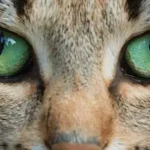
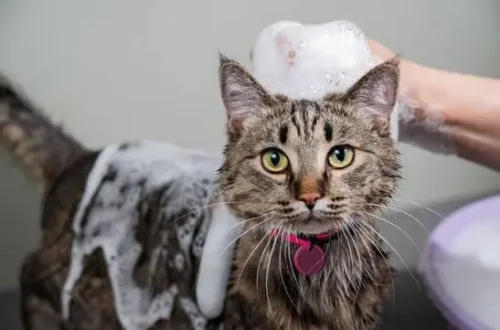
Green is one of the most recognizable feline eye colors.
Green eyes can range from pale yellow-green to deep emerald shades.
Cats with green eyes can have different coat colors and patterns because eye color is influenced by genetics rather than being determined by coat color alone.
The intensity of green can also vary between individual cats.
Yellow and Gold Cat Eyes
Yellow and golden eyes are common among domestic cats.
These colors can range from pale yellow to rich gold or amber.
The amount of pigment in the iris contributes to the final appearance.
Golden eyes may look especially bright in photographs because light reflects from structures inside the feline eye.
Amber Cat Eyes
Amber eyes have a warm yellow-orange appearance.
They can sometimes look similar to golden eyes, making the distinction between the two difficult under different lighting conditions.
As with other eye colors, amber coloration is influenced by genetics and pigmentation.
Copper Cat Eyes
Copper is a deeper eye color that can appear orange, reddish-brown, or rich copper.
It is often associated with high pigmentation in the iris.
Some cats with copper eyes have very striking contrast between their eye color and coat.
Blue Cat Eyes
Blue eyed cats have little or no visible pigment in the iris.
Instead of blue pigment, the blue appearance is related to how light interacts with the structures of the eye.
Blue eyes can range from very pale blue to deeper shades.
They are especially common in certain breeds and in cats carrying genetic traits associated with reduced pigmentation.
Why Are Some Cat Eyes Blue?
Blue eyes do not contain blue pigment in the same way that a colored object contains blue dye.
The appearance is largely related to the way light is scattered within the relatively unpigmented iris.
This is similar to why other naturally occurring structures can appear blue without containing a strong blue pigment.
Genetics plays an important role in determining whether a cat develops blue eyes.
Eye Color Genetics in Cats
Eye color genetics can be complicated because multiple genes and genetic traits can influence pigmentation.
Certain genes can reduce pigment production throughout the body, affecting both the coat and eyes.
This is why some cats with specific coat patterns or genetic traits are more likely to have blue eyes.
However, eye color cannot always be predicted simply by looking at a cat’s fur.
Individual genetic combinations can produce different results.
Cat Coat Color and Eye Color
Coat color and eye color can sometimes be connected genetically, but they are not the same trait.
For example, white cats may have blue, gold, green, or odd-colored eyes.
Cats with pointed color patterns, such as Siamese-type coloration, commonly have blue eyes because the genetic mechanism responsible for their coat pattern also affects pigmentation in the eyes.
This shows why genetics is important when understanding feline eye color.
Cat Eye Colors by Genetics
Different genetic traits can influence how pigment develops in the iris.
Some genes reduce pigment production, while others affect where pigment appears.
In cats with certain color-point patterns, reduced pigmentation results in blue eyes.
White spotting and other pigmentation-related genetic traits can also be associated with unusual eye colors.
Because several genetic factors can interact, eye color should be considered a characteristic rather than a simple one-gene feature.
Why Do Some Cats Have Two Different Eye Colors?
Some cats have one blue eye and one eye of another color.
This condition is called heterochromia.
It occurs when pigmentation develops differently between the two eyes.
Odd-colored eyes are particularly noticeable in some white or partially white cats, although heterochromia can occur in other cats as well.
A cat can have combinations such as blue and green, blue and gold, or blue and copper eyes.
Are Cat Eye Colors Related to Breed?
Breed can influence the eye colors commonly seen in cats.
For example, Siamese cats are known for blue eyes, while other breeds have standards that allow or favor specific eye colors.
However, breed does not completely determine eye color.
Mixed-breed cats can also have many different eye colors depending on their genetic background.
Can Cat Eye Color Predict a Cat’s Personality?
There is no reliable evidence that a cat’s eye color determines its personality.
A green-eyed cat is not automatically calmer than a gold-eyed cat, and a blue-eyed cat is not automatically more affectionate.
Personality is influenced by genetics, early experiences, socialization, environment, and individual temperament.
Eye color is primarily a physical characteristic.
Cat Eyes and Light Reflection
Cats’ eyes can appear to glow when light shines into them at certain angles.
This is partly due to a reflective layer behind the retina called the tapetum lucidum.
It helps cats make better use of available light, which is particularly useful for animals that are active during low-light conditions.
The reflected light can make the eyes appear bright in photographs or at night.
This reflection is separate from the actual color of the iris.
Rare and Unusual Cat Eye Colors
Some cat eye colors are less commonly seen than the familiar green, yellow, and gold shades. These unusual colors often attract attention because they can create a strong contrast with a cat’s coat.
However, rarity depends on the breed and population being considered. A color that is unusual in domestic mixed-breed cats may be completely normal within a particular breed.
Odd-Eyed Cats
An odd-eyed cat has two different colored eyes, most commonly one blue eye and one green, yellow, amber, or copper eye.
This is known as complete heterochromia. It develops when pigmentation differs between the two irises during development.
Odd-eyed cats are often associated with white or partially white coats, but the trait can occur in cats with other coat patterns as well.
Sectoral Heterochromia
Not all unusual eye colors involve two completely different eyes.
Some cats have two or more colors within the same iris. This is called sectoral heterochromia.
For example, part of one iris may appear blue while another section appears green or gold.
This happens because pigment is distributed unevenly within the iris during development.
Are Blue-Eyed Cats Rare?
Blue eyed cats are less common among many ordinary domestic cats, but they are not rare across the entire cat population.
Certain breeds naturally have blue eyes as part of their typical appearance. Siamese and several other color-point cats, for example, commonly have blue eyes.
Blue eyes occur when there is very little pigment in the iris. The blue appearance comes from the way light interacts with the relatively unpigmented tissue rather than from a blue pigment.
Why Do White Cats Have Blue Eyes?
White coat color and blue eyes can sometimes be connected through genes that affect pigment development.
When pigment-producing cells do not reach or develop normally in the iris, the eye can remain blue.
This is why white cats are more likely to have blue or odd-colored eyes than many other cats.
However, not every white cat has blue eyes. White cats can also have green, gold, copper, or other eye colors.
Blue Eyes and Deafness in White Cats
There is an important distinction between eye color and hearing health.
White cats with one or two blue eyes have a higher risk of congenital deafness than white cats without blue eyes. This relationship is associated with pigmentation genetics rather than blue eye color itself being the direct cause of deafness.
Having blue eyes does not mean that every cat is deaf.
For example, blue-eyed cats that are not white do not automatically have the same increased risk.
Do Cat Eye Colors Affect Vision?
Normal eye color itself does not determine whether a cat can see well.
Green, gold, copper, blue, and other normal iris colors can all occur in healthy cats.
The important distinction is between a cat’s normal inherited eye color and a new change in eye appearance.
A sudden change in an adult cat’s eye color can sometimes be associated with an eye problem and should be assessed by a veterinarian.
Can Cat Eye Colors Change With Age?
The biggest natural change usually occurs during kittenhood.
Kittens are born with eyes that appear blue because the iris initially contains little pigment. As melanin develops, the eyes can gradually change to their adult color.
Once a cat reaches adulthood, its eye color should generally remain stable.
A sudden change later in life is different from normal kitten development and should not be ignored.
What Is the Rarest Cat Eye Color?
There is no simple worldwide ranking that identifies one eye color as the rarest in all cats.
Eye color frequency varies according to breed, coat color, genetic background, and population.
Some shades or combinations may be unusual in domestic cats but relatively normal in particular breeds.
Odd-colored eyes and unusual blue-eye patterns can therefore appear rare without being a health problem.
Can Genetics Predict a Cat’s Eye Color?
Genetics can provide clues, but predicting the exact eye color of an individual kitten is not always simple.
Multiple genetic factors influence pigmentation, and different combinations can produce different results.
Researchers have also identified genetically distinct forms of blue-eye traits in different feline lineages, showing that feline eye color genetics is more complicated than a simple one-gene system.
This is why two cats with similar coats can still have different eye colors.
Cat Eye Color and Breed
Breed can influence which eye colors are commonly seen.
For example, color-point breeds are strongly associated with blue eyes, while other breeds may commonly show green, gold, copper, or other shades.
Breed standards can also specify preferred eye colors.
However, breed alone does not guarantee a particular eye color because individual genetics still play a major role.
Mixed-breed cats can display a wide variety of cat eyes and eye colors.
Do Cat Eye Colors Match Their Coat?
There can be a relationship between coat pigmentation and eye pigmentation, but the two are not directly matched.
A white cat can have blue, green, gold, copper, or odd-colored eyes.
Similarly, cats with darker coats can have several different eye colors depending on their genetic background.
Some genetic traits affect pigment production in both the coat and eyes, while others primarily influence one characteristic.
Why Do Cat Eyes Glow at Night?
The glowing appearance of cat eyes in dim light is not the actual iris color.
Cats have a reflective structure behind the retina called the tapetum lucidum. It reflects available light back through the retina, helping the eyes make better use of limited light.
When light from a camera or flashlight enters the eye, this structure can create the familiar glowing effect.
The reflected color can vary and should not be confused with the cat’s natural iris color.
Why Do Cat Eyes Look Different in Photos?
Lighting can make a cat’s eye color appear brighter, darker, or slightly different in photographs.
Flash photography can also make the eyes appear to glow because of reflection from the tapetum lucidum.
For this reason, a photograph is not always the best way to judge the exact natural color of a cat’s eyes.
Natural daylight usually provides a better view of the iris.
When Is a Cat Eye Color Change a Concern?
A normal kitten eye-color change is expected as the iris develops.
A noticeable color change in an adult cat is different.
If one or both eyes suddenly change color, become cloudy, develop redness, or look different from normal, contact a veterinarian. Eye color changes can sometimes be associated with underlying eye disease.
Do not assume that every change is simply a new eye color.
Cat Eye Colors: A Quick Comparison
| Eye color | Common appearance | Notes |
|---|---|---|
| Blue | Pale to deep blue | Common in color-point cats |
| Green | Light green to emerald | Common feline eye color |
| Yellow | Pale to bright yellow | Often seen in domestic cats |
| Gold | Warm golden shade | Can range from light to deep gold |
| Amber | Yellow-orange | Can resemble golden eyes |
| Copper | Orange to reddish-brown | Strong iris pigmentation |
| Odd-eyed | Two different colors | A form of heterochromia |
| Sectoral | Multiple colors in one iris | Uneven pigment distribution |
The exact shade can vary between individual cats and may look different under different lighting conditions.
Cat Eye Colors and Healthy Cat Eyes
Normal cat eye colors can vary widely, but healthy eyes should generally look clear and comfortable.
A healthy cat’s eyes should not normally have persistent redness, thick discharge, significant cloudiness, or obvious swelling.
Changes around the eye are more important than whether the iris is green, blue, gold, or copper.
Signs of Healthy Cat Eyes
Healthy cat eyes commonly have:
- Clear corneas
- Bright, even-looking eyes
- Pupils that respond to changes in light
- Little or no discharge
- No obvious swelling
- No persistent redness
- No visible cloudiness
Some cats naturally have slightly different eye shapes or colors, so knowing what is normal for your own cat is important.
Can an Adult Cat’s Eyes Change Color?
A cat’s permanent eye color generally remains stable after maturity.
If an adult cat suddenly develops a different-looking iris, a cloudy appearance, or a change in one eye, it should not automatically be assumed to be a normal color variation.
Eye problems can sometimes cause changes in how the eye looks.
A veterinarian can determine whether the change is harmless or requires treatment.
Cat Eye Color vs. Eye Health
Eye color itself is usually a normal physical characteristic.
A blue-eyed cat is not automatically healthier or less healthy than a green-eyed cat.
The important thing is whether the eyes are clear, comfortable, and functioning normally.
Sudden changes such as cloudiness, redness, swelling, unusual discharge, or a noticeably different pupil should receive veterinary attention.
Do Blue-Eyed Cats Need Special Care?
Blue eyes do not normally require a special cleaning routine simply because they are blue.
However, cats with blue eyes should receive the same regular observation as other cats.
If you notice squinting, excessive tearing, discharge, redness, cloudiness, or a sudden change in appearance, contact a veterinarian.
For white cats with blue eyes, hearing should also be considered because certain pigmentation-related genetic patterns are associated with an increased risk of congenital deafness.
Cat Eye Colors in Different Lighting
Lighting can dramatically change how an eye color appears.
Green eyes may look brighter in sunlight, while golden eyes can appear darker indoors.
Camera flashes can also make cat eyes appear to glow because of the tapetum lucidum.
This means a cat may appear to have slightly different shades in photographs without its actual eye color changing.
Why Understanding Eye Color Genetics Matters
Eye color genetics helps explain why cats can have such different-looking eyes.
Genes influence the development and distribution of pigment in the iris. Other genetic traits can influence coat color, white spotting, color-point patterns, and the development of blue or odd-colored eyes.
Because several genetic factors can interact, eye color is not always predictable from coat color alone.
This is also why kittens from the same litter can sometimes develop different adult eye colors.
Cat Eye Colors FAQs
What are the most common cat eye colors?
Common cat eye colors include green, yellow, gold, amber, copper, and blue. The exact shade can vary between individual cats and breeds.
Why are kitten eyes blue?
Most kittens initially have blue-looking eyes because their iris has very little developed pigment. As they mature, pigmentation increases and their permanent eye color develops.
Are blue-eyed cats rare?
Blue eyes are less common among many domestic cats, but they are normal and common in several breeds, particularly color-point cats. Their frequency depends on the cat’s genetics and breed.
Can cats have two different colored eyes?
Yes. A cat can have one blue eye and one green, gold, amber, or copper eye. This is called heterochromia and is usually related to differences in pigmentation during development.
What is the rarest cat eye color?
There is no single eye color that can be called the rarest among all cats worldwide. Frequency varies by breed, coat color, genetics, and population.
Can a cat’s eye color change when it gets older?
Kittens commonly experience eye-color changes as they mature. An obvious new color change in an adult cat is different and should be checked by a veterinarian, especially if it occurs with redness, cloudiness, discharge, or discomfort.



One comment on “Cat Eye Colors: A Guide to Feline Eye Color Genetics”
Comments are closed.