



Cat Tail Meanings
A cat’s tail is much more than a furry extension of its body. Cats use their tails as an important part of communication, helping express emotions such as confidence, fear, excitement, irritation, and relaxation. By learning common cat tail meanings, you can better understand what your cat may be communicating.
A raised tail, tucked tail, puffed tail, or rapidly moving tail can each provide useful clues. However, tail position should never be interpreted by itself. Your cat’s ears, eyes, body posture, whiskers, and the situation around it all help provide the complete picture.
Why Do Cats Use Their Tails to Communicate?
Cats communicate through body posture, facial expressions, vocalizations, scent, and movement. Their tails are particularly useful because they can move into many different positions.
A cat can raise its tail when approaching someone, tuck it underneath its body when frightened, or puff it up when startled.
Tail movements can also communicate changing emotions. A cat that starts with a relaxed tail but then begins flicking it rapidly may be becoming irritated or overstimulated.
Learning these changes can help you respond before your cat becomes uncomfortable.
Cat Tail Positions and Their Meanings
There is no universal dictionary where every tail position has exactly one meaning. Instead, tail position provides clues that should be combined with the rest of your cat’s body language.
Here are some of the most common cat tail meanings.
Cat Tail Held Upright
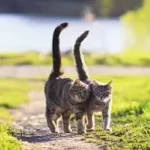
A cat walking toward you with its tail held upright is often displaying a friendly or confident signal.
You may notice this when your cat greets you after you return home or approaches another familiar person or animal.
An upright tail can also appear when a cat is exploring its surroundings confidently.
The rest of the body should still be considered. A relaxed face, natural ears, and loose movements make the signal easier to interpret as friendly.
A cat’s eyes can come in a variety of beautiful shades, so check out our Cat Eye Color guide to learn what different eye colors may mean.
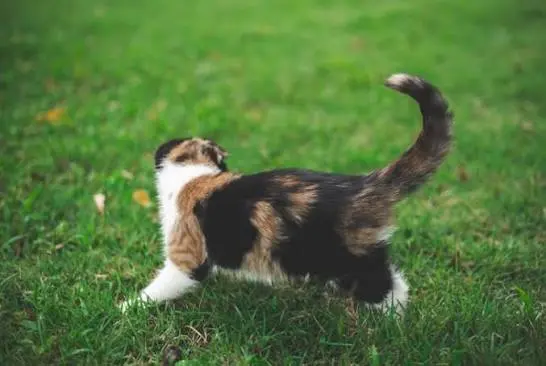
Cat Tail Curved at the Tip
Sometimes a cat holds its tail upright with a small curve at the end.
This can occur during friendly or curious interactions.
You may see your cat walking around the house with this tail position while exploring or approaching you.
It is generally considered a relaxed social signal when the rest of the body also appears comfortable.
Cat Tail Tucked Under the Body
A tucked tail can indicate fear, insecurity, or discomfort.
You may notice this position when your cat encounters something unfamiliar or feels threatened.
Other signs may include crouching, flattened ears, wide eyes, and attempts to hide.
If your cat’s tail is tucked, avoid forcing interaction. Giving your cat an opportunity to move somewhere safe can help reduce stress.
Cat Tail Held Low
A low tail can have several possible meanings.
Some cats naturally carry their tails lower while walking or exploring. In other situations, a low tail may occur when a cat feels uncertain, nervous, or uncomfortable.
Context is particularly important here.
If the low tail appears alongside crouching, flattened ears, or avoidance, your cat may be experiencing fear or stress.
Cat Tail Puffed Up
A puffed-up tail is one of the easiest feline signals to recognize.
The fur on the tail stands away from the body, making the tail appear much larger.
Cats commonly puff up their tails when they are frightened, startled, or highly aroused.
The rest of the body may also become tense, with raised fur across the back or an arched posture.
A cat in this state should be given space rather than approached.
Cat Tail Flicking Slowly
Slow tail movements can happen when a cat is focused on something.
For example, your cat might slowly move its tail while watching a bird outside the window or preparing to pounce on a toy.
The movement does not automatically mean anger.
Look at the cat’s ears, eyes, posture, and activity to determine whether it is concentrating, playing, or becoming irritated.
Cat Tail Flicking Quickly
Rapid tail flicking can be a sign of irritation, excitement, frustration, or high arousal.
You may notice it when your cat is being petted for longer than it wants or when another animal is nearby.
If the tail begins moving rapidly during interaction, it is often a good idea to pause.
Your cat may be communicating that it needs a break.
Cat Tail Thumping
Some cats repeatedly thump or strike their tail against the floor.
This can occur when the cat is irritated, highly focused, frustrated, or emotionally aroused.
For example, a cat may thump its tail while being approached by another animal or while watching something it cannot reach.
A tail thumping by itself does not tell you exactly what the cat feels.
Check the rest of the body language before deciding what the behavior means.
Cat Tail Wrapped Around the Body
A cat may sit or lie down with its tail wrapped around its body.
This can simply be a comfortable resting position.
It can also help the cat conserve warmth while resting.
If the body is relaxed and the ears and eyes appear normal, there is usually no reason to interpret this position as a warning.
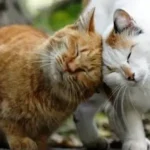
Cat Tail Wrapped Around Another Cat
Cats sometimes place their tails around another cat during friendly interactions.
This may occur between cats that have a comfortable social relationship.
However, cats have individual personalities, so the behavior should be considered alongside their other signals.
Relaxed bodies, calm movements, and friendly interaction are more useful indicators than the tail position alone.
Cat Tail Between the Legs
When a cat holds its tail tightly between or underneath its legs, it may be frightened or feeling insecure.
This position can appear during stressful situations such as meeting an unfamiliar animal, hearing a frightening noise, or being taken somewhere unfamiliar.
The cat may also crouch or try to hide.
Give it enough distance to move away and avoid forcing physical contact.
Cat Tail Straight Out Behind the Body
A tail held straight behind the body can occur during walking, exploration, or focused activity.
The meaning depends on the rest of the cat’s posture.
A relaxed body and natural ears suggest a very different situation from a stiff body with flattened ears.
This is why learning cat tail meanings works best when you look at the entire cat rather than focusing only on the tail.
Cat Tail Movements During Play
Play can produce many different tail movements.
A cat chasing a toy may hold its tail upright, move it quickly, or make small movements while concentrating on its target.
Some cats also puff their tails during particularly energetic play.
Playful body language usually includes active movement and periods of relaxation.
If the cat becomes stiff, defensive, or starts hissing, the interaction may no longer be simple play.
Cat Tail Language During Greeting
A raised tail is commonly seen when cats greet familiar people or animals.
Your cat may walk toward you with its tail upright, rub against your legs, and then move around you.
This can be part of a friendly social interaction.
Some cats may also use their tail to communicate confidence when exploring a familiar environment.
Cat Tail Language When Your Cat Is Happy
Cats do not smile like humans, so their body language provides important clues.
A relaxed cat may have an upright tail, soft eyes, natural ears, and loose body posture.
It may also purr, rub against you, knead, or choose to remain close.
A raised tail combined with relaxed body language is generally a positive signal.
Cat Tail Language When Your Cat Is Scared
Fear can produce a noticeable change in tail position.
A frightened cat may tuck its tail, hold it low, or puff it up.
It may also crouch, flatten its ears, widen its eyes, raise its fur, or attempt to escape.
If you see several of these signals together, give your cat space.
Trying to pick up or corner a frightened cat can increase its fear and may result in scratching or biting.
Cat Tail Meanings in Different Situations
A cat’s tail can change position quickly as its emotions or attention change. This is why cat tail meanings are easier to understand when you consider what is happening around your cat at the same time.
A tail movement during play may mean something completely different from the same movement during a stressful situation.
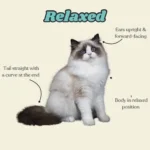
Cat Tail Meanings When Your Cat Is Relaxed
A relaxed cat usually has loose muscles and natural tail movements.
The tail may rest comfortably on the floor, curve gently around the body, or remain upright while the cat walks around the home.
If your cat also has soft eyes, relaxed ears, and normal movements, these signs generally suggest that it feels comfortable.
A relaxed tail should not be confused with a tail that suddenly becomes stiff or starts moving rapidly.
Cat Tail Meanings When Your Cat Is Curious
Curious cats often use their entire body to investigate something interesting.
Your cat may approach a new object with its tail upright or slightly curved while moving its head and ears toward the object.
The tail may make small movements as the cat concentrates.
This type of tail language is usually best understood alongside forward-facing ears and an alert but relaxed body.
Cat Tail Meanings When Your Cat Is Excited
Excitement can cause noticeable changes in a cat’s tail.
A cat may hold its tail upright, move it quickly, or make small movements with the tip.
You may see this when your cat notices a favorite toy, hears food being prepared, or spots something interesting through a window.
Excitement is not necessarily negative. The rest of the body can help you determine whether the cat is excited, playful, or becoming overstimulated.
Cat Tail Meanings During Hunting and Stalking
Cats naturally use stalking behaviors when watching prey or toys.
During this behavior, your cat may lower its body, focus its eyes, move slowly, and keep its tail close to the ground.
The tail may make small movements while the cat concentrates on its target.
This is normal feline behavior and can often be seen during interactive play.
Providing appropriate toys allows cats to express these natural behaviors safely.
Cat Tail Meanings During Play
Tail movements are common during energetic play.
A cat may chase a toy with its tail raised, rapidly moving, or slightly puffed.
Some cats become extremely focused while playing and may make quick movements with their tail.
Play usually includes pauses and relaxed moments.
If the cat’s body becomes stiff, its ears flatten, or it begins hissing and growling, stop the interaction and give it space.
Cat Tail Meanings When Your Cat Is Annoyed
One of the most useful signals to recognize is a sudden change in tail movement.
A cat that was previously relaxed may begin flicking or swishing its tail after being petted for too long.
This can indicate irritation or overstimulation.
Other signs may include ears moving backward, body tension, turning away, or trying to leave.
Stopping the interaction at this point can prevent the cat from becoming more defensive.
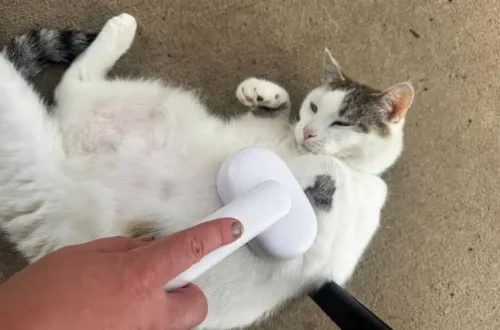
Cat Tail Meanings During Petting
Some cats enjoy long periods of petting, while others prefer short interactions.
Your cat may initially keep its tail still while enjoying attention.
Later, it may begin flicking the tail, shifting its body, or looking toward your hand.
These changes can indicate that the cat has had enough.
Learning this part of cat tail meanings can help you recognize your cat’s limits before it hisses, swats, or bites.
Cat Tail Meanings When Meeting a Stranger
A new person can produce different tail signals depending on the cat’s confidence.
A social cat may approach with an upright tail and relaxed posture.
A nervous cat may keep its tail low, tuck it close to the body, or move away.
Do not force a shy cat to greet visitors.
Allowing the cat to approach voluntarily gives it more control over the interaction.
Cat Tail Meanings When Meeting Another Cat
Cats use their tails as part of their communication with other cats.
A relaxed cat may approach another familiar cat with an upright tail.
A nervous or defensive cat may lower, tuck, or puff its tail.
Rapid tail movements combined with staring, flattened ears, hissing, or growling can indicate tension.
If two cats are becoming defensive, separate them safely rather than allowing the conflict to continue.
Cat Tail Meanings When Your Cat Is Angry
An angry or defensive cat may show several signals simultaneously.
Its tail can move rapidly, become stiff, or puff up.
The cat may also flatten its ears, widen its eyes, arch its back, raise its fur, hiss, or growl.
These are warning signs.
Do not approach or punish a cat displaying defensive behavior. Give it enough space to calm down.
Cat Tail Meanings When Your Cat Is Frightened
Fear can change the appearance and position of the tail very quickly.
A frightened cat may tuck its tail underneath its body or puff it up to make itself appear larger.
It may crouch close to the ground and try to hide.
If you notice these signs, identify and remove the source of fear when possible.
Allow your cat to retreat to a quiet, secure location.
Cat Tail Meanings When Your Cat Is Stressed
Stress may produce less dramatic tail signals than fear.
A stressed cat may keep its tail low, close to its body, or move it repeatedly.
Other signs can include hiding, reduced interaction, excessive grooming, changes in appetite, or unusual vocalization.
A change in your cat’s normal behavior is often more meaningful than one isolated tail movement.
If stress continues, consider what environmental change may be affecting your cat.
Cat Tail Meanings and Body Language Together
The tail should never be interpreted completely on its own.
For example, an upright tail combined with relaxed ears and soft eyes usually creates a very different picture from an upright but stiff tail combined with tense muscles.
When reading cat tail meanings, check:
- Tail position
- Tail movement
- Ear position
- Eye appearance
- Whisker position
- Body posture
- Vocal sounds
- What is happening around the cat
Looking at these signals together makes it easier to understand what your cat is trying to communicate.
What Does a Curved Cat Tail Mean?
A gently curved tail can occur when a cat is relaxed, curious, or greeting someone.
Some cats naturally carry their tails with a curved tip when walking around.
A curved tail should therefore not be given one fixed meaning.
If the cat’s body is loose and its ears are natural, the behavior is usually less concerning than a curved tail combined with tense or defensive posture.
What Does a Stiff Cat Tail Mean?
A stiff tail can indicate increased alertness or emotional arousal.
The meaning depends on whether the tail is upright, low, puffed, or moving.
A stiff upright tail may occur during excitement or focused attention, while a stiff low or puffed tail can occur during fear or defensive behavior.
Look at the complete body posture before interpreting the signal.
What Does a Cat Tail Twitch Mean?
Small tail twitches can occur when a cat is concentrating or excited.
For example, your cat may twitch the end of its tail while watching a bird or preparing to chase a toy.
Repeated twitching during petting can have a different meaning and may indicate growing irritation.
The situation surrounding the twitch is therefore important.
What Does It Mean When a Cat Wraps Its Tail Around You?
A cat may sometimes place or brush its tail against your legs while walking around you.
This can occur during friendly social interaction and may be part of scent-based communication.
Cats have scent glands in several areas of their bodies, and physical contact can help them exchange familiar scents.
However, the tail itself should not be treated as proof that a cat wants to be picked up or touched.
Cat Tail Communication With Other Cats
Tail communication is only one part of feline social behavior.
Cats also use scent, facial expressions, ears, body posture, vocalizations, and physical contact.
For example, two comfortable cats may approach each other with relaxed bodies and raised tails.
Two cats that feel threatened may stare, flatten their ears, puff their fur, and move their tails aggressively.
Understanding the combination of signals provides a much more accurate picture of the relationship.
Cat Tail Meanings and Individual Personality
Every cat has its own personality and communication style.
Some cats naturally move their tails more than others.
A behavior that is normal for one cat may be unusual for another.
This is why knowing your cat’s baseline behavior is so useful.
If you know how your cat normally carries and moves its tail, sudden changes become much easier to recognize.
When Cat Tail Behavior May Need Attention
Most tail movements are normal parts of feline communication.
However, a sudden change in tail position can sometimes be associated with pain or injury.
Pay attention if your cat suddenly stops moving its tail normally, keeps it in an unusual position, appears painful, avoids being touched, or has difficulty walking.
Tail injuries can require veterinary attention.
If you are concerned about a sudden physical change, it is safer to have your cat examined rather than assuming the behavior is simply communication.
Understanding Cat Tail Meanings More Accurately
Understanding cat tail meanings becomes much easier when you stop looking at the tail as a single signal. A cat’s tail works together with its ears, eyes, whiskers, posture, movement, and vocalizations.
For example, a rapidly moving tail can indicate irritation during petting, but a similar movement may happen during intense play. Looking at the situation helps you understand what the tail is communicating.
Watch for Changes in Tail Position
One of the best ways to understand cat tail meanings is to notice changes rather than focusing only on the final position.
If your cat’s tail is relaxed and then suddenly begins flicking, something in the situation may have changed.
The change could be caused by petting, another animal, a strange sound, a new person, or something the cat finds interesting.
Learning your cat’s normal behavior makes these changes much easier to recognize.
Cat Tail Meanings Should Be Read With the Ears
Ears provide useful information when interpreting tail signals.
An upright tail combined with forward or neutral ears can indicate a relaxed or friendly interaction.
In contrast, a puffed tail combined with flattened ears is much more likely to indicate fear or defensive behavior.
This is why experienced cat owners look at the tail and ears together rather than relying on one signal.
Cat Tail Meanings and the Eyes
Your cat’s eyes can provide another important clue.
Soft eyes and relaxed eyelids generally fit with a comfortable body.
Wide eyes and large pupils can occur during excitement, fear, or intense attention.
Therefore, when interpreting cat tail meanings, consider whether the cat’s eyes match the emotional signal suggested by its tail.
Cat Tail Meanings and Whisker Position
Whiskers can also change position according to what a cat is experiencing.
Relaxed whiskers usually accompany a relaxed body.
Whiskers pushed forward may appear when a cat is focused on something, while whiskers pulled tightly backward can occur during fear or discomfort.
Combining whisker position with tail movement provides another useful clue.
Cat Tail Meanings During Human Interaction
Cats often use their tails when interacting with people.
A cat may greet you with an upright tail, walk around your legs, or brush its tail against you.
These behaviors can occur during friendly social contact.
However, a cat can also communicate that it wants space by moving away, lowering its tail, or beginning to flick it rapidly.
Respecting these signals helps create a better relationship between cats and people.
Cat Tail Meanings During Cat Bunting
Cat bunting is when a cat gently rubs or bumps its head against a person, another animal, or an object.
Although bunting mainly involves the head and face, it can happen alongside relaxed tail signals.
A cat may approach with its tail raised, rub against your legs, and then perform a gentle headbutt.
If you have wondered, “why does my cat headbutt me?”, this behavior is often associated with social interaction and scent communication.
The tail can provide additional information about whether the cat is relaxed during the interaction.
Cat Tail Meanings When Your Cat Wants Space
Sometimes your cat’s tail can tell you that an interaction should stop.
A rapidly flicking tail, low posture, backward ears, and attempts to move away can indicate discomfort.
This is particularly important during petting.
Instead of continuing until your cat hisses or swats, stop when the earlier signals appear.
Giving your cat space teaches it that its communication is respected.
Cat Tail Meanings and Fear
Fear can produce some of the clearest tail signals.
A frightened cat may:
- Tuck its tail
- Hold its tail close to its body
- Puff its tail
- Crouch
- Flatten its ears
- Widen its eyes
- Raise its fur
- Hide
These signals become even more meaningful when several appear together.
A frightened cat should be allowed to retreat instead of being cornered or picked up.
Cat Tail Meanings and Aggression
Aggressive or defensive behavior can involve dramatic tail movements.
A cat may puff its tail, move it rapidly, stiffen its body, arch its back, flatten its ears, and hiss or growl.
These behaviors indicate that the cat is experiencing a high level of emotional arousal.
Do not punish a cat for these warning signals.
The safest response is usually to stop the interaction and create distance.
Cat Tail Meanings During Relaxation
Relaxed cat tail meanings are usually easier to recognize because the entire body appears comfortable.
The tail may rest naturally, curve gently around the body, or remain upright while the cat walks.
The ears are generally neutral, the eyes appear soft, and the muscles do not look tense.
If your cat regularly displays this combination, it is generally a sign that the environment feels safe.
Cat Tail Meanings During Sleep
A sleeping cat may wrap its tail around its body or rest it alongside the legs.
This can simply be a comfortable sleeping position.
Cats may also use their tails to help conserve warmth while resting.
If the cat is sleeping normally and does not show signs of discomfort, there is usually no reason to interpret the position as a warning.
Cat Tail Meanings and Health Changes
Most tail movements are normal communication.
However, physical changes in the tail should be taken seriously.
Contact a veterinarian if your cat suddenly:
- Stops moving its tail normally
- Holds the tail in an unusual position
- Shows pain when the tail is touched
- Has swelling around the tail
- Has difficulty walking
- Suddenly avoids normal activity
A behavioral tail signal is different from a physical problem affecting the tail.
If you are unsure which one you are seeing, professional veterinary advice is appropriate.
Cat Tail Meanings: Quick Reference
| Tail behavior | Possible meaning |
|---|---|
| Tail upright | Friendly, confident, or social |
| Tail upright with curved tip | Relaxed or curious |
| Tail low | Uncertainty or discomfort |
| Tail tucked | Fear or insecurity |
| Tail puffed | Fear, surprise, or defensive arousal |
| Slow tail movement | Focus or changing arousal |
| Fast tail flicking | Irritation, excitement, or frustration |
| Tail thumping | High arousal or irritation |
| Tail wrapped around body | Resting or warmth |
| Tail close to body | Fear or insecurity |
| Tail moving during play | Excitement or focused activity |
These are general cat tail meanings, not fixed translations. Always consider your cat’s complete body language and the situation.
Cat Tail Meanings FAQs
What does it mean when a cat’s tail is up?
An upright tail commonly appears when a cat is greeting someone, feeling confident, or engaging in friendly social interaction. A relaxed body and natural ears can support this interpretation.
Why does my cat’s tail puff up?
A puffed tail usually occurs when a cat is frightened, startled, or highly aroused. The cat may also arch its back, raise its fur, flatten its ears, or attempt to escape.
Why does my cat flick its tail?
Tail flicking can have several meanings, including irritation, excitement, concentration, or frustration. The speed of the movement and the rest of the cat’s body language help determine the likely meaning.
What does a cat’s tucked tail mean?
A tucked tail commonly indicates fear, insecurity, or discomfort. Give the cat space and look for the situation that may be causing the stress.
Why does my cat wrap its tail around me?
A cat may brush or wrap its tail around your legs during friendly social contact. It can occur alongside rubbing and other scent-related behaviors, but it does not necessarily mean the cat wants to be picked up.
Can cat tail behavior indicate pain?
Yes. A sudden change in normal tail movement, an unusual tail position, swelling, or pain when the tail is touched can indicate an injury or other physical problem. A veterinarian should assess concerning changes.


2 Comments on “Cat Tail Meanings: What Your Cat’s Tail Is Telling You”
Comments are closed.