








How Long Can a Cat Go Without Eating?
Introduction
If your cat suddenly refuses food, you may immediately wonder, “How long can a cat go without eating?” Although a healthy adult cat may theoretically survive for around one to two weeks without food if it has access to water, this does not mean that prolonged cat fasting is safe. Cats can develop serious health complications after going without adequate nutrition, including hepatic lipidosis, also known as fatty liver disease. A change in cat appetite can also be an early sign of illness, pain, stress, or another problem. Understanding the safe limits, warning signs, and emergency symptoms can help you know when your cat needs veterinary attention.
How Long Can a Cat Go Without Eating?
A healthy adult cat may theoretically survive approximately one to two weeks without food if it continues drinking water. However, this is a survival estimate, not a recommended fasting period.
Cats should not intentionally be left without food.
A cat that stops eating for more than about 24 hours should be taken seriously, especially if it is also drinking less, vomiting, becoming lethargic, or showing other symptoms. Veterinary sources recommend contacting a veterinarian rather than waiting for several days to see what happens.
So, when asking how long a cat can go without eating, there are two very different answers:
- Theoretical survival: Around 1–2 weeks with access to water
- Safe period to wait: Much shorter; more than 24 hours without eating is concerning
The difference is extremely important.
Is Cat Fasting Safe?
Intentional cat fasting is generally not something owners should attempt unless it is specifically recommended and supervised by a veterinarian.
Cats have a unique metabolism.
When a cat does not receive enough food, its body begins using stored energy. Prolonged food deprivation can cause fat to accumulate in the liver, potentially leading to hepatic lipidosis, a serious and potentially fatal liver condition.
This is one reason a cat refusing food should not simply be left alone for several days.
What Happens When a Cat Stops Eating?
The body changes as food deprivation continues.
During the First Several Hours
Your cat may simply appear normal.
Some cats occasionally skip a meal because of:
- Stress
- A change in routine
- Food preference
- Mild stomach upset
- Environmental changes
However, continue monitoring the situation.
After About 24 Hours
Going without food for 24 hours is already concerning.
Your cat may begin showing:
- Lower energy
- Increased weakness
- Reduced interest in normal activities
- Changes in cat appetite
- Increased hiding
This is a good point to contact your veterinarian rather than waiting several more days.
After Two to Seven Days
The risk of serious complications increases significantly.
Cats may begin breaking down body fat for energy, and fat can accumulate in the liver.
This can lead to hepatic lipidosis, or fatty liver disease.
Signs may include:
- Severe lethargy
- Weight loss
- Vomiting
- Yellowing of the eyes or skin
- Weakness
These are important emergency signs that require veterinary care.
Why Do Cats Stop Eating?
There are many possible reasons for a reduced cat appetite.
Common causes include:
Dental Problems
Painful teeth or gums can make eating uncomfortable.
A cat may approach its bowl but then walk away.
Illness
Medical conditions involving the digestive system, kidneys, liver, or other organs can reduce appetite.
Nausea
Cats may stop eating when they feel nauseated.
Vomiting may or may not occur.
Pain
Pain anywhere in the body can cause a cat to lose interest in food.
Stress
Changes in the home can affect eating behavior.
Examples include:
- Moving
- New pets
- New people
- Loud construction
- Changes in routine
Food Changes
Some cats strongly prefer a particular food texture, flavor, or smell.
A sudden diet change may cause temporary food refusal.
Foreign Objects or Blockages
A swallowed object can cause serious digestive problems and may reduce appetite.
This requires prompt veterinary assessment.
Cat Appetite: What Is Normal?
Every cat has its own eating habits.
Some cats eat quickly, while others prefer several smaller meals.
What matters most is knowing your cat’s normal pattern.
A sudden change in cat appetite is more important than comparing your cat’s eating habits with another cat.
Watch for:
- Eating less than usual
- Refusing favorite foods
- Skipping repeated meals
- Taking longer to eat
- Dropping food from the mouth
- Approaching food but not eating
These changes can provide important clues.
How Long Can a Kitten Go Without Eating?
Kittens are more vulnerable than healthy adult cats.
Very young, unweaned kittens need frequent milk or appropriate feeding and can become weak much faster than adult cats. Older kittens may tolerate a longer period without food, but veterinary sources still recommend seeking help quickly when a kitten refuses food.
Do not use the adult cat fasting timeline for a kitten.
If a kitten is not eating, contact a veterinarian sooner rather than waiting.
How Long Can a Cat Go Without Water?
Food and water are different concerns.
A cat can theoretically survive longer without food than without water, but dehydration can become dangerous quickly. Cats that stop drinking may become seriously dehydrated, particularly if they are also vomiting or have diarrhea.
Watch for:
- Dry or sticky gums
- Weakness
- Lethargy
- Reduced urination
- Sunken-looking eyes
A cat refusing both food and water requires prompt veterinary attention.
Cat Fasting vs Skipping One Meal
There is an important difference between occasionally missing one meal and prolonged cat fasting.
| Situation | What It Means |
|---|---|
| Misses one meal but acts normal | Monitor closely |
| Eats noticeably less | Contact veterinarian if it continues |
| Refuses food for about 24 hours | Veterinary advice recommended |
| Refuses food and water | Prompt veterinary attention |
| Refuses food with vomiting or severe lethargy | Urgent veterinary care |
| Shows collapse or severe weakness | Emergency care |
The exact risk varies depending on your cat’s age, health, weight, and symptoms.
Emergency Signs to Watch For
A lack of food becomes more urgent when other symptoms appear.
Important emergency signs include:
- Repeated vomiting
- Severe diarrhea
- Extreme lethargy
- Collapse
- Difficulty breathing
- Severe weakness
- Yellow eyes or skin
- Signs of significant pain
- Suspected poisoning
- Suspected intestinal blockage
- Refusal to drink
Do not wait for the theoretical survival limit if these symptoms are present.
Cats at Higher Risk
Some cats can become seriously ill more quickly when they stop eating.
Higher-risk cats include:
- Kittens
- Senior cats
- Overweight cats
- Cats with diabetes
- Cats with kidney disease
- Cats with liver disease
- Cats with other chronic illnesses
Overweight cats are particularly concerning because sudden food deprivation increases the risk of hepatic lipidosis.
Quick Facts
| Question | Answer |
|---|---|
| How long can a cat go without eating? | A healthy adult may theoretically survive 1–2 weeks with water, but this is not safe or recommended. |
| Is cat fasting safe? | Prolonged fasting can be dangerous. |
| When is reduced cat appetite concerning? | A cat that has not eaten for about 24 hours should be taken seriously. |
| What is a major starvation risk? | Hepatic lipidosis, or fatty liver disease |
| Are kittens different? | Yes. They can become weak much faster. |
| What emergency signs matter? | Vomiting, severe weakness, collapse, jaundice, breathing difficulty, and other serious symptoms |
Why You Should Not Wait for the Survival Limit
The question how long can a cat go without eating can be misleading if the answer is treated as permission to wait.
A cat may theoretically survive for days or even one to two weeks under certain conditions, but serious health problems can develop much earlier. Veterinary sources consistently emphasize that more than 24 hours without food is concerning and that early treatment is preferable.
A change in cat appetite is often a symptom rather than the disease itself.
Finding the reason early gives your cat a better chance of recovering before complications develop.
What to Do If Your Cat Is Not Eating
If you are still wondering how long can a cat go without eating, the most important thing is not to wait for the maximum survival time. A cat that refuses food needs close observation, and continued loss of cat appetite should be taken seriously.
The goal is to identify why your cat is refusing food and get appropriate help before prolonged cat fasting causes complications.
1. Check When Your Cat Last Ate
First, try to determine exactly when your cat last ate a normal meal.
Write down:
- The approximate time
- How much your cat ate
- Whether it drank water
- Any vomiting or diarrhea
- Changes in activity
This information can help your veterinarian understand the severity of the appetite change.
2. Check the Food
Sometimes the problem is related to the food rather than an illness.
Check whether:
- The food is fresh.
- The food has been stored correctly.
- The smell has changed.
- You recently changed brands.
- The texture is different.
- The bowl is clean.
Cats can be sensitive to changes in food smell, texture, and temperature.
3. Provide Fresh Water
Water is especially important when a cat is not eating.
Keep fresh water available in an easy-to-reach location.
You can also provide multiple water bowls around the home.
If your cat refuses both food and water, do not wait to see how long cat fasting can continue. Contact a veterinarian promptly.
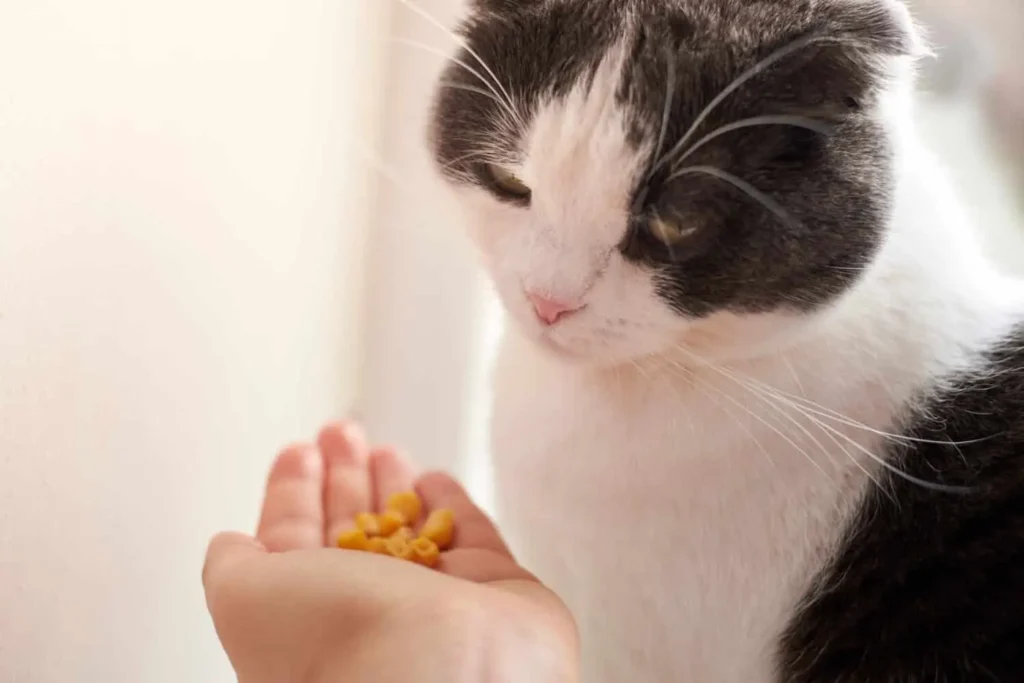
4. Offer Familiar Food
If your cat is otherwise alert and your veterinarian has not instructed you to restrict food, offering its usual favorite food may help.
Avoid suddenly introducing many different foods.
A familiar smell can sometimes encourage a reduced cat appetite.
5. Warm Wet Food Slightly
Some cats respond to the smell of warmed wet food.
Warming food slightly can make its aroma stronger.
However, the food should never be hot enough to burn your cat’s mouth.
6. Keep Mealtimes Calm
Stress can interfere with eating.
Feed your cat in a quiet area away from:
- Loud noises
- Other animals
- Heavy household traffic
- Children disturbing the cat
A calm environment can support normal cat appetite.
7. Do Not Force-Feed Without Veterinary Guidance
Do not force food into your cat’s mouth unless a veterinarian has specifically instructed you how to do it.
Improper force-feeding can increase stress and may create a risk of food entering the airway.
If your cat continues refusing food, professional evaluation is safer than attempting prolonged home feeding methods.
How Veterinarians Diagnose Loss of Appetite
When a cat stops eating, a veterinarian will first try to identify the underlying cause.
The veterinarian may ask:
- How long has your cat refused food?
- Has your cat been drinking?
- Has your cat vomited?
- Has your cat lost weight?
- Is your cat urinating normally?
- Has anything changed at home?
- Has your cat eaten anything unusual?
These questions help determine why the cat appetite has changed.
Physical Examination
A physical examination may include checking:
- Mouth and teeth
- Gums
- Abdomen
- Temperature
- Hydration
- Heart rate
- Body weight
Dental pain, dehydration, abdominal discomfort, and other problems may become apparent during the examination.
Blood Tests
Blood tests may be recommended to investigate medical causes of appetite loss.
Testing may help evaluate:
- Kidney function
- Liver function
- Blood glucose
- Electrolytes
- Infection
- Anemia
The exact tests depend on your cat’s symptoms and medical history.
Imaging Tests
If the veterinarian suspects an internal problem, imaging may be recommended.
Possible tests include:
- X-rays
- Ultrasound
These can help identify problems such as intestinal obstruction, abnormal organs, or other digestive conditions.
Dental Examination
Dental disease is an important possible cause of reduced cat appetite.
Your cat may want to eat but avoid food because chewing hurts.
Possible signs include:
- Bad breath
- Drooling
- Pawing at the mouth
- Difficulty chewing
- Dropping food
Dental problems require veterinary treatment.
Treatment for a Cat That Is Not Eating
Treatment depends on the reason your cat stopped eating.
There is no single treatment for every case of reduced appetite.
Treating the Underlying Illness
If illness is responsible for the appetite loss, treatment focuses on that condition.
For example, treatment may involve:
- Medication
- Dental care
- Fluid therapy
- Treatment for infection
- Pain management
- Treatment of digestive problems
Once the underlying problem improves, appetite may gradually return.
Managing Nausea
Cats experiencing nausea may refuse food even when they are hungry.
A veterinarian may prescribe appropriate medication when nausea is contributing to food refusal.
Do not give human anti-nausea medicines to your cat unless specifically directed by a veterinarian.
Managing Pain
Pain can significantly reduce a cat’s appetite.
Appropriate veterinary pain management may help a cat become comfortable enough to eat again.
Never use human painkillers without veterinary instructions because some can be dangerous or fatal to cats.
Appetite Stimulants
In certain situations, a veterinarian may prescribe an appetite stimulant.
These medications should only be used when appropriate for the individual cat.
An appetite stimulant does not replace treatment for the underlying illness.
Nutritional Support
If a cat continues refusing food, a veterinarian may recommend assisted nutritional support.
Depending on the situation, this can include:
- Special diets
- Assisted feeding
- Feeding through a tube
Veterinary nutritional support can help prevent complications associated with prolonged cat fasting.
Monitoring Your Cat at Home
If your veterinarian recommends monitoring your cat at home, keep track of important changes.
Record:
- Food intake
- Water intake
- Urination
- Bowel movements
- Vomiting
- Energy level
- Body weight
This information can help determine whether your cat is improving or needs additional care.
Cat Appetite Recovery
A returning appetite is generally encouraging.
However, do not assume that one small meal means the problem is completely resolved.
Continue observing:
- How much your cat eats
- How often it eats
- Whether it keeps food down
- Whether normal activity returns
A consistently improving cat appetite is more reassuring than a single meal.
When Cat Fasting Becomes an Emergency
There is no need to wait until your cat reaches the theoretical survival limit.
Seek prompt veterinary attention when food refusal continues, particularly if your cat is approaching or has passed about 24 hours without eating.
Seek urgent care sooner if there are emergency signs such as:
- Repeated vomiting
- Severe weakness
- Collapse
- Breathing difficulty
- Severe abdominal pain
- Yellow gums or eyes
- Severe dehydration
- Suspected poisoning
- Suspected foreign-body ingestion
These symptoms can indicate a potentially serious condition.
Special Considerations for Overweight Cats
Overweight cats require particular attention when they stop eating.
When a cat suddenly consumes very little food, the body may mobilize stored fat.
Excessive fat accumulation in the liver can contribute to hepatic lipidosis.
This is why prolonged cat fasting should never be considered a safe weight-loss strategy.
Weight management should always be gradual and guided by an appropriate feeding plan.
Special Considerations for Senior Cats
Senior cats may have several conditions that affect cat appetite.
Potential causes include:
- Dental disease
- Kidney disease
- Arthritis
- Digestive problems
- Other chronic illnesses
A new appetite change in a senior cat deserves careful attention.
Special Considerations for Kittens
Kittens have greater nutritional needs than adult cats.
They have smaller energy reserves and can become weak quickly when they are not eating.
Do not apply the adult answer to how long a cat can go without eating to a young kitten.
If a kitten refuses food, veterinary advice should be sought promptly.
Prevention
You cannot prevent every cause of appetite loss, but regular care can reduce some risks.
Helpful habits include:
- Routine veterinary examinations
- Regular dental care
- Appropriate nutrition
- Safe indoor environments
- Gradual diet changes
- Monitoring body weight
- Keeping potentially toxic substances away from cats
Early recognition of appetite changes can also prevent prolonged cat fasting.
Daily Appetite Monitoring Checklist
Every Day
- Check whether your cat ate normally.
- Make sure fresh water is available.
- Observe energy levels.
- Check for vomiting or diarrhea.
Every Week
- Monitor body condition.
- Check eating habits.
- Observe chewing and swallowing.
- Keep food storage clean.
Every Month
- Review your cat’s weight.
- Check whether appetite patterns have changed.
- Review food portions.
During Illness
- Record food intake.
- Record water intake.
- Follow your veterinarian’s instructions.
- Watch closely for emergency signs.
Care Summary Table
| Situation | Recommended Action |
|---|---|
| Skips one meal but acts normal | Monitor closely |
| Eats noticeably less | Monitor and contact veterinarian if it continues |
| Around 24 hours without food | Seek veterinary advice |
| Refuses food and water | Prompt veterinary attention |
| Food refusal with vomiting | Prompt veterinary evaluation |
| Severe weakness or collapse | Emergency veterinary care |
| Overweight cat refusing food | Contact veterinarian promptly |
| Kitten refusing food | Seek veterinary advice promptly |
Why Early Action Matters
The question of how long a cat can go without eating should never be used to decide how many days you can safely wait.
The theoretical survival period is much longer than the period during which food deprivation can begin causing health problems.
A change in cat appetite is often an important warning that something is wrong. Addressing the cause early can prevent prolonged cat fasting, reduce complications, and give your cat a better chance of returning to normal eating.
Cat Fasting: What Is Safe and What Is Not?
If you are searching for how long a cat can go without eating, it is important to understand that surviving without food is very different from safely going without food.
A cat may survive for a surprisingly long time under certain conditions, but prolonged cat fasting can cause serious health problems much earlier. Changes in cat appetite should therefore be treated as a potential health warning rather than something to ignore.
Cat Fasting vs Normal Skipping
A healthy cat may occasionally eat less than usual.
For example, a cat might temporarily have a reduced appetite because of:
- Mild stress
- A change in routine
- A different food
- A warm environment
However, continued food refusal is different from simply eating a smaller meal.
| Occasional Reduced Eating | Concerning Food Refusal |
|---|---|
| Cat remains active | Cat becomes weak |
| Drinks normally | Drinking decreases |
| Eats again later | Continues refusing food |
| No other symptoms | Vomiting or diarrhea may occur |
| Normal behavior | Major behavior changes |
Knowing your cat’s normal eating pattern makes changes in cat appetite easier to recognize.
Common Myths About How Long Cats Can Go Without Food
There are many misleading ideas about how long a cat can go without eating.
Myth 1: Cats Can Safely Go Two Weeks Without Food
False.
One to two weeks is sometimes discussed as a theoretical survival period for a healthy adult cat with access to water. It does not mean that a cat can safely practice cat fasting for that long.
Serious complications can develop much earlier.
Myth 2: A Cat Will Eat When It Gets Hungry Enough
False.
A sick cat may continue refusing food even when it needs nutrition.
Waiting for hunger to “win” can allow the underlying illness to become worse.
Myth 3: Cats Can Fast to Lose Weight
False.
Intentional cat fasting is not a safe weight-loss method.
Rapid food restriction can increase the risk of serious liver problems, particularly in overweight cats.
Safe weight management should be gradual and veterinarian-guided.
Myth 4: One Day Without Food Is Never Serious
False.
A healthy adult cat that misses one meal may not immediately develop a serious problem, but approximately 24 hours without eating is enough to take a change in cat appetite seriously.
Cats with existing illnesses, kittens, and senior cats may need attention sooner.
Myth 5: Water Is Not Important If a Cat Is Not Eating
False.
Water is essential.
A cat that refuses both food and water is at greater risk of dehydration and requires prompt veterinary attention.
Emergency Signs When a Cat Is Not Eating
Knowing the emergency signs is just as important as knowing how long a cat can go without eating.
Seek urgent veterinary care if your cat refuses food and develops:
- Severe weakness
- Collapse
- Repeated vomiting
- Difficulty breathing
- Severe abdominal pain
- Significant dehydration
- Yellow eyes or gums
- Severe diarrhea
- Suspected poisoning
- Suspected foreign-object ingestion
- Seizures or unusual neurological signs
Do not wait for a specific number of days when these symptoms are present.
Why Overweight Cats Need Extra Attention
Overweight cats are at particular risk when food intake suddenly decreases.
When a cat does not receive enough calories, stored body fat may be released for energy. The liver may struggle to process the increased amount of fat, potentially resulting in hepatic lipidosis.
This is one reason prolonged cat fasting can be dangerous.
If an overweight cat suddenly stops eating, contact a veterinarian promptly rather than waiting to see how long can a cat go without eating.
How to Encourage a Healthy Cat Appetite
If your veterinarian has advised home monitoring, several simple measures may help support cat appetite.
You can try:
- Offering familiar food
- Keeping feeding areas quiet
- Providing clean food and water bowls
- Offering appropriately warmed wet food
- Reducing household stress
- Keeping other pets away during meals
Do not force food into your cat’s mouth without professional guidance.
If your cat continues refusing food, veterinary assessment is more important than trying increasingly complicated home remedies.
How to Monitor Your Cat’s Eating
Good observation can help identify changes early.
Keep track of:
Food
Record approximately how much your cat eats.
Water
Note whether drinking is normal, increased, or decreased.
Weight
Unexpected weight loss can be an important warning sign.
Behavior
Watch for hiding, weakness, restlessness, or unusual behavior.
Bathroom Habits
Changes in urination or bowel movements can provide additional clues.
These observations can help your veterinarian understand changes in cat appetite.
When a Cat Starts Eating Again
A returning appetite is encouraging, but continue monitoring your cat.
Ask:
- Is it eating normal portions?
- Is it keeping food down?
- Is energy returning?
- Is it drinking normally?
- Is the appetite improving each day?
If your cat eats one small meal and then refuses food again, the problem may not be resolved.
Final Verdict
If you are asking how long a cat can go without eating, remember the most important distinction: a cat’s theoretical ability to survive without food is not the same as a safe amount of time to wait.
A healthy adult cat may theoretically survive around one to two weeks without food if water remains available, but prolonged cat fasting can cause dangerous complications well before that point. A significant change in cat appetite, particularly food refusal lasting around 24 hours, should be taken seriously.
Kittens, senior cats, overweight cats, and cats with existing medical conditions may be at greater risk. If food refusal is accompanied by emergency signs such as severe weakness, repeated vomiting, breathing difficulty, collapse, or yellowing of the eyes or gums, seek urgent veterinary care rather than waiting.
Frequently Asked Questions
1. How long can a cat go without eating?
A healthy adult cat may theoretically survive around one to two weeks without food if it has access to water, but this is not considered a safe fasting period. Veterinary attention is appropriate when food refusal approaches 24 hours.
2. How long can a cat safely fast?
Cats should not undergo prolonged cat fasting without veterinary supervision. A significant reduction in food intake should be taken seriously, especially if it continues for about 24 hours.
3. What happens if a cat does not eat for one day?
A cat may initially appear relatively normal, but a full day without food can signal an underlying problem. Changes in cat appetite should be monitored closely and discussed with a veterinarian.
4. Can cats survive two weeks without food?
Theoretical survival for one to two weeks is sometimes possible for an otherwise healthy adult with access to water, but this does not mean two weeks of cat fasting is safe.
5. How long can a kitten go without eating?
Kittens have smaller energy reserves and higher nutritional needs than adult cats. A kitten that refuses food should receive veterinary advice promptly rather than following an adult cat’s fasting timeline.
6. Can a cat go without food but still drink water?
A cat may survive longer without food when water is available, but prolonged food deprivation can still cause serious health problems. Drinking water does not make extended cat fasting safe.
7. What are the emergency signs of a cat not eating?
Important emergency signs include severe weakness, collapse, repeated vomiting, breathing difficulty, severe dehydration, yellow gums or eyes, seizures, and suspected poisoning or obstruction.
8. Why has my cat’s appetite suddenly changed?
A change in cat appetite can result from dental pain, illness, nausea, stress, pain, food changes, or digestive problems. Sudden appetite changes should be monitored carefully.
9. Can stress cause a cat to stop eating?
Yes. Moving, new pets, unfamiliar people, loud noises, and changes in routine can affect appetite. Persistent food refusal still requires veterinary attention.
10. Can an overweight cat go longer without eating?
No. Overweight cats can actually face an increased risk of hepatic lipidosis when they stop eating. Prolonged cat fasting should never be used as a weight-loss strategy.
11. Should I force-feed my cat?
Do not force-feed your cat without veterinary guidance. Incorrect feeding techniques can increase stress and may cause food to enter the airway.
12. How can I improve my cat’s appetite?
If your veterinarian recommends home care, offering familiar food, reducing stress, keeping bowls clean, and providing a quiet feeding area may help support cat appetite.
13. When should I call the vet if my cat is not eating?
Contact a veterinarian when food refusal continues, particularly around 24 hours, and seek help sooner if your cat is young, elderly, overweight, medically ill, or showing other symptoms.
14. Can cat fasting cause fatty liver disease?
Yes. Prolonged inadequate food intake can contribute to hepatic lipidosis, commonly called fatty liver disease. This is an important reason not to intentionally allow prolonged cat fasting.
15. What should I do if my cat is not eating and is vomiting?
Food refusal combined with repeated vomiting is more concerning than appetite loss alone. These are potential emergency signs, so contact a veterinarian promptly rather than waiting to see how long can a cat go without eating.