




Cat Sleeping Positions: What Do They Mean?
Have you ever looked at your sleeping cat and wondered how that position could be comfortable?
One day, your cat may be curled into a tight little ball. The next day, it may be stretched across the sofa with its belly completely exposed. Sometimes, cats even sleep in twisted positions that look uncomfortable enough to make a human’s back hurt.
Different cat sleeping positions can provide clues about your cat’s comfort, temperature needs, sense of security, and instincts. However, one position alone cannot tell you exactly what your cat is thinking.
The best way to understand a cat’s sleeping habits is to look at the complete picture.
Ask yourself:
- Where is your cat sleeping?
- How relaxed does its body look?
- Is the environment warm or cold?
- Is your cat in a deep sleep or light rest?
- Is this a normal position for your cat?
- Has its sleeping behavior suddenly changed?
PetMD notes that cat sleeping positions are often connected to comfort, temperature regulation, trust, and instinctive safety behaviors.
Why Do Cats Sleep in Different Positions?
Cats do not choose the same cat sleeping posture every time they rest.
Just like people, they may change position when they:
- Feel warmer or colder
- Want to become more comfortable
- Feel safe
- Want to remain alert
- Need an easy escape route
- Are entering a deeper stage of sleep
A cat’s instincts also play an important role.
Although domestic cats live in comfortable homes, their natural behavior is still influenced by the fact that cats are both predators and animals that can be vulnerable to larger threats.
This helps explain why a cat may sometimes sleep in a tightly curled position and other times stretch out completely.
A curled position can help protect vulnerable areas and conserve warmth, while a more open position may suggest the cat feels comfortable enough to relax more deeply.
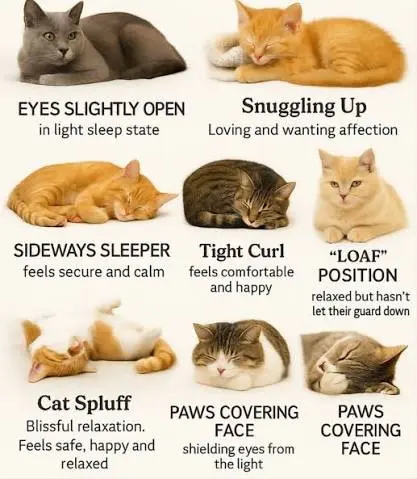
Cat Sleeping Posture and Cat Body Language
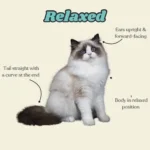
A cat sleeping posture is only one part of cat body language.
For example, a cat lying on its side may look completely relaxed. But if its muscles are tense, its breathing appears unusual, or the position is a sudden change from its normal behavior, the context may be different.
When looking at cat body language, pay attention to:
- Muscle tension
- Paw position
- Tail position
- Ear position
- Breathing
- The sleeping location
- How easily the cat wakes up
- Whether the cat returns to its usual routine
Plant City Animal Hospital emphasizes that sleeping posture and sleeping location can work together to provide clues about a cat’s comfort, environmental awareness, and emotional security.
Cats can be active at different times of the day, so understanding their Cat Zoomies can help explain why they suddenly run, jump, and play around the house.
Sleeping vs Resting: Is Your Cat Actually Asleep?
Sometimes a cat may look as though it is sleeping when it is actually just resting.
Cats can spend time in light rest while remaining ready to react to sounds or movement around them.
A deeply relaxed sleeping cat may have:
- Loose muscles
- Slow, relaxed breathing
- A stretched or comfortable posture
- Little reaction to normal household sounds
A lightly resting cat may:
- Keep its head upright
- Keep its paws positioned for movement
- Open its eyes quickly
- React immediately to sounds
This is one reason some cat sleeping positions look relaxed but still appear ready for action.
The position does not always indicate deep sleep.
Sometimes your cat is simply taking a light nap while keeping an eye on its surroundings.
1. Cat Sleeping Curled Into a Ball
One of the most common cat sleeping positions is the curled-up ball.
Your cat may tuck:
- Its legs close to its body
- Its tail around itself
- Its nose near or under its tail
- Its head toward its chest
This compact position can help conserve body heat.
It can also reduce exposure of the abdomen, where many vital organs are located.
PetMD explains that curling into a ball helps cats conserve warmth and protect vulnerable parts of their bodies.
A curled-up sleeping cat may simply be cold and looking for warmth.
It may also prefer the secure feeling of a compact position.
For this reason, cats that frequently curl into a ball may enjoy:
- Round beds
- Donut-shaped beds
- Blankets
- Warm resting areas
Purina also describes the curled position as one that can help a cat maximize warmth while feeling more protected.
However, do not assume that a cat curled into a ball is automatically afraid or unhappy.
For many cats, it is simply comfortable.
2. The Cat Loaf Position
The famous cat loaf is one of the most recognizable cat sleeping positions.
In this position, your cat typically:
- Sits with its body upright
- Tucks its front paws underneath its body
- Keeps its belly close to the ground
- Keeps its head upright or slightly lowered
The result looks a little like a loaf of bread.
A loafing cat is often comfortable, but it may not be completely asleep.
This position allows the cat to rest while remaining relatively ready to move.
Keeping the paws tucked underneath can also help conserve warmth.
Think of it like someone sitting comfortably on a chair while still being ready to stand up quickly.
Your cat may be relaxed—but it has not completely switched off.
What Does the Cat Loaf Mean?
A normal loaf can suggest:
- Comfort
- Light rest
- Warmth conservation
- A sense of security
- Readiness to move if necessary
The loaf position is especially common when a cat is resting in an area where people or other pets are still moving around.
3. Cat Sleeping on Its Side
When a sleeping cat lies on its side, its body often appears loose and relaxed.
The legs may be:
- Slightly bent
- Fully stretched
- Relaxed in different directions
Side sleeping exposes more of the body than a tightly curled position.
For this reason, a cat that regularly sleeps on its side may feel relatively comfortable and secure in its environment.
PetMD and Purina both describe side sleeping as a relaxed position often associated with comfort and a feeling of safety.
Side sleeping can also be a position where a cat enters deeper rest.
However, cats can still wake quickly if they hear something interesting.
Even a deeply relaxed cat does not lose all awareness of its surroundings.
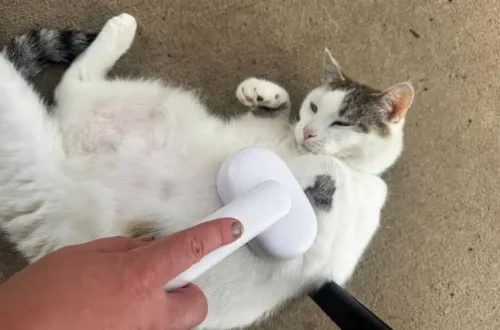
4. Cat Sleeping on Its Back With Its Belly Up
A cat sleeping on its back can look adorable.
Your cat may:
- Lie completely on its back
- Stretch its legs upward
- Rest its paws near its chest
- Expose its belly
Among common cat sleeping positions, the belly-up posture is often associated with comfort and trust.
The belly is a vulnerable area, so exposing it while resting can suggest that a cat feels safe in its surroundings.
But there is one important thing to remember:
A Belly-Up Sleeping Cat Is Not Always Asking for a Belly Rub
Many people see a cat exposing its belly and immediately assume:
“My cat wants me to rub its stomach.”
Not necessarily.
Your cat may trust you enough to sleep with its belly exposed while still disliking belly touching.
The sleeping position can show comfort in the environment.
It does not automatically mean the cat wants physical contact.
This is an important difference when interpreting cat body language.
5. The Superman Cat Sleeping Position
The Superman pose is another popular and funny-looking position.
In this cat sleeping posture, your cat lies on its stomach with:
- Front legs stretched forward
- Back legs stretched behind
- Body extended across the floor or another surface
The position can look as though your cat is flying through the air like Superman.
A cat may choose this position because it feels comfortable while still protecting the more vulnerable underside of its body.
Temperature can also influence this choice.
PetMD notes that cats may stretch out on warm, soft surfaces for comfort or choose cooler surfaces such as tile or hardwood when they want help regulating body temperature.
So if your cat frequently uses the Superman position on a cool floor during warm weather, the surface itself may be part of the reason.
6. Why Does My Cat Sleep in Strange or Twisted Positions?
Sometimes you may look at your sleeping cat and genuinely wonder whether it needs help.
Its legs may point in one direction while its head twists in another.
Fortunately, many strange-looking cat sleeping positions are completely normal.
Cats have extremely flexible bodies.
Their flexible spines and highly mobile shoulders allow them to curl, stretch, twist, and sleep in positions that would be uncomfortable for many humans.
A strange-looking position does not automatically mean pain.
In many cases, the simplest explanation is:
Your cat is comfortable.
Purina also notes that unusual or “acrobat-like” positions can simply be comfortable for cats, even when they look awkward to us.
However, context still matters.
If your cat suddenly begins sleeping in an unusual position while also showing:
- Stiffness
- Limping
- Difficulty jumping
- Reduced activity
- Signs of pain
then the issue may not be the position itself.
The important question is whether there has been a sudden change in your cat’s normal behavior.
7. Cat Sleeping Sitting Upright
Some cats appear to sleep while sitting almost upright.
Their tail may be:
- Wrapped around their body
- Hanging down
- Resting beside them
Their head may occasionally drop as they become sleepy.
This position can look unusual, but some cats use it during light rest.
A cat sitting upright can remain relatively ready to move while taking a short nap.
PetMD describes upright resting as a position that can reflect comfort and confidence while also allowing a cat to transition easily into movement or grooming.
Purina similarly describes the upright seated position as one where a cat can remain relatively ready to respond to its surroundings.
If your cat occasionally naps this way and otherwise behaves normally, there is usually no reason to worry.
8. What Does It Mean When a Cat Changes Sleeping Positions?
Cats naturally change their cat sleeping posture throughout the day.
Your cat may start curled into a ball.
Later, it may move into a loaf.
After becoming more relaxed, it may stretch onto its side.
These changes can happen because:
- The room temperature changes
- The cat becomes more relaxed
- The surface becomes uncomfortable
- Noise levels change
- The cat moves between light and deep rest
- The cat simply wants a different position
One sleeping position is only a snapshot.
Observing patterns over time provides much more useful information about your cat’s comfort and behavior.
A healthy cat does not need to sleep in one “perfect” position.
In fact, variety is completely normal.
The bigger concern is a persistent and unusual change, especially when combined with other signs that your cat may not feel well.
9. Why Does My Cat Sleep With Its Paws Over Its Face?
One of the cutest cat sleeping positions is when a cat covers its face with one or both paws.
Your cat may:
- Place one paw over its eyes
- Tuck its nose beneath its paws
- Use its tail to partly cover its face
- Curl its entire body around its head
There can be several reasons for this position.
Blocking Light
A cat sleeping near a window or in a bright room may use its paw to block some of the light.
Just like people may cover their eyes with a hand or blanket, a sleeping cat may use its paws to create a darker resting space.
Keeping Warm
Cats may also cover their face to conserve warmth.
The nose and face are exposed areas, so tucking them closer to the body can help create a warmer and more protected position.
PetMD and Purina both describe face-covering and tucked positions as behaviors that can be linked with warmth, comfort, and blocking light.
Simply Being Comfortable
Of course, sometimes there may be no deeper explanation.
Your cat may simply find that position comfortable.
That is an important rule when interpreting cat body language.
Not every movement has a secret meaning.
10. Why Does My Cat Sleep With Its Eyes Half Open?
Some owners become worried when they notice their sleeping cat with its eyes partially open.
In many cases, a cat may appear to sleep while:
- One eye is partly open
- Both eyes are slightly open
- The eyes move beneath the eyelids
- The cat quickly reacts to a sound
Cats can move between different stages of sleep and rest while remaining aware of their surroundings.
A cat that is lightly resting may not completely close its eyes.
PetMD includes partially open eyes among normal-looking cat sleeping behaviors, particularly when a cat is in lighter rest and remains responsive to its environment.
However, sleeping with the eyes slightly open should not be confused with eye problems.
If you notice:
- Redness
- Swelling
- Discharge
- Squinting while awake
- Frequent rubbing of the eyes
the issue may be unrelated to your cat’s normal sleeping posture.
11. Why Does My Cat Sleep Next to Me?
Many cats choose to sleep close to their owners.
Your cat may sleep:
- Beside you on the bed
- Next to you on the sofa
- Near your legs
- On a nearby chair
This can be connected to comfort, familiarity, warmth, and a sense of security.
Cats are often selective about where they choose to rest.
Sleeping requires them to become less aware of their surroundings, so choosing a familiar person or location may help them feel comfortable.
Plant City Animal Hospital notes that cats may choose sleeping locations near their owners because of trust, security, comfort, and warmth.
However, sleeping beside you does not necessarily mean your cat will want constant interaction.
Some cats simply enjoy being nearby.
A cat may want to share your space while still maintaining a little personal distance.
12. Why Does My Cat Sleep on My Chest?
If your cat regularly sleeps on your chest, there may be several reasons.
Your chest provides:
- Warmth
- A stable resting surface
- Your familiar scent
- The sound of your heartbeat
- Gentle movement from breathing
For some cats, these things can create a comfortable and familiar environment.
A cat sleeping on your chest may also enjoy the closeness and security of being near you.
However, body size and personality matter.
Not every cat enjoys sleeping directly on a person.
Some may prefer to sleep beside you instead.
Both behaviors can show that the cat feels comfortable in your presence.
13. Why Does My Cat Sleep on My Head or Pillow?
A cat sleeping near your head may seem strange, especially when you wake up with a furry roommate taking over your pillow.
Your pillow and head area may provide:
- Warmth
- Familiar scent
- A soft surface
- Less movement than your legs or feet
Your cat may also have learned that the pillow is one of the most comfortable places in the bed.
If your cat repeatedly chooses this location, comfort may be the simplest explanation.
14. Why Does My Cat Sleep on My Feet?
Cats may sleep near or on your feet because the area provides warmth while allowing a little more personal space.
Sleeping near your feet may also be convenient.
Your cat can remain close to you without needing to lie directly on your upper body.
For some cats, this location may feel safer because they can quickly move away if they become uncomfortable.
This is another reminder that cat sleeping positions should be interpreted together with the location.
A cat’s relationship with a sleeping space can tell you as much as the posture itself.
15. Why Does My Cat Sleep Between My Legs?
Sleeping between your legs can create a small enclosed space.
Your legs may provide:
- Warmth
- Physical boundaries
- Familiar scent
- A secure resting area
For a sleeping cat, this can feel similar to resting inside a protected space.
Cats often enjoy areas where they can feel surrounded or partially enclosed.
That does not mean every cat sleeping between your legs is anxious.
Many cats simply find the position warm and comfortable.
16. Why Do Cats Sleep in Boxes?
Cats have a famous relationship with boxes.
Even when you buy an expensive cat bed, your cat may immediately choose the cardboard box it arrived in.
Boxes provide:
- Enclosure
- Physical boundaries
- A hiding place
- A protected resting area
Plant City Animal Hospital identifies enclosed sleeping areas as attractive to cats because they can provide a sense of security and help them feel protected.
A box can allow a cat to rest while reducing exposure to activity around the room.
The walls also create a clear boundary between the cat and its surroundings.
This may explain why a sleeping cat can look completely relaxed inside a small cardboard box.
17. Why Does My Cat Sleep in Drawers, Closets, or Other Small Spaces?
Boxes are not the only enclosed places cats enjoy.
Your cat may also sleep in:
- Drawers
- Closets
- Cabinets
- Laundry baskets
- Open bags
- Under furniture
These spaces can provide quiet and privacy.
They may also be darker and less exposed to movement around the home.
Some cats prefer sleeping in the middle of a busy household.
Others prefer a hidden location where they are less likely to be disturbed.
Both preferences can be normal.
The more important question is whether your cat has suddenly changed from its usual sleeping habits.
18. Why Do Cats Sleep in High Places?
Cats often enjoy sleeping above ground level.
You may find your cat resting on:
- A cat tree
- A shelf
- The back of a sofa
- A wardrobe
- A window perch
High locations can give cats a better view of their surroundings.
From an elevated position, your cat may feel more secure because it can observe activity below.
PetMD and Plant City Animal Hospital both discuss elevated sleeping locations as places where cats may feel comfortable while maintaining awareness of their environment.
High places may be especially attractive in homes with:
- Children
- Dogs
- Multiple cats
- Frequent visitors
- A lot of activity
A cat sleeping on a high perch may simply enjoy having a peaceful place away from ground-level activity.
19. Why Does My Cat Sleep in the Sun?
A sleeping cat stretched out in a patch of sunlight is a familiar sight in many homes.
Cats may seek sunny areas because they enjoy warmth.
Sunlight can create a comfortable resting spot, especially when the surrounding room is cooler.
You may notice your cat moving throughout the day as the sunlight changes position.
For example:
Morning: Window on one side of the house.
Afternoon: Another sunny area.
Your cat may simply follow the warm spots.
This does not necessarily mean the cat is trying to get sunlight for a specific health reason.
Often, the explanation is much simpler:
The spot feels warm and comfortable.
20. Why Does My Cat Sleep on a Cool Floor?
Not every cat wants warmth all the time.
During warm weather, your cat may choose:
- Tile
- Hardwood
- Stone
- Another cool surface
A stretched-out cat sleeping posture on a cool floor may help your cat feel more comfortable when the environment is warm.
PetMD notes that temperature regulation can influence where and how cats sleep, with cats sometimes stretching out on cooler surfaces.
So if your cat normally sleeps in a warm bed but suddenly moves to the tile during a hot day, the temperature may explain the change.
21. Why Does My Cat Sleep Under the Blanket?
Some cats love sleeping under blankets.
Others refuse to go anywhere near them.
A cat that sleeps under a blanket may enjoy:
- Warmth
- Darkness
- Enclosure
- A quieter environment
The blanket creates a small covered space that can feel similar to a den.
However, make sure your cat can easily move out from under the blanket.
Never tightly wrap or trap a cat inside bedding.
Your cat should always be able to leave the space comfortably.
22. Why Does My Cat Change Where It Sleeps?
Your cat may have a favorite bed for weeks and then suddenly ignore it.
This can happen for many normal reasons.
Your cat may be responding to:
- Seasonal temperature changes
- A different amount of sunlight
- Household noise
- New furniture
- A new pet
- A new person
- Changes in routine
For example, your cat may sleep in a sunny window during winter but move to a cool floor during summer.
This type of change can be completely normal.
Plant City Animal Hospital explains that changes in sleeping locations can reflect environmental changes and a cat’s search for comfort or security.
However, if your cat suddenly avoids a favorite location and also appears uncomfortable, fearful, or unwell, the change deserves more attention.
23. Why Does My Cat Sleep in a Different Position Every Day?
It is completely normal for cat sleeping positions to change.
Your cat may curl into a ball one day and stretch across the sofa the next.
Several factors can influence the chosen cat sleeping posture, including:
- Temperature
- Surface comfort
- Noise
- Security
- Level of tiredness
- Light vs deep rest
A cat that feels completely safe may also use several different positions because it does not need to remain in one protective posture.
Instead of focusing too much on a single position, look for patterns over time.
For example:
Normal variation:
Your cat sometimes sleeps curled up, sometimes on its side, and sometimes in a loaf.
Possible change worth noticing:
Your normally active cat suddenly spends all day hiding under furniture and avoids its usual sleeping places.
The difference is not simply the position.
It is the overall change in behavior and routine.
24. Does Where a Cat Sleeps Matter More Than How It Sleeps?
Both can provide useful clues.
A cat sleeping posture may tell you something about:
- Comfort
- Warmth
- Relaxation
- Alertness
The sleeping location may provide clues about:
- Security
- Privacy
- Social bonding
- Environmental preferences
For example, a cat sleeping curled up inside a box may be trying to stay warm while enjoying an enclosed space.
A cat stretched out on a sunny windowsill may be comfortable, warm, and interested in the activity outside.
A cat sleeping beside you may enjoy the familiar environment while still choosing a position that feels physically comfortable.
This is why understanding cat body language requires looking at more than one detail.
The position, location, environment, and your cat’s usual behavior all work together.
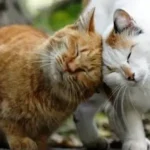
25. Why Do Cats Sleep With Other Cats or Dogs?
Some cats prefer sleeping alone, while others enjoy resting close to another animal.
You may see two cats:
- Curled up together
- Sleeping side by side
- Touching paws
- Resting with their backs against each other
A cat may sleep near another cat because of:
- Social bonding
- Warmth
- Familiarity
- A sense of security
Cats that have a close relationship may choose to share a sleeping space.
However, not every cat that lives with another cat will want to sleep beside it.
Some cats enjoy companionship but still prefer their own personal sleeping area.
The same can happen in homes with dogs.
A cat and dog that feel comfortable around each other may occasionally sleep close together. This can suggest familiarity and tolerance, although the relationship should always be judged by their overall behavior.
26. Cat Sleeping Positions by Age
A cat’s age can influence how, where, and how long it sleeps.
Kittens
Kittens often sleep in unusual and flexible positions.
They may:
- Fall asleep during play
- Sleep in twisted positions
- Curl up with littermates
- Stretch out completely
- Change positions frequently
Kittens spend a lot of energy playing and growing, so frequent periods of sleep are normal.
Because they are small, kittens may also seek warm and enclosed spaces.
Adult Cats
Adult cats often develop favorite sleeping locations and routines.
An adult cat may have:
- A preferred bed
- A favorite sunny window
- A high perch
- A place near its owner
- A hidden quiet area
Adult cats can still change their cat sleeping positions depending on temperature, comfort, and activity around the home.
Senior Cats
Older cats may sleep more and may change positions less often because of reduced mobility or stiffness.
A senior cat may prefer:
- Softer surfaces
- Easily accessible beds
- Warm locations
- Quiet areas
However, aging does not mean that every change in a cat sleeping posture should be ignored.
A sudden change, especially when combined with difficulty moving, reduced activity, or signs of discomfort, deserves attention.
27. Can a Cat’s Sleeping Position Show Pain?
Sometimes, changes in the way a cat rests can happen when it feels uncomfortable.
However, a single unusual position does not automatically mean your cat is in pain.
Cats are flexible and can sleep in positions that look extremely uncomfortable to humans.
What matters more is whether your cat’s posture is accompanied by other changes.
Possible signs of discomfort may include:
- Stiffness when getting up
- Limping
- Difficulty jumping
- Avoiding stairs
- Hiding more than usual
- Reduced grooming
- Decreased activity
- Vocalizing when touched
- A tense or guarded body
A cat that is normally relaxed but suddenly begins resting in a tense position may need closer observation.
The important word is change.
A strange position that your cat has always used is different from a sudden and persistent new posture.
28. When Can Cat Sleeping Positions Be a Warning Sign?
Most cat sleeping positions are harmless.
However, contact a veterinarian if an unusual sleeping posture appears together with concerning symptoms.
Pay attention if your cat:
- Has difficulty breathing
- Breathes unusually while resting
- Appears unable to get comfortable
- Repeatedly changes position because it cannot settle
- Shows signs of pain
- Suddenly hides constantly
- Stops eating normally
- Has major changes in activity
- Has difficulty walking or jumping
- Appears weak or disoriented
The position itself may not be the problem.
It is the combination of an unusual posture and other changes that matters.
For example, a cat sleeping stretched out on the floor can be completely normal.
But if the same cat appears weak, has unusual breathing, and refuses food, the overall situation is different.
29. Why Does My Cat Suddenly Sleep More Than Usual?
Cats naturally spend a large part of the day sleeping and resting.
However, if your cat suddenly begins sleeping much more than normal, consider the complete situation.
Possible questions include:
- Is your cat eating normally?
- Is it still interested in play?
- Has its daily routine changed?
- Is the weather hotter than usual?
- Has the household become quieter?
- Is your cat showing signs of illness?
Sometimes a change in sleep is temporary.
For example, a very active day may be followed by extra rest.
However, a persistent change in activity or behavior should not automatically be explained by the phrase “my cat is just sleeping more.”
Knowing your cat’s normal routine makes unusual changes easier to notice.
30. How to Read Cat Body Language While Your Cat Is Resting
A cat sleeping posture gives only part of the story.
To better understand your cat, observe several things together.
Look at the Body
A relaxed body often appears loose and comfortable.
A tense cat may keep its muscles tight or hold its body in an unusual way.
Look at the Ears
Relaxed ears are generally positioned naturally.
Flattened or tightly pulled-back ears can suggest fear, stress, or discomfort when combined with other signals.
Look at the Tail
A relaxed tail may rest naturally beside or around the body.
A tightly held or suddenly puffed tail may provide a different clue.
Look at the Environment
A cat sleeping on a high shelf may be avoiding household activity.
A cat under a blanket may simply be seeking warmth.
A cat beside you may enjoy familiarity and comfort.
Look for Changes
This is often the most useful step.
Your cat’s normal behavior is your best reference point.
31. Common Myths About Cat Sleeping Positions
Myth: A Cat Sleeping on Its Back Always Wants a Belly Rub
Not necessarily.
A belly-up sleeping cat may feel safe and relaxed, but that does not automatically mean it wants its stomach touched.
Myth: A Curled-Up Cat Is Always Afraid
False.
Cats often curl up simply to stay warm or because they find the position comfortable.
Myth: Cats Only Sleep in Strange Positions When Something Is Wrong
False.
Cats are naturally flexible and can sleep in positions that look unusual to humans.
Myth: Sleeping Near You Means Your Cat Is Always Affectionate
Not always.
Your cat may enjoy your warmth, scent, or familiar sleeping environment while still preferring limited physical contact.
Myth: A Cat That Sleeps Alone Is Unhappy
False.
Some cats naturally prefer quiet, private sleeping spaces.
A preference for sleeping alone does not automatically mean the cat is lonely.
Myth: One Sleeping Position Can Tell You Exactly What Your Cat Is Feeling
This is one of the biggest misconceptions.
A single cat sleeping position cannot provide a complete emotional diagnosis.
Temperature, comfort, environment, personality, age, and routine can all influence how a cat sleeps.
How to Make Your Cat’s Sleeping Area More Comfortable
Cats usually appreciate having several resting options.
Instead of providing only one bed, consider offering different choices.
Your cat may enjoy:
- A soft bed
- A covered bed
- A blanket
- A high perch
- A sunny resting spot
- A quiet area away from household activity
Different options allow your cat to choose according to its needs.
For example, your cat may use a warm enclosed bed during winter and a cool floor during summer.
There is no single perfect sleeping space for every cat.
The best option is often to give your cat safe choices.
Quick Guide to Common Cat Sleeping Positions
| Cat Sleeping Position | What It May Suggest |
|---|---|
| Curled into a ball | Warmth, comfort, and protection |
| Loaf position | Light rest, comfort, and readiness to move |
| Sleeping on the side | Relaxation and comfort |
| Belly up | Feeling safe and comfortable |
| Superman pose | Stretching and physical comfort |
| Paws over the face | Blocking light, warmth, or comfort |
| Eyes partly open | Light rest and environmental awareness |
| Sitting upright | Resting while remaining ready to react |
| Twisted position | Flexibility and individual comfort |
| Under a blanket | Warmth, darkness, and enclosure |
| In a box | Privacy and a protected space |
| High perch | Environmental awareness and security |
| Beside an owner | Familiarity, warmth, and comfort |
| On a cool floor | Temperature regulation |
Remember, these are possible explanations—not guaranteed meanings.
Your cat’s individual personality and normal habits always matter.
Frequently Asked Questions About Cat Sleeping Positions
What is the most common cat sleeping position?
Cats commonly sleep curled into a ball, in a loaf position, on their side, or stretched out. The preferred position can change throughout the day.
Why does my cat sleep in weird positions?
Cats have highly flexible bodies. Many strange or twisted positions are simply comfortable for them.
What does it mean when a cat sleeps on its back?
A cat sleeping on its back may feel relaxed and safe. However, an exposed belly does not necessarily mean the cat wants a belly rub.
Why does my cat sleep curled into a ball?
Curling into a ball can help a cat conserve warmth and protect its abdomen. It may also simply be a comfortable position.
Why does my cat sleep with its paws over its face?
Your cat may be blocking light, keeping its face warm, or simply choosing a comfortable position.
Why does my cat sleep next to me?
Your cat may enjoy your warmth, scent, familiarity, or the sense of comfort provided by being nearby.
Why does my cat sleep on my chest?
Your chest provides warmth, a familiar scent, gentle movement, and the sound of your heartbeat, which some cats may find comforting.
Why does my cat sleep in a box instead of its bed?
Boxes provide physical boundaries, privacy, and an enclosed space that many cats find secure and comfortable.
Why does my cat suddenly change sleeping positions?
Changes can happen because of temperature, comfort, noise, sleep depth, or environmental changes. A sudden persistent change combined with other symptoms deserves more attention.
Should I worry about my cat’s sleeping posture?
Most unusual positions are harmless. However, contact a veterinarian if a new posture appears alongside pain, unusual breathing, weakness, mobility problems, appetite changes, or other concerning symptoms.
Final Thoughts
Understanding cat sleeping positions can be a fun way to learn more about your cat, but a sleeping posture should never be interpreted by itself.
A curled-up cat may be warm and comfortable.
A belly-up cat may feel safe.
A cat sleeping beside you may enjoy your warmth and familiar presence.
A cat hiding inside a box may simply prefer a quiet and enclosed space.
The best way to understand a sleeping cat is to look at the complete picture.
Consider its sleeping posture, body tension, location, environment, personality, and usual routine.
Most of the time, your cat is simply choosing the position that feels best at that moment.
But if its sleeping habits suddenly change along with signs of pain, illness, unusual breathing, weakness, or major behavioral changes, that is when the sleeping position becomes part of a larger picture worth paying attention to.