








Cat Walking: What Does a Normal Cat Walk Look Like?
The way a cat moves can reveal a lot about its normal behavior.
A healthy cat may walk quietly across the room, place one paw carefully in front of the other, balance with its tail, suddenly change direction, or move from a slow walk to a fast run within seconds.
Because cats are naturally flexible and agile, their movement can sometimes look very different from the way humans or dogs walk.
This may make cat owners wonder:
What is a normal cat walk?
What is a cat gait?
Why does my cat walk so quietly?
In most cases, cat walking is smooth, coordinated, and balanced. A healthy cat should generally be able to move comfortably without obvious limping, dragging a leg, wobbling, or showing signs of pain.
However, every cat has its own normal movement pattern.
A playful young cat may move quickly and energetically, while an older cat may walk more slowly.
The most useful thing is to understand what is normal for your individual cat.
Changes in a cat’s usual walking behavior can sometimes be more important than comparing its movement with another cat.
This article explores how cats walk, what a normal cat gait looks like, why cats move so quietly, and what different walking behaviors may mean.
Cats use many different sounds to communicate, and Cat Trilling is a common way they express excitement, affection, or get their owner’s attention.
What Is Cat Walking?
Cat walking refers to the way a cat moves from one place to another using a coordinated pattern of its legs, paws, body, and tail.
Walking may seem simple.
But your cat is constantly making small adjustments to maintain balance and move smoothly through its environment.
While walking, a cat uses:
- Its legs for movement
- Its paws for contact and grip
- Its spine for flexibility
- Its muscles for control
- Its tail to assist with balance and communication
A cat may change its walking style depending on the situation.
For example, your cat may walk differently when:
- Exploring a familiar room
- Sneaking toward a toy
- Approaching another animal
- Feeling uncertain
- Walking on a narrow surface
- Preparing to jump
This is why there is no single position that describes every healthy cat walk.
Instead, normal movement should generally look controlled, coordinated, and comfortable.
How Do Cats Walk?
Cats usually walk using a smooth and coordinated movement pattern.
Unlike humans, cats walk on their toes rather than placing the entire bottom of the foot on the ground.
This type of movement is called digitigrade locomotion.
Their toes and paw pads help them move quietly and absorb some of the impact from walking and jumping.
As your cat walks, each leg moves in a coordinated sequence.
The body remains flexible, allowing the cat to adjust its position quickly.
This flexibility helps cats:
- Change direction
- Walk along narrow surfaces
- Move through tight spaces
- Prepare for jumping
- Respond quickly to changes around them
If you watch your cat closely, you may notice how effortlessly it shifts its weight from one leg to another.
A healthy cat usually makes these movements without appearing to struggle.
What Is a Cat Gait?
A cat gait simply refers to the pattern of movement your cat uses while walking or moving.
A normal gait involves coordination between the:
- Front legs
- Back legs
- Spine
- Muscles
- Nervous system
A healthy cat gait should generally appear balanced and smooth.
Your cat should be able to place weight on its legs comfortably and move without obvious difficulty.
However, a cat’s gait can change depending on speed.
For example, your cat may:
- Walk slowly while exploring
- Move carefully across an unfamiliar surface
- Run quickly during play
- Crouch while stalking a toy
These different movement styles can all be normal.
The important difference is whether your cat can move comfortably and whether there has been a sudden change from its usual pattern.
What Does a Healthy Cat Walk Look Like?
A healthy cat walk generally looks smooth, controlled, and coordinated.
Your cat should normally be able to:
- Put weight on all legs
- Walk without obvious limping
- Maintain balance
- Turn comfortably
- Change direction
- Jump when physically able
- Move without showing clear signs of pain
A healthy cat may occasionally move differently for a simple reason.
For example, your cat might walk slowly because it has just woken up.
It may crouch because it is stalking a toy.
It may walk carefully because the floor feels unfamiliar or slippery.
These temporary changes can be normal.
The concern is usually a persistent or sudden change.
For example, if your cat normally jumps onto the sofa but suddenly refuses to do so and appears stiff while walking, that change deserves attention.
Your cat’s normal routine is often the best point of comparison.
Why Do Cats Walk So Quietly?
One of the most interesting things about cat walking is how quietly cats can move.
You may not even notice your cat approaching until it is suddenly standing beside you.
Cats are naturally built for quiet and controlled movement.
Several features contribute to this.
Soft Paw Pads
The pads on a cat’s paws help soften contact with the ground.
This allows cats to move with less noise.
Walking on Their Toes
Because cats walk on their toes, their movement pattern is different from humans.
Their paws are designed to support controlled and agile movement.
Flexible Bodies
A cat’s flexible body helps it move smoothly.
The spine and muscles allow the cat to adjust its position while walking.
Controlled Movement
Cats are capable of carefully placing their paws.
This can be especially useful when they are stalking a toy or moving through an environment quietly.
You may notice this during play.
Your cat can suddenly switch from relaxed walking to extremely careful movement when something catches its attention.
Why Do Cats Place Their Back Paws Near Their Front Paw Prints?
When watching a cat walk, you may notice that its back paws often follow a similar path to its front paws.
This movement pattern can help the cat move efficiently and carefully through its environment.
By placing the hind paws in or near the path already tested by the front paws, the cat can reduce unnecessary movement.
This may be especially useful when moving along narrow surfaces or through uneven areas.
For example, imagine your cat walking along the narrow top of a fence or cat tree.
Its front paws test the path first.
The hind paws can then follow along the same general line.
This coordinated movement contributes to the precise and balanced appearance of a cat gait.
How Do Cats Maintain Balance While Walking?
Cats have an impressive ability to maintain balance.
Their bodies constantly make small adjustments while moving.
Several parts of the body work together.
Flexible Spine
A cat’s spine allows for a wide range of movement.
This flexibility helps the cat adjust its body position while walking, turning, and jumping.
Paws
The paws provide contact with the ground.
Cats can adjust how they place their paws depending on the surface.
Muscles
Muscles help control movement and body position.
They allow cats to make rapid adjustments when changing direction.
Inner Ear and Nervous System
Balance also depends on systems inside the body that help the cat understand its position and movement.
Together, these systems allow cats to move with remarkable coordination.
This does not mean cats never lose their balance.
A young cat may misjudge a jump.
A playful cat may slip while running across a smooth floor.
An occasional awkward moment can happen.
Persistent wobbling or difficulty maintaining balance, however, is different and should not be ignored.
Why Does My Cat Walk With Its Tail Up?
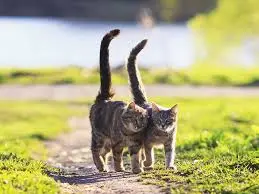
A cat walking with its tail held upright is often showing a relaxed or confident posture, particularly when the body also appears loose and comfortable.
You may see your cat walk toward you with:
- Tail raised
- Ears in a neutral position
- Relaxed body
- Slow, comfortable movement
This can be part of a friendly social interaction.
For example, your cat may notice you entering the room and walk toward you with its tail upright before rubbing against your legs.
However, tail position should always be interpreted with the rest of your cat’s body language.
A tail held upright is not the only sign of a relaxed cat.
Look at the complete picture.
A cat with an upright tail and relaxed body may be communicating differently from a cat whose tail is puffed, stiff, or rapidly moving.
Why Does My Cat Walk Toward Me?
There can be many reasons your cat walks toward you.
Your cat may want:
- Attention
- Food
- Play
- Comfort
- Interaction
- Access to another room
Sometimes your cat may simply be interested in what you are doing.
For example, you stand up from the sofa and walk toward the kitchen.
Your cat immediately follows.
This does not always mean it wants food.
Your movement may simply have attracted its attention.
Look at what your cat does after approaching you.
Walks Toward You and Rubs Against Your Legs
Your cat may be starting a social interaction.
Walks Toward You and Looks at Its Food Bowl
Food may be the reason.
Walks Toward You and Brings a Toy
Your cat may want to play.
Walks Toward You and Then Heads Toward a Door
It may want you to open it.
Understanding walking behavior becomes easier when you watch the complete sequence rather than focusing only on the walk itself.
Why Does My Cat Walk Around My Legs?
Walking around your legs is common cat behavior.
Your cat may circle you when:
- Greeting you
- Seeking attention
- Expecting food
- Rubbing against you
- Following your movement
Cats may also rub their faces or bodies against your legs during these interactions.
This behavior can combine movement, touch, and scent-related communication.
For example, when you arrive home, your cat may walk around your legs, rub against you, and then continue following you through the house.
This can be part of a familiar greeting routine.
However, be careful when walking.
A cat moving closely around your legs can easily create a tripping hazard.
This is especially common when your cat has decided that you are walking much too slowly toward its food bowl.
Why Does My Cat Follow Me Everywhere?
Many cat owners notice that their cat seems to appear wherever they go.
You walk into the kitchen, and your cat follows.
You move to another room, and your cat appears a few minutes later.
Then you sit down, and suddenly your cat is nearby again.
This type of walking behavior can have several explanations.
Your cat may be following you because it:
- Wants attention
- Is curious about what you are doing
- Expects food
- Wants to play
- Enjoys being near you
- Has learned that following you often leads to something interesting
For example, if you usually feed your cat in the kitchen, your cat may immediately follow you whenever you walk in that direction.
Cats are good at learning routines.
Your cat may connect certain movements with specific events.
Picking up a particular object, walking toward a certain room, or getting up at a familiar time may all signal that something interesting is about to happen.
Following you can also simply be part of your cat’s social behavior.
Some cats prefer to stay close to their favorite people without necessarily wanting constant physical contact.
Why Does My Cat Pace Around the House?
Pacing means repeatedly walking around an area or moving back and forth.
Sometimes this behavior is completely normal.
Your cat may pace because it is:
- Waiting for food
- Excited about playtime
- Interested in something outside
- Waiting for you to open a door
- Exploring its environment
For example, your cat may walk back and forth near the kitchen shortly before its usual mealtime.
This can simply be part of an established routine.
However, repeated pacing that is new or unusual for your cat should be viewed in context.
Pay attention if pacing happens together with:
- Restlessness
- Confusion
- Excessive vocalization
- Hiding
- Changes in appetite
- Changes in litter box habits
- Other unusual behavior
The pacing itself does not automatically indicate a problem.
The important question is whether the behavior is new and whether other changes are happening at the same time.
Why Does My Cat Walk Slowly?
A cat walking slowly is not always a cause for concern.
Cats naturally change their speed depending on what they are doing.
Your cat may walk slowly when:
- Exploring something unfamiliar
- Stalking a toy
- Waking up from sleep
- Moving across a slippery surface
- Approaching something carefully
For example, a cat may move slowly toward a toy because it is entering a stalking posture.
This is very different from a cat that is walking slowly because it appears stiff or uncomfortable.
Look at the rest of the movement.
A healthy cat walking slowly may still appear:
- Balanced
- Coordinated
- Comfortable
- Alert
If slow walking is new and your cat also appears stiff, reluctant to move, or unable to jump normally, it is worth paying closer attention.
Why Does My Cat Walk Low to the Ground?
A cat walking close to the ground can have several meanings.
The situation matters.
A cat may lower its body when:
- Stalking a toy
- Playing
- Exploring cautiously
- Feeling uncertain
- Trying to move quietly
During play, a low walking position can be completely normal.
You may see your cat lower its body, focus intensely on a toy, and slowly move forward before suddenly pouncing.
This is part of natural predatory behavior.
However, a low body position can also appear when a cat feels uncomfortable or frightened.
Look at the rest of the body language.
A playful cat may have focused eyes and controlled movements.
A frightened cat may also show:
- Flattened ears
- A tense body
- A tucked or lowered tail
- Attempts to hide
The same low walking position can have different meanings depending on the complete situation.
Why Does My Cat Walk Sideways?
A sideways walk can sometimes look strange, especially when a cat suddenly turns its body while moving.
In playful situations, cats may arch their backs, turn sideways, and make exaggerated movements.
You may notice this during:
- Play
- Excitement
- Interactions with another cat
- Sudden bursts of energy
A kitten may perform an exaggerated sideways walk while playing with a toy.
The movement can look dramatic but may simply be part of playful behavior.
However, persistent sideways movement, loss of coordination, stumbling, or difficulty walking normally is different.
If your cat suddenly appears unable to walk in a straight line, contact a veterinarian.
Healthy Cat Walk vs. Unusual Cat Gait
A healthy cat walk usually appears smooth and coordinated.
Your cat should generally be able to:
- Put weight on all four legs
- Walk without obvious pain
- Maintain balance
- Turn comfortably
- Change direction
- Move at different speeds when needed
An unusual cat gait may look different from your cat’s normal movement pattern.
Possible changes include:
- Limping
- Stiffness
- Wobbling
- Dragging a leg
- Walking unevenly
- Difficulty standing
- Difficulty jumping
- Suddenly moving much less
It is important not to diagnose the cause based only on the way your cat walks.
Different problems can affect movement in different ways.
The safest approach is to notice changes early and seek veterinary advice when the change is persistent, sudden, or accompanied by other symptoms.
Why Is My Cat Limping?
Limping means your cat is not placing weight normally on one or more legs.
The limp may be:
- Mild
- Occasional
- Constant
- Sudden
- Gradual
A cat may limp after an injury, but there are many possible causes of abnormal movement.
Do not assume that a limp will resolve on its own.
Pay attention to whether your cat:
- Refuses to place weight on the leg
- Cries when the area is touched
- Has visible swelling
- Hides more than usual
- Avoids walking or jumping
If your cat suddenly cannot use a leg or appears to be in significant pain, veterinary care should be sought promptly.
Avoid forcing your cat to walk to “test” the leg.
Allow the cat to rest and follow professional advice.
Why Is My Cat Walking Stiffly?
A stiff cat gait can be more noticeable after your cat has been resting.
Your cat may appear slow to stand up or move with shorter, less flexible steps.
Occasional temporary stiffness can sometimes happen, but persistent stiffness or a noticeable change in movement should not be ignored.
You may also notice your cat:
- Hesitating before jumping
- Choosing lower surfaces
- Moving more slowly
- Avoiding stairs
- Spending more time resting
These changes can be especially important in older cats.
Cats are often good at hiding discomfort, so changes in normal daily movement can provide useful information.
If stiffness continues or affects your cat’s normal activities, speak with a veterinarian.
Why Is My Cat Wobbling or Losing Balance?
Occasional clumsiness can happen.
A cat may slip on a smooth floor or misjudge a jump during an energetic play session.
Persistent wobbling is different.
A cat that repeatedly:
- Stumbles
- Falls
- Tilts its body
- Has difficulty walking straight
- Appears unable to maintain balance
should be evaluated by a veterinarian.
Sudden loss of balance can be especially concerning.
Keep your cat in a safe area where it cannot fall from furniture or stairs while arranging veterinary care.
Do not assume persistent wobbling is simply part of your cat’s personality.
Why Does My Cat Walk With an Arched Back?
An arched back can mean different things depending on your cat’s overall posture.
During play, a cat may arch its back dramatically.
You may see this in the classic playful “Halloween cat” position.
The cat may also:
- Turn sideways
- Puff its fur
- Hop or jump
- Make exaggerated movements
This can occur during excitement or play.
However, an arched back combined with stiffness, reluctance to move, hiding, or signs of pain is different.
If your cat consistently walks with an unusual posture and appears uncomfortable, veterinary advice is recommended.
Again, context matters.
A playful arch that lasts a few seconds is very different from a persistent change in posture.
Why Is My Cat Dragging a Leg?
Dragging a leg is not considered part of normal cat walking.
A cat may drag a leg because of an injury or another condition affecting movement or nerve function.
If your cat is dragging a leg, especially if the change appeared suddenly, contact a veterinarian promptly.
Do not:
- Force the cat to walk
- Pull on the leg
- Attempt to straighten the limb
- Give human pain medication
Keep your cat calm and limit unnecessary movement while seeking professional advice.
Changes in Senior Cat Walking
Older cats may naturally become less active, but significant changes in movement should not simply be accepted as “old age.”
You may notice a senior cat:
- Walking more slowly
- Taking longer to stand up
- Jumping less often
- Avoiding high surfaces
- Appearing stiff after resting
These changes can affect quality of life.
You can make the home easier to navigate by providing:
- Comfortable resting areas
- Easy access to food and water
- Lower-entry litter boxes
- Steps or ramps where appropriate
- Non-slip walking surfaces
If your older cat develops a new or worsening change in its walking behavior, discuss it with a veterinarian.
Understanding your cat’s normal gait makes it easier to notice when something has changed.
Can You Walk a Cat on a Leash?
Yes, some cats can learn to walk outdoors using a properly fitted harness and leash.
However, not every cat will enjoy it.
This is important to understand before starting leash training.
Unlike dogs, cats do not usually need outdoor walks as part of their basic daily care. A cat may live a happy and active life indoors when it has enough opportunities for play, climbing, scratching, and exploration.
For some cats, supervised outdoor exploration can be enjoyable.
For others, being taken outside on a leash may be stressful.
A good approach is to let your cat’s personality guide the process.
Do All Cats Enjoy Walking Outside?
No.
Some cats may enjoy exploring outdoors slowly and safely.
Others may feel uncomfortable, frightened, or overwhelmed.
A cat may dislike leash walking because of:
- Unfamiliar sounds
- Cars
- Dogs
- Other people
- New smells
- Sudden movements
- An unfamiliar environment
For example, one cat may happily investigate grass, smell plants, and slowly explore the garden.
Another may immediately crouch, try to hide, or struggle to return indoors.
These cats have different comfort levels.
You should never force a frightened cat to continue walking outside.
The goal of cat walking on a leash should be safe exploration, not making your cat behave like a dog.
Blue Cross emphasizes that outdoor experiences should suit the individual cat and that some cats may find being outside on a lead stressful.
Harness vs. Collar for Walking a Cat
If you plan to walk your cat outdoors, use a properly designed cat harness rather than attaching a leash directly to a regular collar.
A collar is not designed to distribute the pressure needed for leash walking.
Pulling against a collar may place pressure around the neck.
A well-fitted harness is designed to secure around the cat’s body.
The harness should:
- Fit securely
- Allow comfortable movement
- Not be excessively loose
- Not restrict breathing or normal movement
- Be designed specifically for cats
Cats can be surprisingly skilled at escaping from poorly fitted equipment.
Before going outdoors, make sure your cat cannot easily slip out of the harness.
A good fit should be checked carefully every time.
How to Introduce Your Cat to a Harness
Do not immediately put a harness on your cat and take it outside.
For most cats, this process should happen gradually.
Step 1: Let Your Cat See and Smell the Harness
Place the harness near your cat in a calm indoor environment.
Allow your cat to investigate it voluntarily.
You can create a positive association by offering a favorite treat or gentle praise when your cat remains relaxed near it.
Do not chase your cat with the harness.
The goal is to make the object feel familiar rather than frightening.
Step 2: Briefly Put the Harness On
Once your cat appears comfortable with the harness, try placing it gently on the cat for a short period.
Do this indoors.
Some cats may freeze, crouch, or walk awkwardly when wearing a harness for the first time.
This does not necessarily mean they will never accept it.
Give your cat time to adjust.
If your cat appears extremely distressed, remove the harness and try again later rather than forcing the process.
Step 3: Allow Your Cat to Move Indoors
Once your cat can comfortably wear the harness, allow it to walk around inside.
Observe how your cat moves.
Your cat should still be able to:
- Walk comfortably
- Turn around
- Sit
- Lie down
- Use the litter box if needed
Do not move to the next stage until your cat appears comfortable.
This stage may take one session for some cats and much longer for others.
How to Introduce the Leash
After your cat is comfortable wearing the harness, introduce the leash indoors.
Attach it to the harness and allow your cat to become familiar with the feeling.
Do not pull your cat forward.
Instead, allow the cat to move naturally.
Hold the leash loosely and follow your cat’s direction.
The idea is to teach your cat that the leash does not automatically mean pressure or restraint.
A cat walk should not look like a person dragging a cat down a path.
Your cat should have the opportunity to stop, investigate, and choose where it wants to go within the safe area.
Your Cat’s First Outdoor Walk
The first outdoor experience should be short and calm.
Choose an area that is:
- Quiet
- Familiar if possible
- Away from heavy traffic
- Free from loose dogs
- As safe and controlled as possible
Start by allowing your cat to observe.
Your cat may simply sit and look around.
That is perfectly fine.
There is no requirement to cover a certain distance.
For your cat, the first outdoor “walk” may involve spending several minutes smelling one patch of grass.
This is still exploration.
Allow your cat to move at its own pace.
If your cat wants to return indoors, respect that decision.
Let Your Cat Choose the Pace
One of the biggest differences between walking a cat and walking a dog is the pace.
Dogs may be trained to follow a person along a route.
Cats are often more interested in investigating their surroundings.
Your cat may:
- Stop frequently
- Smell the ground
- Sit and observe
- Change direction
- Explore one small area for several minutes
This is normal.
A successful cat walk is not measured by distance.
It is measured by whether your cat remains comfortable and safe.
Imagine taking your cat outside and expecting a ten-minute walk around the neighborhood.
Your cat may have a completely different plan.
It may spend eight minutes studying one leaf and two minutes deciding whether the grass is suspicious.
That is still very normal cat behavior.
Signs Your Cat Is Comfortable During a Walk
A relaxed cat may:
- Move voluntarily
- Explore the environment
- Show curiosity
- Pause to investigate
- Maintain normal body movement
- Respond to familiar sounds or your voice
Your cat does not need to constantly move to enjoy outdoor exploration.
Some cats prefer to sit quietly and observe.
Pay attention to your cat’s individual comfort level.
Signs Your Cat Is Stressed During a Walk
Stop the outdoor activity if your cat appears frightened or overwhelmed.
Possible signs include:
- Crouching low and refusing to move
- Flattened ears
- Attempting to escape
- Panicked struggling
- Excessive vocalization
- Trembling
- Trying to hide
- Repeated attempts to return indoors
Do not punish your cat for being afraid.
Calmly move the cat back to a safe environment.
If your cat repeatedly shows strong stress during outdoor leash training, leash walking may simply not be suitable for that individual cat.
When Should You Avoid Walking Your Cat Outside?
Leash walking may not be appropriate when:
- Your cat is extremely fearful
- Your cat panics when outside
- The environment is unsafe
- There are uncontrolled dogs nearby
- Traffic is heavy
- Weather conditions are extreme
- Your cat is ill or recovering from an injury
Outdoor safety should always come before curiosity.
If you are unsure whether leash walking is appropriate for your cat, speak with your veterinarian.
Alternatives to Walking Your Cat Outside
Your cat does not have to walk outdoors to enjoy enrichment.
There are many ways to provide interesting experiences indoors.
Consider:
- Interactive toys
- Puzzle feeders
- Cat trees
- Scratching posts
- Safe climbing areas
- Window perches
- Regular play sessions
- Rotating toys to create novelty
A secure outdoor enclosure, sometimes called a catio, may also provide supervised outdoor experiences without requiring leash walking.
The best option depends on your cat’s personality, environment, and safety needs.
When Should You Contact a Veterinarian About Your Cat’s Walking?
Changes in cat walking can sometimes indicate discomfort or a medical problem.
Contact a veterinarian if your cat shows:
- Sudden limping
- Dragging a leg
- Persistent stiffness
- Repeated wobbling
- Difficulty standing
- Loss of balance
- Sudden weakness
- Refusal to walk
- Signs of pain while moving
A sudden or significant change in your cat’s normal cat gait deserves prompt attention.
Do not give your cat human pain medication unless a veterinarian specifically instructs you to do so.
Some medications that are safe for people can be dangerous for cats.
Common Myths About Cat Walking
Myth: All Cats Need Daily Outdoor Walks
False.
Unlike dogs, cats do not generally require leash walks as part of their basic daily routine.
Many indoor cats can live fulfilling lives with appropriate enrichment, play, climbing, and environmental stimulation.
Myth: You Can Walk a Cat Using Any Collar
False.
A regular collar is not designed for leash walking.
A properly fitted harness designed for cats is the safer choice for supervised walking.
Myth: A Cat Should Follow You Like a Dog
Not necessarily.
Cats often prefer to explore at their own pace.
Stopping, smelling, observing, and changing direction can all be part of a normal outdoor experience.
Myth: If My Cat Walks Slowly, Something Must Be Wrong
Not always.
A cat may walk slowly while exploring, stalking, waking up, or moving cautiously.
A sudden or persistent change accompanied by stiffness, pain, or difficulty moving is more concerning.
Myth: Older Cats Naturally Have to Walk Stiffly
Not necessarily.
Changes in movement should not automatically be dismissed because a cat is older.
Persistent stiffness or reduced mobility should be discussed with a veterinarian.
Frequently Asked Questions About Cat Walking
What does a healthy cat walk look like?
A healthy cat walk is generally smooth, balanced, and coordinated. Your cat should be able to place weight on all legs and move without obvious pain, persistent limping, or loss of balance.
What is a cat gait?
A cat gait is the pattern of movement a cat uses while walking or moving. A normal gait should generally appear controlled and coordinated.
Why does my cat walk so quietly?
Cats have soft paw pads, walk on their toes, and have flexible bodies that allow controlled and quiet movement.
Why does my cat follow me everywhere?
Your cat may be curious, want attention, expect food, enjoy your company, or have learned that following you leads to something interesting.
Why is my cat walking slowly?
Slow walking can be normal when a cat is exploring, stalking, waking up, or moving cautiously. A sudden change combined with stiffness or discomfort should be evaluated.
Can you walk a cat on a leash?
Yes, some cats can learn to explore outdoors using a properly fitted cat harness and leash. However, not every cat enjoys or tolerates leash walking.
Should I walk my cat with a collar?
No. For supervised leash walking, use a properly fitted harness designed for cats rather than attaching a leash directly to a regular collar.
How long should a cat walk be?
There is no required distance or time. Let your cat’s comfort level guide the experience. Some cats may explore for only a few minutes, while others may enjoy longer sessions.
What should I do if my cat is wobbling while walking?
Persistent or sudden wobbling, stumbling, or loss of balance is not normal and should be discussed with a veterinarian.
Final Thoughts
Cat walking can tell you a lot about your cat’s normal movement and behavior.
A healthy cat gait is usually smooth, balanced, and comfortable. Cats may walk quietly, follow their owners, circle around legs, move slowly while exploring, or crouch low when playing.
The meaning of a particular walking behavior depends on the situation.
The most important thing is to know what is normal for your own cat.
A naturally slow and careful cat may have a different walking style from an energetic young cat.
What matters most is a noticeable change.
If your cat suddenly begins limping, wobbling, dragging a leg, walking stiffly, or avoiding movement, veterinary advice is important.
For cats that enjoy outdoor exploration, leash walking can also be an option. The process should be gradual, safe, and guided by your cat’s comfort.
Remember: a good cat walk is not about how far your cat travels.
Sometimes, according to your cat, standing still and carefully inspecting one piece of grass is the entire adventure.