





Cat Trilling: What Does It Really Mean?
Have you ever heard your cat make a short, rolling sound that is not quite a meow and not quite a purr?
It may sound like:
“Mrrrp!”
“Brrrp!”
This sound is commonly known as a cat trill.
Many cat owners hear this sound when their cat sees them, walks toward them, wants attention, or appears excited about something.
This naturally leads to the question:
Why do cats trill?
In many situations, cat trilling is a form of communication. Cats may trill to greet someone, get attention, communicate with other cats, guide kittens, or express interest and excitement.
Cats.com describes trilling as a short, high-pitched vocal sound that cats may use in social communication with people and other cats.
The meaning of a trill can depend on the situation.
For example, imagine your cat sees you enter the room.
It raises its head, walks toward you, and makes a cheerful little “mrrrp” sound.
That trill may be part of a greeting.
Now imagine your cat makes the same sound and then walks toward the kitchen while repeatedly looking back at you.
In that situation, your cat may be trying to get your attention or encourage you to follow.
The sound may be similar.
The meaning can change depending on what happens around it.
Understanding cat trilling, body language, and context can help you better understand what your cat may be trying to communicate.
What Is Cat Trilling?
A cat trill is a short vocal sound that often has a rolling, musical quality.
It is usually different from a standard meow.
A meow may be longer and more open.
A trill often sounds softer and may be produced with the cat’s mouth mostly closed.
People describe cat trilling in different ways, including:
- Mrrp
- Brrp
- Prup
- Rrrp
Of course, every cat sounds different.
Some cats make a very quiet trill that is barely noticeable.
Others make a loud and enthusiastic sound when they see their favorite person.
Cats.com explains that trilling is a distinctive feline vocalization that is often used as a social form of communication.
Unlike a warning sound such as hissing or growling, a trill is commonly associated with friendly, social, or attention-seeking interactions.
However, the sound alone does not tell the complete story.
To understand cat trilling, look at what your cat is doing before and after making the sound.
Stretching is a normal part of feline behavior, and our Cat Stretching guide explains why cats stretch, what different stretches mean, and when unusual stretching may need attention.
What Does a Cat Trill Sound Like?
A cat trill usually has a short, rolling sound.
It may sound like a mixture of:
- A soft meow
- A purr-like vibration
- A chirp
This is one reason why people sometimes confuse cat trilling with cat chirping.
The sound can also vary depending on the individual cat.
One cat may make a tiny:
“Mrrp.”
Another may make a longer:
“Brrrrrp!”
You may also notice that your cat uses different versions of the trill in different situations.
For example, a quiet trill when approaching you may sound different from an excited trill before mealtime.
Cats can have their own vocal styles.
Just as people have different voices, cats can have different ways of communicating.
Why Do Cats Trill?
There is no single answer to why do cats trill.
Cats may use this sound for several reasons.
Common situations include:
- Greeting a person
- Getting attention
- Communicating with another cat
- Communicating with kittens
- Showing interest or excitement
- Encouraging someone to follow
- Responding to interaction
The surrounding situation provides the biggest clue.
For example:
Cat Trill + Walking Toward You
Your cat may be greeting you.
Cat Trill + Walking Away + Looking Back
Your cat may be trying to lead you somewhere.
Cat Trill + Rubbing Against Your Legs
Your cat may be starting a friendly social interaction.
Cat Trill + Looking Toward a Food Bowl
Your cat may be trying to get your attention.
This is why you should not try to give every trill exactly one meaning.
Instead, think of the cat trill as part of a larger conversation.
Your cat uses sound, body position, movement, facial expressions, and behavior together.
Where Does Cat Trilling Come From?
Cat trilling may have roots in communication between mother cats and their kittens.
Mother cats can use trilling sounds when communicating with and guiding their young.
The sound may help encourage kittens to pay attention or follow.
As cats grow older, trilling can continue as part of their social communication.
An adult cat may trill at:
- Its owner
- Another familiar cat
- A kitten
- Someone it wants to follow
Cats.com notes that trilling is associated with communication between mother cats and kittens and may also continue into adult social interactions.
This helps explain why trilling can sometimes sound like a friendly:
“Come here.”
or:
“Follow me.”
Of course, your cat is not necessarily giving you instructions every time it makes a trill.
Sometimes it may simply be acknowledging your presence.
Why Do Mother Cats Trill at Kittens?
A mother cat may use vocal sounds, including trills, to communicate with her kittens.
The kittens are highly dependent on their mother during early life.
They need to learn where to go, when to follow, and how to respond to her behavior.
A trill can help draw their attention.
For example, a mother cat may move away and vocalize.
The kittens may then follow her.
This type of communication can help maintain contact between the mother and her young.
The exact vocal sounds can vary between cats, but trilling is commonly associated with maternal communication and guidance.
This connection may also help explain why adult cats sometimes use a cat trill when they appear to want a person or another animal to follow them.
Cat Trill vs. Meow: What Is the Difference?
A cat trill and a meow are both forms of vocal communication, but they usually sound different.
A Cat Trill
A trill is often:
- Short
- Rolling
- Musical
- Soft
- Produced with the mouth mostly closed
A Meow
A meow can be:
- Short or long
- High or low
- Soft or loud
- Used in many different situations
A cat may meow when it wants food, attention, access to a room, or interaction.
A trill is often more closely connected with social communication, greeting, acknowledgment, or encouraging someone to pay attention.
However, cats do not follow a strict communication dictionary.
One cat may trill frequently.
Another may prefer meowing.
Some cats may use both sounds throughout the day.
The important thing is to learn your own cat’s communication style.
Cat Trill vs. Purr
Cat trilling and purring are also different sounds.
A purr is usually a more continuous vibration.
A cat may purr while:
- Resting
- Being petted
- Sitting beside you
- Nursing kittens
A cat trill is usually shorter and more distinct.
Your cat may trill once and then become quiet.
It may also trill several times while walking toward you.
A cat can potentially use more than one vocal behavior during the same interaction.
For example, your cat may trill when it sees you and begin purring when you start gently petting it.
The sounds can have different functions within the same social interaction.
Cat Trill vs. Cat Chirping
Cat trilling and cat chirping are often confused because both can sound short and high-pitched.
However, they can occur in different situations.
A cat trill often has a rolling or vibrating quality.
It is commonly heard during social interactions, such as:
- Greeting you
- Getting your attention
- Walking toward you
- Communicating with another cat
A cat chirping sound may be sharper or more bird-like.
You may hear it when your cat is:
- Watching birds
- Looking at squirrels
- Focusing on moving prey
- Becoming excited during play
There can be overlap between these sounds.
Different people may even describe the same sound differently.
The best way to understand your cat’s vocalization is to look at the situation.
A sound made while your cat is rubbing against your legs may have a different meaning from a sound made while your cat is staring intensely at a bird outside the window.
Is Cat Trilling Usually a Positive Sound?
In many everyday situations, yes.
A cat trill is often heard during friendly or relaxed social interactions.
You may hear it when:
- You come home
- Your cat approaches you
- Your cat wants attention
- Your cat is interested in something
- Your cat interacts with a familiar animal
TrustedHousesitters describes trilling as a common form of friendly communication that may occur when cats are feeling socially engaged or content.
However, no single sound should be interpreted completely on its own.
Always look at your cat’s body language.
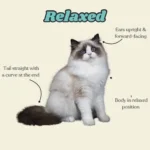
A relaxed cat may also show:
- Neutral or forward-facing ears
- A loose body
- A relaxed tail
- Slow movements
- Rubbing behavior
- Interest in approaching you
These signals can help support the idea that the trill is part of a comfortable social interaction.
Why Does My Cat Trill When It Sees Me?
This is one of the most common situations where owners notice cat trilling.
You enter the room.
Your cat looks at you.
Then:
“Mrrp!”
Your cat may be using the trill to acknowledge your presence.
Possible meanings include:
- Hello
- I see you
- Come here
- Pay attention to me
- I am ready to interact
For example, imagine your cat has been resting near a window.
You walk into the room.
Your cat stands up, stretches, looks directly at you, and makes a short trill before walking toward you.
The trill may be part of a greeting and the beginning of a social interaction.
Woman’s World and other cat behavior resources describe greeting and attention-seeking as common situations in which cats may trill.
Your cat’s behavior after the sound gives you the best clue.
If it walks toward you, rubs against you, or follows you, the trill may be part of a friendly interaction.
If it trills and immediately walks toward another location while looking back, it may want you to follow.
The fun part of living with a cat is learning its own unique communication style.
Is Cat Trilling a Greeting?
In many situations, yes.
A cat trill can be part of the way a cat acknowledges or greets someone familiar.
You may notice this when:
- You enter the room
- You come home
- Your cat wakes up and sees you
- Your cat approaches you
- You speak to your cat
For example, you might walk into the kitchen and hear:
“Mrrp!”
Your cat then walks toward you with a relaxed body and upright tail.
In this situation, cat trilling may be part of a friendly greeting.
Cats do not always greet people with the same behavior.
One cat may run toward you and meow.
Another may quietly blink at you.
Another may make a cheerful trill.
The important thing is to observe your own cat’s usual communication pattern.
If the trill regularly happens when you appear and is followed by friendly body language, it may have become part of your cat’s personal greeting routine.
Why Does My Cat Trill When I Pet It?
Some cats make a cat trill when they are enjoying social interaction.
You may gently pet your cat, and it responds with a short:
“Brrrp!”
Possible reasons include:
- Your cat is responding to your interaction
- It wants more attention
- It feels socially engaged
- It is communicating during a pleasant moment
However, every cat has different preferences.
A trill while being petted may be positive when your cat also appears relaxed.
Look for signals such as:
- A loose body
- Neutral ears
- Slow movements
- Remaining close to you
- Purring
- Rubbing against your hand
But remember that cats can change their minds.
A cat may initially enjoy being petted and later become overstimulated.
If your cat starts moving away, flicking its tail repeatedly, flattening its ears, or becoming tense, stop the interaction.
The full body language matters more than the sound alone.
Why Does My Cat Trill and Rub Against Me?
This combination often happens during a social interaction.
Your cat may:
- Walk toward you.
- Make a short trill.
- Rub its face or body against your legs.
- Remain nearby.
This sequence can be part of friendly feline behavior.
Cats use body language and scent-related communication during social interactions.
The trill may help get your attention, while rubbing can be another form of communication.
For example, your cat may trill at you from across the room and then immediately walk over to rub against your legs.
The message may be something similar to:
“Hello. I am here.”
Of course, the exact meaning can vary.
Your cat may also want food, play, or attention.
Watch what it does next.
If your cat walks toward the food bowl after rubbing against you, it may have another request in mind.
Why Does My Cat Trill and Lead Me Somewhere?
Have you ever had your cat make a cat trill, walk away, and then look back at you?
It can feel as though your cat is saying:
“Come with me.”
And sometimes, that may be exactly what it is trying to communicate.
Cats may use trilling to get attention and encourage another individual to follow.
This behavior may have connections to the way mother cats communicate with kittens.
Your cat may trill and lead you toward:
- Its food bowl
- A closed door
- A favorite toy
- A window
- Another room
For example:
Your cat looks at you and trills.
It walks toward the kitchen.
Then it stops and looks back.
When you follow, it walks directly to its food bowl.
The trill was likely part of an attempt to get your attention and guide you toward something important from your cat’s perspective.
And, naturally, according to your cat, an empty food bowl is often a very serious emergency.
Cat Trilling for Food or Attention
Cats quickly learn how to communicate with the people around them.
If your cat has learned that trilling gets your attention, it may use this sound when it wants something.
Your cat may trill when it wants:
- Food
- A treat
- Playtime
- A door opened
- You to follow it
- General attention
The surrounding behavior provides the clue.
For example:
Trill + Walking to Food Bowl
Your cat may be interested in eating.
Trill + Bringing You a Toy
Your cat may want to play.
Trill + Sitting Near a Closed Door
Your cat may want access to another room.
Cats can learn which behaviors get a response from their owners.
If you usually respond when your cat trills, it may become part of your normal communication routine together.
Why Do Cats Trill at Other Cats?
Cats do not use trilling only with humans.
They may also make this sound when interacting with other cats.
A cat may trill at:
- A familiar cat
- Another cat in the household
- A kitten
- A cat it wants to approach
The trill can function as part of social communication.
For example, one cat may approach another while making a short vocal sound.
The other cat may respond by approaching, remaining nearby, or making its own vocalization.
However, not every interaction between cats is friendly.
Always look at the body language.
A relaxed social interaction may involve:
- Loose body posture
- Neutral ears
- Calm movement
- Slow blinking
- Resting near one another
A tense interaction may include:
- Flattened ears
- A stiff body
- Growling
- Hissing
- Swatting
The same cat that trills during a friendly interaction may hiss if it later feels threatened.
Context changes everything.
Cat Trilling During Play and Excitement
Some cats become more vocal when they are excited.
You may hear a cat trill before or during:
- Playtime
- Chasing a toy
- Exploring something new
- Watching movement
- Anticipating an activity
For example, you pick up your cat’s favorite toy.
Your cat immediately becomes alert, looks at the toy, and makes a short trill before beginning to play.
The sound may be part of its excitement.
Not every cat vocalizes during play.
Some cats play silently.
Others may trill, chirp, meow, or make several different sounds.
Individual personality can make a big difference.
Why Do Cats Chirp at Birds?
Cat chirping is another fascinating feline vocalization.
You may hear it when your cat sits at the window watching:
- Birds
- Squirrels
- Insects
- Other small moving animals
The sound can be quick and repetitive.
It may be accompanied by intense staring, body tension, or tail movement.
This type of vocalization is often associated with a cat’s interest or excitement toward potential prey.
For example, your cat may sit quietly at the window.
A bird lands nearby.
Suddenly, your cat starts making repeated chirping sounds while watching every movement.
This is different from a simple greeting trill.
The situation provides an important clue.
A trill directed at you may be social communication.
A cat chirping sound while watching birds may be connected with excitement and prey-focused behavior.
Cat Chirping vs. Cat Chattering
Cat chirping and chattering are also often confused.
A cat chirp may sound short and bird-like.
It can occur when a cat is focused on something interesting or exciting.
Cat chattering often sounds more rapid or repetitive.
You may notice the cat’s jaw or teeth moving while it watches prey through a window.
For example, your cat may stare at a bird and make:
“Ch-ch-ch-ch.”
The exact explanation for prey-related chattering is not fully established.
However, it is commonly observed when cats are highly focused on animals they cannot easily reach.
Different cats may also produce different versions of chirping and chattering.
One cat may be very vocal at the window.
Another may watch birds silently.
Both can be completely normal.
Why Does My Cat Trill So Much?
Some cats are naturally more vocal than others.
If your cat frequently uses cat trilling, this may simply be part of its personality.
Your cat may trill:
- When greeting you
- Before meals
- During play
- When following you
- When asking you to follow it
- During relaxed social interactions
The key question is whether this behavior is normal for your individual cat.
For example, a cat that has trilled frequently since it was young may simply be naturally talkative.
But if a normally quiet cat suddenly begins vocalizing much more than usual, pay attention to other changes.
Consider:
- Has your cat’s routine changed?
- Is there a new pet or person?
- Has your cat’s appetite changed?
- Does your cat seem restless?
- Is your cat using the litter box normally?
- Does your cat appear uncomfortable?
A sudden change in vocal behavior can sometimes be connected with stress, environmental changes, or medical issues.
The change itself is often more important than whether trilling happens frequently.
Why Does My Cat Trill but Rarely Meow?
Cats have individual communication styles.
One cat may meow constantly.
Another may rarely meow but frequently make a cat trill.
This does not automatically mean anything is wrong.
Your cat may simply prefer one vocal sound over another.
Some cats also communicate more through:
- Body language
- Tail position
- Eye contact
- Rubbing
- Following you
- Sitting near what they want
Think of your cat’s vocalizations as part of its personal communication style.
Over time, you may begin to recognize patterns.
Perhaps your cat uses one particular trill before meals and another when greeting you.
Learning these small differences can make it easier to understand what your cat wants.
Why Doesn’t My Cat Trill?
Not every cat makes trilling sounds.
Some cats communicate mostly through meowing.
Others are generally quiet and rely more on body language, such as:
- Tail position
- Eye contact
- Rubbing
- Following you
- Sitting near what they want
- Touching you with a paw
So, if your cat rarely makes a cat trill, it does not automatically mean anything is wrong.
Cats have different personalities and communication styles.
For example, one cat may greet every family member with a loud “mrrrp!”
Another may simply walk over, raise its tail, and rub against their legs.
Both cats may be expressing friendly social behavior in different ways.
The important thing is to understand what is normal for your own cat.
Does Every Cat Trill?
No.
Cat trilling is a normal feline vocalization, but it is not something every cat does regularly.
Some cats may:
- Trill often
- Trill only occasionally
- Trill during specific situations
- Prefer meowing
- Communicate mostly through body language
- Remain generally quiet
You may even notice that a cat becomes more vocal over time.
For example, a cat may rarely trill as a kitten but begin using the sound more frequently after becoming comfortable in its home.
Communication patterns can develop through experience and interaction.
A cat may also learn that a particular sound gets a response from its owner.
If your cat trills and you immediately look at it, speak to it, or follow it, the cat may continue using that sound as part of your shared communication routine.
Does Breed Affect Cat Trilling?
Individual personality is usually more important than breed when it comes to how often a cat uses different sounds.
However, some cats may generally be more vocal than others.
Breed characteristics can sometimes influence overall vocal tendencies, but you should not expect every cat from a particular breed to communicate in exactly the same way.
Two cats from the same breed can have completely different personalities.
For example:
- One may constantly meow.
- One may frequently trill.
- One may chirp during play.
- One may be almost silent.
Your cat’s environment, personality, experiences, and relationship with the people around it can all influence how it communicates.
So, while breed may play some role in general vocal tendencies, it cannot predict whether a particular cat will frequently make a cat trill.
Is Excessive Cat Trilling Normal?
A cat that trills frequently may simply be naturally vocal.
If your cat has always been chatty and otherwise appears healthy and comfortable, frequent cat trilling may be part of its normal personality.
For example, your cat may trill:
- When you wake up
- When you enter a room
- Before meals
- During play
- When following you
- When asking you to follow it
This can be completely normal.
The more important question is:
Has your cat’s vocal behavior suddenly changed?
A normally quiet cat that suddenly becomes much more vocal may be responding to something different in its environment or physical condition.
Look for other changes as well.
These may include:
- Changes in appetite
- Changes in activity
- Restlessness
- Hiding
- Changes in litter box habits
- Changes in sleep
- Signs of discomfort
A sudden change deserves more attention than a cat simply being naturally talkative.
When Can Changes in Cat Vocalization Need Veterinary Attention?
A cat trill is usually not a reason to worry.
However, sudden or unusual changes in vocalization can sometimes occur alongside stress, discomfort, or illness.
Consider contacting a veterinarian if your cat suddenly begins vocalizing differently and also shows signs such as:
- Reduced appetite
- Vomiting
- Weakness
- Hiding
- Difficulty moving
- Changes in litter box habits
- Signs of pain
- Confusion or disorientation
- Significant behavior changes
The concern is not simply that your cat is trilling.
The concern is a noticeable change from your cat’s normal behavior combined with other symptoms.
For example, if your cat has always greeted you with trills, that is probably part of its normal communication style.
But if a normally quiet cat suddenly becomes restless, repeatedly vocalizes, and stops eating, the overall change should be taken seriously.
A veterinarian can help determine whether a medical issue may be contributing to unusual behavior or vocalization.
How Should You Respond When Your Cat Trills?
You do not need to respond to every cat trill in exactly the same way.
Instead, look at what your cat is doing.
For example:
Your Cat Trills and Walks Toward You
You can calmly greet your cat or interact if it appears interested.
Your Cat Trills and Walks Away
Watch where it goes.
It may want you to follow.
Your Cat Trills Near Its Food Bowl
Check whether it is mealtime or whether your cat is trying to get your attention.
Your Cat Trills and Brings You a Toy
Your cat may be interested in playing.
Your Cat Trills While Rubbing Against You
This may be part of a friendly social interaction.
The best response depends on the situation.
Over time, you may begin to understand your cat’s personal “language.”
You may even notice that different trills seem to appear in different situations.
Can You Talk Back When Your Cat Trills?
Absolutely.
Talking to your cat will not make you strange.
Well, at least not in the opinion of most cat owners.
If your cat regularly trills when you enter a room, you can calmly respond with your voice.
Some cats may respond to familiar voices or continue the interaction.
You do not need to imitate the exact trill.
Simply speaking gently can become part of your normal communication routine.
For example:
Your cat says:
“Mrrrp!”
You say:
“Hello! What are you doing?”
Your cat may then walk toward you, trill again, or completely ignore you and head toward the kitchen.
That last option is also a very normal cat response.
Should You Try to Make Your Cat Trill?
No.
There is no need to force your cat to make a particular sound.
If your cat is naturally quiet, that may simply be its personality.
Trying to repeatedly provoke vocalization may cause unnecessary stress.
Instead, allow your cat to communicate naturally.
You can encourage positive interaction through:
- Gentle play
- Calm conversation
- Respecting your cat’s personal space
- Allowing your cat to approach voluntarily
- Maintaining a comfortable environment
Your cat may begin trilling more as it becomes comfortable.
Or it may continue communicating in completely different ways.
Both are perfectly normal.
Common Myths About Cat Trilling
Myth: Every Cat Trill Means “I Love You”
Not necessarily.
Trilling can occur during friendly interactions, but it may also mean:
- Hello
- Pay attention
- Follow me
- I am interested in something
- I am excited
The context matters.
Myth: A Cat That Does Not Trill Is Unhappy
False.
Some cats simply do not use trilling as part of their normal communication.
A quiet cat can still be healthy, comfortable, and socially connected.
Myth: Cat Trilling and Cat Chirping Are Exactly the Same
Not always.
These sounds can overlap, and people may describe them differently.
However, trilling is commonly associated with social communication, while cat chirping is often noticed during excitement, play, or prey-focused situations.
The context helps explain the sound.
Myth: A Trilling Cat Always Wants Food
False.
Some cats trill near food, but they may also trill when greeting you, playing, seeking attention, or encouraging you to follow them.
Myth: More Trilling Always Means a Happier Cat
Not necessarily.
Some cats are naturally vocal, while others are quiet.
A sudden increase in vocalization is more important to investigate than comparing your cat’s vocal habits with another cat’s.
Frequently Asked Questions About Cat Trilling
What does a cat trill mean?
A cat trill is usually a form of communication. Depending on the situation, it may be used as a greeting, to get attention, encourage someone to follow, or express interest and excitement.
Why does my cat trill when it sees me?
Your cat may be greeting or acknowledging you. If the trill is followed by relaxed body language, approaching, or rubbing, it may be part of a friendly social interaction.
Why does my cat trill and walk away?
Your cat may be trying to get your attention and encourage you to follow. Look at where your cat goes after making the sound.
Why does my cat trill when I pet it?
Some cats trill during enjoyable social interactions. Check the rest of your cat’s body language to make sure it remains comfortable.
Why do cats trill at other cats?
Cats can use trilling as part of social communication with familiar cats, kittens, or other animals. The surrounding body language helps show whether the interaction is relaxed or tense.
Why do cats chirp at birds?
Cat chirping often occurs when cats are intensely interested in birds, squirrels, or other moving animals. It is commonly associated with excitement and prey-focused behavior.
Is cat trilling the same as purring?
No. Purring is usually a more continuous vibrating sound, while a trill is typically short and rolling.
Why doesn’t my cat trill?
Not every cat trills. Your cat may prefer meowing or communicating through body language.
Should I worry if my cat suddenly starts trilling more?
Frequent trilling can be normal, but a sudden change in vocal behavior combined with other symptoms or behavioral changes may need veterinary attention.
Final Thoughts
Cat trilling is one of the many ways cats communicate with the world around them.
A short cat trill may mean your cat is greeting you, getting your attention, asking you to follow, responding to interaction, or expressing excitement.
The exact meaning depends on context.
Instead of focusing only on the sound, look at what your cat does next.
A trill followed by rubbing against your legs may be part of a friendly greeting.
A trill followed by walking toward the food bowl may be a request.
A trill followed by repeated glances toward another room may mean your cat wants you to come along.
And when you hear cat chirping while your cat watches birds outside the window, the sound may have a completely different context.
The more you observe your cat’s sounds, body language, and daily habits, the easier it becomes to understand its unique communication style.
In the end, your cat may never speak your language.
But with enough attention, you may become surprisingly good at understanding theirs.