


Cat Stretching: What Does It Really Mean?
Few things look more familiar to a cat owner than a long, dramatic stretch.
Your cat wakes up from a nap, pushes its front paws forward, arches its back, stretches its legs, and sometimes follows the movement with a big yawn.
You may also notice your cat stretching when you enter the room.
This can make you wonder:
Why do cats stretch so much?
In most situations, cat stretching is a completely normal behavior. Cats may stretch after resting, before moving, during social interactions, or simply because the movement feels comfortable.
Stretching can help a cat transition from rest to activity and maintain normal movement and flexibility. It may also appear as part of relaxed cat body language, especially when a cat feels comfortable in its environment.
However, the meaning can depend on the situation.
A cat stretching after waking up may simply be preparing its body to move.
A cat stretching when it sees you may be greeting you, seeking interaction, or waking from a nap.
A cat that suddenly stretches differently, appears stiff, or avoids normal movement may be showing a change worth paying attention to.
The key is to look at the complete situation rather than assuming every stretch has the same meaning for a stretching cat.
What Does Cat Stretching Mean?
There is no single meaning behind every cat stretch.
A stretch can be connected with:
- Waking up after rest
- Preparing for movement
- Maintaining flexibility
- Repositioning the body
- Relaxation and comfort
- Social interaction
- Greeting a familiar person
- Preparing for play
This is why context matters.
Imagine your cat has been sleeping on the sofa for an hour.
It wakes up, stretches its front legs forward, arches its back, and walks toward its food bowl.
The stretch is likely part of the transition from resting to moving.
Now imagine something different.
You walk into the room, and your cat looks at you, slowly stretches, walks toward you, and starts rubbing against your legs.
In that situation, the stretch may be part of a social interaction or greeting.
The movement may look similar.
The situation around it changes the possible meaning.
Veterinary sources describe cat stretching as a natural behavior that can support movement and flexibility while also appearing during relaxed or social moments.
Why Do Cats Stretch?
One major reason cats stretch is to transition their bodies between periods of rest and movement.
Cats spend a significant amount of time resting. After remaining in one position for a while, they often perform a long stretch before walking, jumping, climbing, or playing.
A typical stretch may involve:
- Extending the front legs
- Lengthening the spine
- Stretching the back legs
- Raising or moving the tail
- Spreading the toes
These movements help the cat move through its normal range of motion.
Veterinary sources commonly describe stretching as part of maintaining flexibility, mobility, coordination, and readiness for movement after periods of rest.
Think about how you might stretch after sitting in one position for a long time.
Your cat is doing something similar, although stretching is also a deeply natural part of normal feline movement.
Why Do Cats Stretch After Sleeping?
Stretching after sleeping is one of the most common forms of cat stretching.
You may notice your cat:
- Open its eyes.
- Slowly raise its front half.
- Extend its front legs.
- Arch or lengthen its back.
- Stretch its hind legs.
- Yawn.
- Begin walking or looking for something to do.
This sequence is a normal transition from rest to activity.
Research on feline behavior describes deep forward stretching as a normal behavior that can occur immediately after waking. In painful conditions, normal stretching may become altered or absent, which is one reason changes in your cat’s usual movement can be useful to notice.
Most of the time, though, a post-nap stretch simply means your cat is waking up and getting ready to move.
Cats use different body signals to communicate, and Cat Hissing is one of the clearest signs that a cat may feel threatened, stressed, or uncomfortable.
Cat Stretching to Prepare for Movement
Cats are built for quick and precise movement.
They jump onto shelves, climb cat trees, chase toys, change direction quickly, and sometimes suddenly race through the house.
Stretching can be part of preparing the body for these activities.
You may notice a stretch before your cat:
- Starts playing
- Chases a toy
- Jumps onto furniture
- Begins exploring
- Has a burst of energy
The movement helps transition the body from a resting state into activity.
Veterinary sources describe stretching before or around periods of play and movement as part of a cat’s normal behavioral pattern.
Of course, not every stretch means your cat is about to start running around the house.
Sometimes, it may stretch and then immediately return to sleep.
Cats have their own priorities.
Cat Stretching and Flexibility
Cats are naturally flexible animals.
Their bodies are designed to support climbing, jumping, turning, and rapid movement.
Regular cat stretching allows them to move different parts of the body through normal positions.
You may see your cat perform a surprisingly long stretch and wonder how its body can move that way.
A typical stretch may involve several areas at once, including:
- Shoulders
- Front legs
- Back
- Hips
- Hind legs
- Paws
Cats also have highly mobile bodies that allow them to perform movements that can look unusual or impossible from a human perspective.
This flexibility is useful in daily life.
A flexible body helps a cat:
- Jump
- Climb
- Balance
- Turn quickly
- Reach different areas while grooming
- Move through narrow spaces
Stretching is one natural part of maintaining normal movement.
Is Cat Stretching a Sign of Comfort?
Often, yes.
A relaxed stretch can suggest that your cat feels comfortable in its surroundings.
For example, a cat resting peacefully in the middle of the room may wake up, stretch slowly, and then lie back down.
The loose, unhurried movement can be part of relaxed behavior.
Veterinary sources note that smooth, balanced stretching commonly occurs when cats are comfortable and at ease, although no single stretch should be used as a complete measure of a cat’s emotional state.
This is important because stretching cat meaning depends on the complete body language.
Look at the rest of your cat’s behavior.
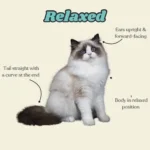
A relaxed cat may also show:
- Loose body posture
- Neutral ears
- Slow movements
- Calm facial expression
- A relaxed tail
- Interest in its surroundings
A stretch combined with these signals can suggest comfort.
But a stretch alone cannot tell you exactly what your cat is feeling.
Why Does My Cat Stretch When It Sees Me?
This is one of the most interesting forms of cat stretching.
You walk into the room, and suddenly your cat stands up and performs a long stretch.
In many cases, this is completely normal.
Possible reasons include:
- Your cat was resting when you appeared
- It is transitioning from rest to interaction
- It is greeting you
- It is preparing to play
- It feels comfortable around you
A recent veterinarian-reviewed explanation identifies communication, greeting, preparing for activity, and feeling secure as possible reasons cats stretch when they see a familiar person.
For example, imagine your cat has been sleeping on the sofa.
You enter the room.
Your cat opens its eyes, stretches, walks toward you, and rubs against your legs.
The stretch may be part of the transition from sleeping to interacting with you.
It can be a little like your cat saying:
“I’m awake now. What’s happening?”
Is Cat Stretching a Greeting?
Sometimes it can be.
Some cats appear to stretch when greeting a familiar person, especially when the stretch is followed by other social behaviors.
These may include:
- Walking toward you
- Meowing
- Purring
- Rubbing against your legs
- Slow blinking
- Asking for attention
- Bringing you toward a food bowl or toy
In this context, the stretch may be part of your cat’s normal greeting routine.
However, it is important not to assume that every stretch means affection.
Your cat may simply have been sleeping when you arrived.
The best clue is what happens next.
If your cat stretches and then approaches you with relaxed and friendly body language, the interaction may have a social meaning.
If it stretches, walks away, and returns to sleep, it may simply have needed to stretch.
Why Does My Cat Stretch Toward Me?
When a cat stretches in your direction, it can look like the movement is specifically aimed at you.
There may be several explanations.
Your cat might be:
- Waking up and moving toward you
- Beginning a greeting
- Preparing for interaction
- Getting ready to play
- Feeling relaxed and secure nearby
A relaxed cat may stretch openly around people it trusts.
Veterinary-reviewed behavioral guidance notes that cats may stretch in front of familiar people as part of communication, greeting, or relaxed interaction, although the exact meaning depends on the surrounding behavior.
Look at the entire sequence.
For example:
Stretch → walks toward you → rubs against you
This may be part of a friendly social interaction.
But:
Stretch → walks toward the window → watches a bird
The stretch was probably more about preparing for movement.
The same behavior can have slightly different meanings depending on what happens before and after it.
Why Does My Cat Stretch When I Pet It?
Some cats perform a deep forward stretch while being stroked, particularly when touched gently from the head toward the tail.
This type of stretching can occur as part of normal feline behavior.
If your cat looks relaxed while stretching, purring, and remaining close to you, the behavior may simply be part of a comfortable interaction.
However, always pay attention to your cat’s response.
If your cat suddenly becomes tense, moves away, flicks its tail repeatedly, or reacts negatively to touch, stop the interaction.
Every cat has different preferences.
One cat may enjoy long petting sessions.
Another may enjoy only a few seconds before wanting space.
The stretch itself should always be interpreted alongside your cat’s overall body language.
Different Types of Cat Stretching
Not every cat stretching movement looks the same.
Your cat may perform a long full-body stretch after sleeping, extend only its front legs, stretch upward against a scratching post, or roll onto its back and stretch all four legs.
The basic reason may still be similar: movement, comfort, flexibility, or preparation for activity.
However, the type of stretch and the situation around it can provide additional clues.
Understanding these common movements can make stretching cat meaning easier to interpret.
Full-Body Cat Stretch
A full-body stretch is one of the easiest forms of cat stretching to recognize.
Your cat may:
- Extend its front legs forward
- Lower its chest
- Lengthen its back
- Raise its hindquarters
- Stretch its back legs
- Extend its paws
This movement often happens after your cat wakes up.
You may see it immediately after a long nap.
A full-body stretch can help your cat transition from resting to moving.
For example, your cat may wake up, stretch from its front paws to its tail, and then walk toward its food bowl or begin exploring the room.
This is generally a normal part of feline behavior.
Riverstone Animal Hospital describes stretching as a natural behavior that can help cats maintain mobility and move comfortably after periods of rest.
Why Does My Cat Stretch Its Front Legs?
Cats often perform a stretch that mainly focuses on the front of the body.
Your cat may extend both front paws forward while lowering its chest toward the floor.
This can look similar to a bow.
A front-leg stretch may involve movement through the:
- Shoulders
- Front legs
- Chest
- Upper back
- Paws
You may notice this stretch after your cat has been lying down for a while.
It can also happen before your cat begins walking or playing.
Sometimes the cat may spread its toes during the movement.
This is simply another normal way your cat moves and stretches its body.
Why Does My Cat Stretch Its Back Legs?
A cat may also stretch one or both hind legs.
You may notice your cat extend a back leg behind its body while standing or after getting up from a resting position.
This type of movement may help the cat move through its normal range of motion.
A back-leg stretch can look especially long because cats naturally have flexible bodies.
Your cat may stretch one side and then the other.
Sometimes it may combine the movement with:
- Raising its tail
- Arching its back
- Extending the front legs
- Walking immediately afterward
In most cases, occasional hind-leg stretching is a normal part of cat stretching.
However, if your cat suddenly appears stiff, repeatedly avoids using one leg, limps, or struggles to jump, the issue is no longer simply about stretching.
Those changes deserve closer attention.
Why Do Cats Stretch Upward Against a Wall or Scratching Post?
One of the most recognizable stretching behaviors happens when a cat stands on its hind legs and stretches upward.
Your cat may place its front paws on:
- A scratching post
- A wall
- A sofa
- A chair
- A cat tree
It may then stretch upward and begin scratching.
This behavior can combine several activities at the same time.
Your cat may be:
- Stretching its body
- Extending its front legs
- Moving its shoulders
- Scratching
- Leaving scent signals through its paws
Scratching is a natural feline behavior, and vertical surfaces give cats an opportunity to extend their bodies while using their claws.
This is why a scratching post can be useful for more than claw maintenance.
It can also provide a comfortable place for normal stretching and movement.
Why Do Cats Stretch and Scratch at the Same Time?
When your cat stretches against a scratching post, the movement may serve more than one purpose.
First, the upward position allows the cat to perform a long stretch through the body.
Second, scratching allows the cat to use its claws.
Cats also have scent glands in their paws, so scratching can leave both visual marks and scent-related information in an area.
This means your cat may be stretching, scratching, and communicating with its environment at the same time.
For example, your cat may wake up from a nap, walk directly to its scratching post, stretch upward, scratch several times, and then continue with its day.
That sequence is perfectly normal.
Cat Stretching Before Play or Activity
Sometimes cat stretching happens shortly before a burst of movement.
You may see your cat:
- Wake up.
- Perform a long stretch.
- Look around.
- Suddenly chase a toy.
- Run through the house.
The stretch may simply be part of the transition from rest to activity.
Cats naturally move between periods of resting and intense activity.
A stretch can happen before:
- Playing with a toy
- Chasing another cat
- Exploring
- Climbing
- Running around the house
However, do not assume that every stretch means zoomies are about to begin.
Sometimes your cat may stretch, take three steps, and immediately return to sleep.
That is also very normal cat behavior.
Why Does My Cat Stretch Before Eating?
Some cats appear to stretch before going to their food bowl.
This may happen because the cat has just woken up and is transitioning into activity.
For example:
Sleeping → stretching → walking → eating
In this situation, the stretch is probably not specifically about food.
Your cat may simply have woken up and started its normal routine.
Cats often connect activities together in predictable patterns.
A cat may wake up, stretch, eat, groom, and then find another comfortable place to rest.
The stretch is one part of the transition between these activities.
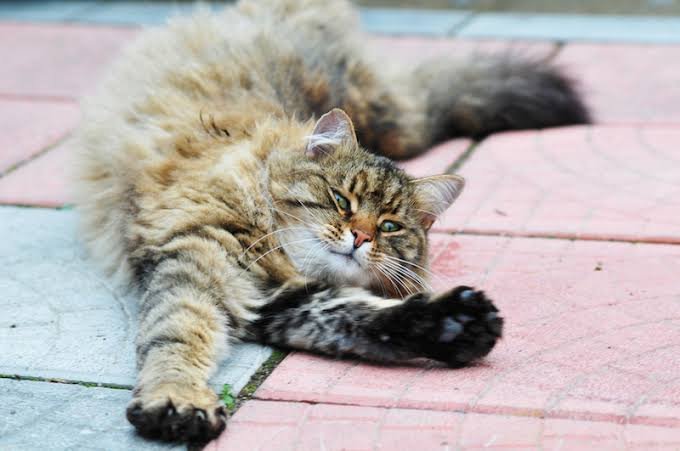
Belly-Up Cat Stretching
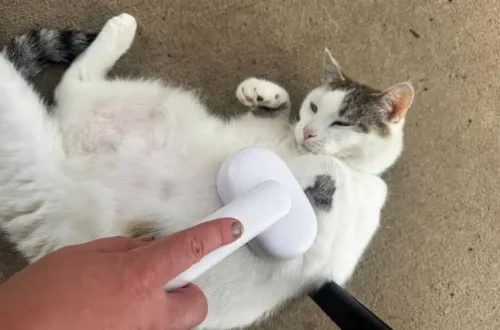
A cat may sometimes roll onto its back and stretch its legs into the air.
This position can look dramatic because the cat may fully expose its stomach while extending its paws and legs.
A belly-up stretch may happen when a cat feels physically comfortable and relaxed.
However, an exposed belly should not automatically be interpreted as an invitation to touch.
Your cat may be perfectly comfortable showing you its belly while still disliking belly rubs.
This is an important difference.
A cat can trust you enough to relax nearby without wanting you to touch every part of its body.
Look at what happens after the stretch.
If your cat rolls back onto its feet and walks away, it may simply have been stretching.
If it remains close, purrs, or rubs against you, the movement may be part of a relaxed social interaction.
Why Does My Cat Stretch and Roll Around?
Stretching and rolling can sometimes happen together.
Your cat may:
- Stretch its front legs
- Roll onto one side
- Roll onto its back
- Twist its body
- Stretch again
This may simply be part of a comfortable and relaxed movement sequence.
Some cats are naturally more expressive than others.
One cat may perform a quick stretch and walk away.
Another may spend several minutes rolling, stretching, and changing positions.
Personality can influence how your cat moves.
The behavior is usually not concerning when your cat otherwise appears comfortable and moves normally.
Why Does My Cat Stretch in Front of Me?
A cat may perform a long stretch directly in front of you because you are simply nearby when it wakes up.
However, the movement can also be part of a familiar interaction.
For example, your cat may:
- Notice you
- Stand up
- Stretch
- Walk toward you
- Rub against your legs
In this situation, the stretch may be part of a greeting or transition into social interaction.
Your cat may feel comfortable enough to stretch openly in your presence.
This does not mean every stretch is a deliberate message of affection.
Instead, think about the full sequence.
The behavior before and after the stretch provides more useful information than the stretch alone.
Why Does My Cat Stretch So Much?
Some cats simply stretch more noticeably than others.
Frequent normal cat stretching can happen throughout the day because cats regularly move between periods of rest and activity.
You may notice repeated stretches:
- After naps
- Before walking
- Before playing
- After sitting in one position
- During relaxed interactions
This can be completely normal if your cat:
- Moves comfortably
- Walks normally
- Jumps as usual
- Plays normally
- Shows no signs of pain
- Maintains its usual activity level
The important factor is whether the behavior has changed.
For example, a cat that has always stretched frequently may simply have a normal personal habit.
But if your cat suddenly begins repeatedly stretching while also appearing restless, uncomfortable, stiff, or unable to settle, the overall change is more important than the number of stretches alone.
Why Does My Cat Stretch in the Same Place Every Day?
Cats often develop routines.
Your cat may have a favorite place to stretch, just as it may have a favorite place to sleep.
Common stretching locations include:
- Near a scratching post
- Beside the bed
- On a rug
- Near a sunny window
- On the sofa
- At the entrance to a room
There may be a simple explanation.
The surface may provide good traction.
The area may be warm.
Your cat may associate the location with waking up, playing, or scratching.
For example, if your cat sleeps on a particular sofa every afternoon, it may wake up there and perform its usual stretch in the same place.
The repeated location may simply be part of its daily routine.
Why Does My Cat Stretch in the Sun?
A warm sunny area can be an attractive resting place for cats.
If your cat wakes up in a patch of sunlight, you may see it stretch before changing position or returning to sleep.
The stretch itself is not necessarily caused by sunlight.
More likely, your cat is comfortable in that location and is performing its normal movement after resting.
A warm, comfortable environment may encourage relaxed behavior, including stretching.
You may notice your cat moving throughout the day to follow preferred resting spots and then stretching whenever it wakes up.
Does Cat Stretching Mark Territory?
Stretching by itself does not necessarily mean your cat is marking territory.
However, when stretching is combined with scratching, scent-related communication can become part of the behavior.
For example, a cat may stand tall against a scratching post and extend its body.
It then scratches the surface with its claws.
Cats use scratching behavior to interact with their environment, and the paws contain scent glands that contribute to scent marking.
So the complete behavior may involve:
Stretching + scratching + environmental communication
This is one reason why providing appropriate scratching surfaces can support normal feline behavior.
A good scratching post gives your cat a place to stretch upward without using furniture or walls.
Cat Stretching by Age
A cat’s age can influence how often it stretches and how easily it moves.
Kittens, adult cats, and senior cats all stretch, but their overall activity and mobility can be different.
The most important thing is to understand what is normal for your individual cat.
A kitten that constantly stretches before running and playing may be completely normal.
An older cat that suddenly stops stretching, becomes stiff, or struggles to move may be showing a meaningful change.
Cat Stretching in Kittens
Kittens are usually highly active and flexible.
They may sleep deeply and then suddenly wake up, stretch, and immediately begin playing.
You may notice a kitten:
- Stretching after short naps
- Extending its front legs
- Stretching before running
- Rolling and twisting its body
- Stretching while playing with other kittens
Because kittens spend a lot of time switching between sleeping and energetic activity, frequent stretching is often normal.
Their movements may also look exaggerated.
A kitten might perform a huge stretch, chase a toy for five minutes, and then fall asleep again.
This is a normal part of kitten behavior.
Cat Stretching in Adult Cats
Adult cats often develop regular routines.
You may notice your cat stretching at similar times every day.
For example:
Wake up → stretch → eat → groom → explore → rest
An adult cat may also stretch:
- After sleeping
- Before jumping
- Before playing
- At a scratching post
- When greeting you
- After resting in one position
The frequency of cat stretching can vary between individual cats.
Some cats perform dramatic stretches that are easy to notice.
Others may stretch more subtly.
As long as your cat moves comfortably and behaves normally, differences in stretching style are usually part of individual personality and routine.
Cat Stretching in Senior Cats
Older cats may experience changes in mobility as they age.
A senior cat may still stretch regularly, but you might notice differences such as:
- Moving more slowly
- Taking longer to stand up
- Jumping less often
- Choosing lower resting places
- Appearing stiff after resting
These changes should not automatically be dismissed as a normal part of getting old.
Mobility problems and pain can affect how a cat moves.
Research involving cats with degenerative joint disease has shown that changes in normal stretching behavior can be associated with musculoskeletal discomfort. Some affected cats may stretch less fully or show altered movement compared with their usual behavior.
If your senior cat shows persistent changes in mobility, discuss them with a veterinarian.
When Can Cat Stretching Be a Sign of Discomfort?
Most stretching is completely normal.
However, context matters.
A change in your cat’s normal movement may deserve attention.
For example, you may notice that your cat:
- Appears stiff after resting
- Stops performing its usual stretches
- Avoids stretching one part of its body
- Cries or reacts when moving
- Has difficulty standing up
- Avoids jumping
- Walks differently
The concern is usually not the stretch itself.
It is the combination of changed stretching and other signs.
For example, a cat that stretches normally every morning is usually showing ordinary behavior.
But a cat that suddenly appears stiff, avoids movement, and reacts when touched may need veterinary attention.
Is Excessive Cat Stretching Normal?
Some cats stretch frequently throughout the day.
This can be normal, especially if the cat regularly moves between periods of sleeping and activity.
However, “stretching a lot” should be considered alongside the cat’s other behavior.
Pay closer attention if frequent stretching occurs together with:
- Restlessness
- Repeated changes in position
- Difficulty getting comfortable
- Reduced appetite
- Vomiting
- Hiding
- Vocalizing
- A tense body
- Changes in normal movement
A stretch alone cannot diagnose a health problem.
But repeated unusual behavior combined with other symptoms may indicate that something else is happening.
If you are concerned about a sudden behavioral change, contact a veterinarian.
Normal Cat Stretching vs. Changed Movement
One useful way to understand stretching cat meaning is to compare your cat’s current behavior with its normal routine.
Usually Normal
A cat may:
- Stretch after sleeping
- Stretch before moving or playing
- Stretch at a scratching post
- Extend its front or back legs
- Stretch when greeting you
- Roll and stretch while relaxed
Worth Watching
Pay closer attention if your cat:
- Suddenly stops stretching normally
- Appears stiff
- Avoids using a leg
- Has difficulty jumping
- Moves less than usual
- Reacts negatively to touch
- Changes its usual posture
- Seems unable to get comfortable
Your cat’s usual behavior provides an important reference point.
A movement that is normal for one cat may be unusual for another.
When Should You Contact a Veterinarian?
Consider contacting a veterinarian if changes in cat stretching occur with signs of pain or illness.
These may include:
- Limping
- Stiffness
- Difficulty walking
- Difficulty jumping
- Sudden reluctance to move
- Crying or vocalizing during movement
- Sensitivity to touch
- Weakness
- Loss of appetite
- Vomiting
- Major changes in behavior
A veterinarian can examine your cat and determine whether pain, injury, joint problems, or another medical condition may be affecting its movement.
Do not try to diagnose the problem based only on how your cat stretches.
The complete pattern of behavior and physical symptoms is much more important.
How to Support Healthy Movement in Your Cat
You cannot control every part of your cat’s movement, but you can provide an environment that supports normal activity.
Consider giving your cat:
- Safe places to climb
- Appropriate scratching posts
- Comfortable resting areas
- Space to move
- Regular play opportunities
- Easy access to food, water, and litter boxes
For senior cats or cats with reduced mobility, environmental adjustments may also be helpful.
For example:
- Provide lower-entry litter boxes
- Use steps or ramps where appropriate
- Place food and water in easy-to-reach locations
- Provide soft resting areas
The goal is to make everyday movement easier and more comfortable.
Should You Stretch Your Cat Yourself?
Generally, you should not force your cat’s legs or body into stretching positions.
Cats naturally stretch on their own.
Trying to manually stretch a cat could make it uncomfortable, frightened, or painful if an underlying injury or medical condition is present.
If your veterinarian recommends specific exercises or rehabilitation techniques, follow their professional instructions.
Otherwise, allow your cat to move naturally.
Providing opportunities for safe play, climbing, walking, and scratching is usually a better way to support normal movement.
Common Myths About Cat Stretching
Myth: Every Cat Stretch Means Your Cat Is Happy
Not necessarily.
A relaxed stretch can happen when your cat feels comfortable, but stretching can also occur simply because your cat has been resting and is preparing to move.
Myth: Cats Only Stretch After Sleeping
False.
Cats may also stretch before play, while using a scratching post, during social interactions, or after remaining in one position.
Myth: If My Cat Stretches Toward Me, It Always Means Love
Not always.
Your cat may be greeting you or preparing for interaction, but it may also simply be waking up when you enter the room.
Look at what happens before and after the stretch.
Myth: Frequent Stretching Always Means Something Is Wrong
False.
Some cats naturally stretch more often than others.
A concern is more likely when stretching behavior suddenly changes or occurs with other signs of discomfort or illness.
Myth: A Cat Showing Its Belly While Stretching Wants a Belly Rub
Not necessarily.
A cat may feel comfortable enough to expose its belly while still disliking being touched there.
Frequently Asked Questions About Cat Stretching
Why do cats stretch so much?
Cats regularly move between periods of rest and activity. Stretching after sleeping, before movement, and during daily routines is normal feline behavior.
Why does my cat stretch when it sees me?
Your cat may be waking up, greeting you, preparing to interact, or simply feeling comfortable around you. The meaning depends on the surrounding body language.
Why does my cat stretch after sleeping?
Stretching helps your cat transition from rest to movement. It is one of the most common forms of normal cat stretching.
Why does my cat stretch toward me?
A stretch toward you may be part of a greeting or relaxed social interaction. Your cat may also simply be preparing to move in your direction.
Why does my cat stretch and scratch at the same time?
Vertical scratching allows cats to extend their bodies while using their claws. Scratching can also contribute to communication through visual and scent-related marking.
Why does my cat stretch before running around?
Your cat may be transitioning from rest to activity. Stretching can occur before play, exploring, or other bursts of movement.
Why does my cat stretch its front legs?
Extending the front legs is a common stretching movement that can occur after resting or before activity.
Is excessive cat stretching normal?
Frequent stretching can be normal. However, if it is a sudden change and happens alongside restlessness, pain, vomiting, appetite changes, or difficulty moving, contact a veterinarian.
Why has my cat stopped stretching?
A change in normal stretching behavior may be related to stiffness, discomfort, or reduced mobility. If the change continues or is accompanied by other symptoms, veterinary advice is recommended.
Final Thoughts
Cat stretching is usually a simple and natural part of everyday feline behavior.
Your cat may stretch after waking up, before playing, while using a scratching post, or when interacting with you.
The exact stretching cat meaning depends on the situation.
A long stretch after a nap may simply mean your cat is ready to move.
A stretch followed by walking toward you may be part of a greeting.
A vertical stretch at a scratching post combines normal movement with scratching behavior.
The most useful thing is to look at the complete picture.
Pay attention to your cat’s habits, overall body language, and ability to move comfortably.
Most of the time, why cats stretch has a simple answer:
They are doing what cats naturally do.
However, if your cat’s stretching or movement suddenly changes alongside stiffness, pain, weakness, difficulty jumping, or other unusual symptoms, that change is worth discussing with a veterinarian.