








Cat Teeth: Everything You Need to Know About Kitten and Adult Cat Teeth
Your cat uses its teeth every day for much more than eating.
A cat’s teeth help with biting, holding food, grooming, playing, and interacting with objects. Kittens also go through a tooth-development stage, just like human children, where baby teeth eventually fall out and are replaced by permanent adult cat teeth.
Many cat owners notice small changes and begin asking questions.
You may wonder:
How many teeth do cats have?
When do kittens get teeth?
When do kitten teeth fall out?
What happens if I find a kitten tooth?
What do healthy cat teeth look like?
Understanding the difference between kitten teeth and adult teeth can help you recognize what is normal as your cat grows. It can also make it easier to notice changes that may require veterinary attention.
A healthy cat mouth should not only be judged by whether the teeth look white. The gums, breath, eating habits, and overall behavior can also provide useful clues about dental health.
What Are Cat Teeth?
Cat teeth are specially shaped for a cat’s natural diet and behavior.
Cats are obligate carnivores, and their teeth are designed differently from human teeth. Instead of having large flat grinding surfaces like humans, cats have pointed and sharp teeth that help them grip and tear food.
A cat’s teeth can be divided into different groups.
These include:
- Incisors
- Canines
- Premolars
- Molars
Each type of tooth has a different shape and purpose.
For example, the long, pointed canine teeth help a cat grip and hold, while the smaller teeth near the front of the mouth help with other functions.
A cat does not use its mouth in the same way a human does.
If you watch your cat eat, you may notice that it often bites, tears, and breaks food into smaller pieces rather than chewing with a side-to-side grinding motion.
How Many Teeth Do Cats Have?
The number of teeth depends on the cat’s age.
A young kitten and an adult cat do not have the same number of teeth.
A typical kitten develops 26 baby teeth, also called deciduous or milk teeth.
A typical adult cat develops 30 permanent teeth.
This change happens gradually as the kitten grows.
The baby teeth eventually fall out, and permanent teeth replace them.
So, if you are counting your kitten’s teeth and comparing them with an adult cat’s mouth, the difference is completely normal.
The transition from kitten teeth to adult teeth is an important stage of development.
How Many Teeth Do Kittens Have?
Kittens typically have 26 baby teeth.
These are temporary teeth that appear during early development.
Kitten teeth include:
- 12 incisors
- 4 canines
- 10 premolars
Kittens do not have molars in their baby set of teeth.
Later, when the permanent teeth develop, the adult cat will have molars as well.
Baby teeth are generally smaller and more delicate than permanent teeth.
You may not always notice every stage of tooth development because kittens often swallow or lose their baby teeth without their owners seeing them.
Finding a tiny tooth on the floor can happen, but not finding one does not mean the tooth has failed to fall out.
A cat’s paws play an important role in movement, balance, and communication, so check out our Cat Paws guide to learn more about their structure and common paw-related concerns.
Kitten Teeth vs. Adult Cat Teeth
The biggest difference between kitten teeth and adult cat teeth is that kitten teeth are temporary.
They help the kitten during its early stages of life but are eventually replaced by stronger permanent teeth.
Here is a simple comparison:
| Feature | Kitten Teeth | Adult Cat Teeth |
|---|---|---|
| Total number | 26 | 30 |
| Type | Temporary baby teeth | Permanent teeth |
| Molars | No | Yes |
| Size | Smaller | Larger and stronger |
| Development | Appear during early kittenhood | Replace baby teeth as the cat grows |
Think of kitten teeth as a temporary set.
They are useful while the kitten is growing, but they are not meant to remain permanently.
As your kitten develops, the baby teeth loosen and fall out while the adult teeth begin to emerge.
Are Kittens Born With Teeth?
No, kittens are not born with visible teeth.
Like many young mammals, they are born without an erupted set of teeth.
Their baby teeth begin to emerge as they grow.
During the first weeks of life, the kitten’s mouth gradually changes.
The teeth begin appearing in stages rather than all at once.
This is why a very young kitten has a different mouth from an older kitten that is already beginning to eat more solid food.
Tooth development is part of the normal growth process.
By the time a kitten is older and preparing for the transition toward permanent teeth, its mouth may look very different from when it was first born.
When Do Kitten Teeth Come In?
Kitten teeth generally begin appearing during the first few weeks of life.
The teeth do not all emerge on the same day.
They usually appear gradually.
The incisors typically appear first, followed by the canines and premolars.
By around two months of age, many kittens have their complete set of 26 baby teeth.
However, individual development can vary.
You do not need to check your kitten’s mouth every day to count each new tooth.
In fact, repeatedly forcing a kitten’s mouth open may create unnecessary stress.
Instead, allow your kitten to become comfortable with gentle handling.
This can make future mouth checks and dental care easier.
When Do Kittens Lose Their Baby Teeth?
Kittens usually begin losing their baby teeth at around three to four months of age.
The process continues as permanent teeth emerge.
By around six to seven months of age, many kittens have developed their complete set of adult cat teeth.
During this transition, you may notice that your kitten is:
- Chewing more than usual
- Biting toys
- Interested in chewing objects
- Slightly more mouth-focused
- Occasionally dropping a baby tooth
These behaviors can be part of normal teething.
Imagine your kitten playing with a toy and chewing it more enthusiastically than before.
This does not automatically mean something is wrong.
The kitten may simply be going through a stage where its mouth and teeth are changing.
However, persistent pain, refusal to eat, significant bleeding, or other unusual symptoms should be discussed with a veterinarian.
When Do Adult Cat Teeth Come In?
Permanent adult cat teeth generally begin replacing the baby teeth at around three to four months of age.
The process continues over the following months.
As the kitten grows, the adult teeth gradually emerge.
By approximately six to seven months of age, many cats have their full set of 30 permanent teeth.
The adult teeth include:
- 12 incisors
- 4 canines
- 10 premolars
- 4 molars
Once these permanent teeth have developed, they are meant to last throughout the cat’s life.
This makes dental care especially important.
Unlike kitten teeth, adult teeth are not supposed to be naturally replaced by another set.
What Are the Signs of Kitten Teething?
Teething can affect a kitten’s behavior.
Some kittens may show only very subtle changes, while others may become more interested in chewing.
Common kitten teething behaviors may include:
- Chewing toys
- Biting objects
- Increased interest in mouthing
- Mild gum sensitivity
- Finding a small baby tooth
Your kitten may also seem more interested in biting your fingers.
This does not mean teething should become an excuse for rough biting.
It is still important to teach gentle play habits.
Instead of allowing your kitten to repeatedly bite your hands, redirect the behavior toward an appropriate toy.
For example, if your kitten grabs your hand and begins chewing, calmly replace your hand with a suitable toy.
This teaches the kitten what is appropriate to bite.
Is It Normal to Find a Kitten Tooth?
Yes, finding a small kitten tooth can be completely normal.
As permanent teeth develop, baby teeth loosen and fall out.
Sometimes you may find a tiny tooth:
- On the floor
- In your kitten’s bedding
- Near a toy
- Around a feeding area
However, many owners never find any baby teeth.
Kittens can swallow their loose teeth while eating or playing, and the tooth-loss process may happen without you noticing.
Therefore, not finding a tooth does not automatically mean there is a problem.
The important thing is to watch your kitten’s overall development.
If your kitten appears comfortable, eats normally, and behaves as usual, the natural tooth transition may simply be happening without visible evidence.
What Happens If a Baby Tooth Does Not Fall Out?
Sometimes a baby tooth remains in place while the permanent tooth begins to emerge.
This is often called a retained baby tooth.
In this situation, two teeth may appear to occupy the same area.
A retained tooth can potentially affect how the permanent tooth develops or create areas where food and debris become trapped.
You should not attempt to pull the baby tooth out yourself.
Pulling on a tooth can cause pain or damage.
If you notice what appears to be a retained baby tooth, ask a veterinarian to examine your kitten’s mouth.
A veterinary professional can determine whether the tooth requires treatment or monitoring.
Why Do Kitten Teeth Look So Sharp?
Anyone who has been gently bitten by a kitten already knows the answer: kitten teeth can feel extremely sharp.
Although baby teeth are smaller than adult teeth, they can have fine pointed edges.
This is one reason playful kitten bites can feel surprisingly painful.
Kittens naturally explore through play and may use their mouths while interacting with:
- Toys
- Other kittens
- Objects
- Human hands
During teething, chewing may also become more appealing.
The best approach is to provide appropriate toys and avoid encouraging your kitten to treat your hands as play objects.
A tiny kitten may look harmless, but those tiny teeth can have very strong opinions about your fingers.
Types of Adult Cat Teeth
Once a kitten has finished teething, it typically develops a complete set of 30 permanent teeth.
These teeth are not all the same.
Different teeth have different shapes and jobs.
The four main types of adult cat teeth are:
- Incisors
- Canines
- Premolars
- Molars
Understanding these different teeth can make it easier to recognize what you are seeing when you look inside your cat’s mouth.
Cats are built differently from humans.
Their teeth are mainly designed for gripping, cutting, and tearing rather than grinding food into a soft paste.
Incisors: The Small Front Teeth
Incisors are the small teeth located at the very front of your cat’s mouth.
An adult cat typically has 12 incisors.
There are six on the upper jaw and six on the lower jaw.
These teeth are much smaller than the long canine teeth.
You may notice them when your cat:
- Nibbles during grooming
- Picks up small objects
- Bites at something delicate
- Grooms its fur
For example, when a cat carefully nibbles at a small piece of dirt or debris caught in its fur, the tiny incisors can help with precise grooming movements.
Because they are small, they may be harder to see than the canines.
Do not worry if you cannot easily count all of them during a quick look at your cat’s mouth.
Your cat may not appreciate a full dental inspection during its afternoon nap.
Canines: The Long Pointed Teeth
Canines are the long, pointed teeth that many people think of as a cat’s “fangs.”
An adult cat has four canine teeth.
There are:
- Two on the upper jaw
- Two on the lower jaw
The canine teeth are designed to help cats grip and hold.
They are much longer and more visible than the incisors.
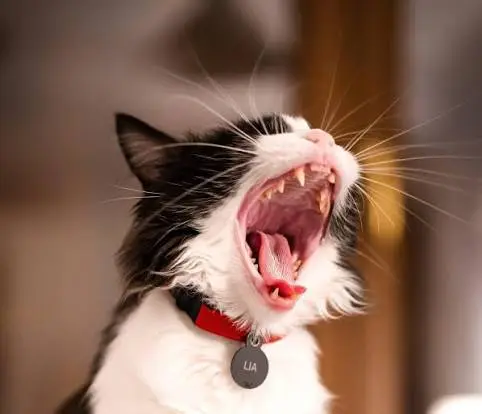
When your cat opens its mouth wide, the upper canines are often easy to notice.
Healthy canines should normally remain firmly in place.
A broken, loose, or suddenly missing tooth should be discussed with a veterinarian.
You should never try to pull a loose tooth yourself.
Even when a tooth looks loose from the outside, there may be structures below the gumline that require professional care.
Premolars: The Teeth Behind the Canines
Premolars are located farther back in the mouth, behind the canine teeth.
An adult cat typically has 10 premolars.
These teeth have sharper edges that help cats cut and break food into smaller pieces.
Cats do not chew food in exactly the same way humans do.
Humans use broad, relatively flat molars to grind food.
Cats are more adapted to biting and shearing.
If you watch a cat eating, you may notice that it often bites and tears rather than performing a large side-to-side chewing movement.
The premolars help support this process.
Because these teeth are located farther back, they can also be more difficult for owners to inspect.
This is one reason routine veterinary dental examinations are important.
Molars: The Back Teeth
Molars are located at the back of the mouth.
Adult cats typically have four molars.
Kittens do not have molars in their baby set of teeth.
The molars appear as part of the permanent adult dentition.
Although cats have molars, they are not shaped like human molars.
A cat’s teeth are adapted for its carnivorous diet.
Instead of broad grinding surfaces, the back teeth help with cutting and processing food.
These teeth can be difficult to see at home because they are located far back in the mouth.
You should never force your cat’s mouth open or place your fingers deeply inside the mouth to inspect them.
A relaxed, brief look is safer than turning a simple home check into a wrestling competition with a very unhappy cat.
What Do Cat Teeth Do?
Different cat teeth work together.
The small incisors can help with precise biting and grooming.
The canines help grip and hold.
The premolars and molars help cut and process food.
Think of the teeth as a small team.
Each tooth has a different shape because it has a different role.
This is also why a cat’s mouth looks different from a human mouth.
A cat is not designed to chew food in the same way you chew a piece of bread.
Its teeth reflect its natural feeding behavior.
What Do Healthy Cat Teeth Look Like?
Healthy cat teeth should generally appear clean and intact.
The exact shade of the teeth can vary slightly, but significant yellow or brown buildup is not something to ignore.
A healthy mouth should not normally have obvious:
- Heavy tartar buildup
- Broken teeth
- Loose teeth
- Significant bleeding
- Severe gum swelling
- Visible sores
However, cats can hide dental pain very well.
A cat may continue eating even when there is an uncomfortable dental problem.
This means you should not assume your cat’s mouth is healthy simply because it is still eating.
Regular veterinary dental examinations are important because some dental problems may not be obvious during a quick look at home.
What Do Healthy Cat Gums Look Like?
Healthy gums are usually smooth and should not appear severely swollen or actively bleeding.
The natural gum color can vary somewhat between cats depending on pigmentation.
Some cats may have darker areas or natural pigmentation on their gums.
What matters is noticing changes from what is normal for your cat.
Pay attention to:
- Redness
- Swelling
- Bleeding
- Sores
- Unusual growths
- Sudden changes in appearance
For example, if your cat normally has pale pink gums and you suddenly notice significant redness around several teeth, that is worth discussing with a veterinarian.
You do not need to inspect your cat’s gums every day.
But becoming familiar with your cat’s normal mouth can make unusual changes easier to recognize.
Plaque vs. Tartar on Cat Teeth
Plaque and tartar are not exactly the same thing.
Plaque is a soft film that can build up on the surface of teeth.
If plaque is not regularly removed, it can harden and become tartar, also called calculus.
Tartar may appear as:
- Yellow buildup
- Brown buildup
- Hard material near the gumline
Once tartar becomes hardened, ordinary brushing at home may not be enough to remove it safely.
Professional veterinary dental treatment may be needed.
This is why prevention is important.
Regular toothbrushing can help reduce plaque before it has an opportunity to harden.
Imagine plaque as a soft layer that is easier to remove.
Over time, if it is allowed to remain, it can become a much harder layer attached to the tooth.
Trying to scrape hardened material from your cat’s teeth at home can damage the gums or teeth.
It is safer to let a veterinary professional handle significant tartar buildup.
Why Does My Cat Have Bad Breath?
A cat’s breath should not have an extremely strong or foul smell.
Persistent bad breath can be associated with dental or oral problems.
Possible causes may include:
- Plaque buildup
- Tartar
- Gum inflammation
- Dental disease
- Problems inside the mouth
Bad breath does not automatically tell you the exact cause.
However, a strong or persistent odor should not simply be ignored.
For example, you may notice that your cat’s breath suddenly smells much worse than usual when it comes close to your face.
If the change continues, look for other signs such as:
- Drooling
- Red gums
- Difficulty eating
- Pawing at the mouth
- Yellow or brown buildup
A veterinarian can examine the mouth and determine whether dental disease or another issue may be involved.
How to Check Your Cat’s Teeth Safely at Home
A home examination should be gentle and brief.
The goal is not to perform a professional dental examination.
You are simply looking for obvious changes.
Choose a time when your cat is relaxed.
You can gently lift the lip and look at the visible teeth and gums.
Check for:
- Yellow or brown buildup
- Red or swollen gums
- Broken teeth
- Visible sores
- Bleeding
- Unusual swelling
- Food repeatedly stuck in one area
Do not force your cat’s mouth open.
Do not place your fingers deep inside the mouth.
And do not attempt to scrape tartar from the teeth.
If your cat becomes stressed or tries to pull away, stop.
A short, calm check is much better than forcing the process.
You can always ask your veterinarian to examine the mouth during a routine visit.
Common Cat Dental Problems
Cats can develop several different dental and oral problems.
Some may be easy to notice, while others can remain hidden below the gumline.
Common problems include:
- Gingivitis
- Periodontal disease
- Tooth resorption
- Broken teeth
- Loose teeth
- Retained teeth
- Tartar buildup
Dental disease can cause discomfort even when a cat continues to eat.
This is because cats may adapt their eating behavior instead of completely refusing food.
For example, a cat with mouth pain may begin chewing on one side, dropping food, or choosing softer food.
Small behavior changes can sometimes provide important clues.
Gingivitis in Cats
Gingivitis means inflammation of the gums.
It is one of the common dental problems that can affect cats.
You may notice gingivitis when the gums around the teeth become:
- Red
- Swollen
- Sensitive
- More likely to bleed
Plaque buildup can contribute to gum inflammation.
If plaque is allowed to remain on the teeth, it can eventually harden into tartar and create an environment that may contribute to further dental problems.
A cat with gingivitis may still eat normally.
This is important because eating does not always mean the mouth is pain-free.
Cats can be very good at hiding discomfort.
You may notice subtle changes instead, such as your cat becoming less interested in having its face touched or developing persistent bad breath.
If you notice significant gum redness or swelling, a veterinary examination is recommended.
Periodontal Disease in Cats
Periodontal disease affects the tissues that support and surround the teeth.
It can develop when dental disease progresses below the visible gumline.
This can potentially affect structures that help keep the teeth stable.
Signs may include:
- Bad breath
- Red or swollen gums
- Tartar buildup
- Bleeding
- Loose teeth
- Difficulty eating
The problem is that some dental disease may not be obvious when you simply look inside your cat’s mouth.
A tooth can appear relatively normal above the gumline while problems exist below it.
This is one reason professional veterinary dental examinations are important.
Think of it like seeing only the top of a tree.
The visible part may look fine, but you cannot fully judge what is happening underneath the ground.
A veterinarian can perform a more complete evaluation and recommend appropriate treatment if needed.
Tooth Resorption in Cats
Tooth resorption is a painful dental condition that can affect cats.
It occurs when the structure of a tooth is progressively damaged or broken down.
Some changes may begin below the gumline, which means they are not always easy for an owner to see.
A cat with tooth resorption may show signs such as:
- Dropping food
- Chewing differently
- Drooling
- Pawing at the mouth
- Avoiding mouth contact
- Changes in appetite
However, some cats hide the discomfort extremely well.
You should never try to diagnose tooth resorption by yourself just by looking at the mouth.
Veterinary examination, and sometimes dental imaging, may be needed to properly assess the teeth.
If your cat suddenly changes how it eats or reacts painfully when the mouth is touched, schedule a veterinary appointment.
Broken Cat Teeth
A cat can develop a broken or damaged tooth.
This may happen for different reasons, including trauma or biting something unusually hard.
A broken tooth may expose sensitive structures and can cause discomfort.
You may notice:
- A tooth that looks shorter than before
- A chipped edge
- Difficulty eating
- Dropping food
- Avoiding one side of the mouth
- Increased sensitivity around the face
Sometimes the damage is obvious.
Other times, the crack may be difficult to see.
Do not try to repair a broken tooth at home.
Human dental products and home repair methods are not appropriate for cats.
A veterinarian should examine the tooth and determine what treatment is needed.
Why Does My Cat Have a Loose Tooth?
A loose tooth is not normal in a healthy adult cat.
Adult cat teeth are permanent teeth and should normally remain firmly attached.
A loose tooth may be associated with:
- Dental disease
- Trauma
- Damage to the supporting tissues
- Other oral problems
If you notice that an adult tooth appears loose, do not try to pull it out.
Pulling a tooth yourself can cause pain, bleeding, and additional injury.
Arrange a veterinary examination instead.
The situation is different for a kitten that is naturally losing a baby tooth during the transition to adult teeth.
Why Is My Cat Missing a Tooth?
A kitten may naturally lose baby teeth as permanent teeth develop.
However, an adult cat teeth should not suddenly disappear without a reason.
If you notice a missing tooth in an adult cat, possible explanations can include previous dental disease, trauma, tooth resorption, or earlier veterinary dental treatment.
Some cats may have had a tooth removed before you adopted them.
If you suddenly notice that a tooth is missing, or if there is swelling, bleeding, or pain, contact your veterinarian.
Avoid assuming that a missing tooth is harmless simply because your cat is still eating.
Signs of Cat Dental Pain
Cats often hide pain.
Instead of crying or clearly showing that a tooth hurts, your cat may make small changes in its normal behavior.
Watch for signs such as:
- Bad breath
- Drooling
- Pawing at the mouth
- Dropping food
- Chewing on one side
- Eating more slowly
- Avoiding dry food
- Reduced appetite
- Weight loss
- Red or bleeding gums
- Hiding more than usual
- Resisting face or mouth touching
For example, imagine your cat normally finishes dry food quickly.
Over time, you notice that it starts dropping pieces from its mouth or walking away from the bowl.
That change may be worth investigating.
Dental pain can affect quality of life, so behavioral changes should not be ignored.
How to Clean Cat Teeth
The most effective home dental care usually involves regular toothbrushing.
Brushing helps remove plaque from the tooth surface before it can harden into tartar.
However, introducing toothbrushing takes patience.
You cannot expect most cats to happily accept a toothbrush immediately.
The goal is to introduce the process gradually.
Start when your cat is calm.
Allow your cat to become comfortable with gentle handling around the face and mouth before introducing a toothbrush.
Short, positive sessions are usually better than long, stressful ones.
How to Brush Your Cat’s Teeth Step by Step
Step 1: Choose the Right Time
Pick a quiet time when your cat is relaxed.
Avoid trying to brush your cat’s teeth immediately after energetic play or when your cat is already irritated.
Step 2: Get Your Cat Used to Face Handling
Gently touch your cat’s cheeks and lift the lips for a few seconds.
Do not force the mouth open.
Reward calm behavior with praise or another positive experience your cat enjoys.
Step 3: Introduce Cat-Safe Toothpaste
Use toothpaste specifically designed for cats.
Allow your cat to become familiar with the toothpaste gradually.
Never use human toothpaste.
Human toothpaste may contain ingredients that are not appropriate for cats to swallow.
Step 4: Introduce a Cat Toothbrush
Use a toothbrush designed for pets.
You can also ask your veterinarian which type of toothbrush may be appropriate for your cat.
Begin with short sessions.
Focus on the outer surfaces of the teeth because these areas are generally easier to reach.
Step 5: Keep the Experience Short
You do not need to spend several minutes brushing.
Even a short session can help your cat gradually become comfortable with the process.
Over time, you may be able to clean more areas.
If your cat becomes highly stressed, stop and try again later.
The goal is consistency, not winning a daily battle against your cat.
Why Should You Use Cat-Safe Toothpaste?
Cats cannot rinse and spit toothpaste the way humans do.
They are likely to swallow what is placed in their mouths.
For this reason, use toothpaste made specifically for cats or recommended by your veterinarian.
Do not use:
- Human toothpaste
- Toothpaste containing fluoride unless specifically directed by a veterinarian
- Baking soda
- Homemade dental mixtures without veterinary guidance
Human toothpaste can contain ingredients that are unsuitable for pets.
Cat-safe toothpaste is formulated with pets in mind and is usually available in flavors designed to be more appealing to them.
Do Dental Treats Help Clean Cat Teeth?
Some dental treats, diets, and products may help support feline dental health.
However, they should not automatically be considered a complete replacement for regular dental care.
Different products work in different ways.
Some are designed to help reduce plaque accumulation, while others may provide little dental benefit.
When choosing a dental product, look for options recommended by your veterinarian or products with recognized veterinary dental approval where available.
Remember that a treat cannot replace professional care when significant dental disease is already present.
If your cat already has painful gums or heavy tartar buildup, simply adding dental treats is unlikely to solve the underlying problem.
Do Dental Diets Help With Cat Dental Health?
Some specially designed dental diets may help reduce plaque or tartar accumulation.
These diets are formulated differently from ordinary cat food.
However, they are not suitable for every cat.
Your cat’s age, nutritional needs, health status, and existing medical conditions should all be considered.
Before making a major dietary change, especially if your cat has health concerns, ask your veterinarian for advice.
A dental diet may be one part of a broader dental care routine rather than a complete solution by itself.
How Often Should Cat Teeth Be Checked?
You can occasionally look at your cat’s visible teeth and gums at home when your cat is calm.
However, home checks cannot replace professional veterinary examinations.
Cats can develop dental problems below the gumline where owners cannot easily see them.
Regular veterinary checkups allow your veterinarian to assess your cat’s oral health.
If your cat develops bad breath, changes in eating behavior, gum swelling, bleeding, or other signs of discomfort, do not wait until the next routine appointment.
Schedule an examination sooner.
When Should You Contact a Veterinarian About Cat Teeth?
Contact a veterinarian if you notice:
- Persistent bad breath
- Red, swollen, or bleeding gums
- Yellow or brown tartar buildup
- Broken teeth
- Loose adult teeth
- Drooling
- Pawing at the mouth
- Difficulty eating
- Dropping food
- Sudden appetite changes
- Swelling around the face or mouth
- Weight loss
Seek veterinary advice promptly if your cat appears to be in significant pain or has difficulty eating.
Dental problems can worsen when left untreated.
Early examination can help identify the cause and allow appropriate treatment.
Common Myths About Cat Teeth
Myth: Cats Do Not Need Their Teeth Brushed
False.
Regular brushing can help reduce plaque buildup and support dental health.
Starting gradually and using cat-safe products can make the process easier.
Myth: Bad Breath Is Normal for Cats
False.
A slight natural mouth odor can occur, but persistent strong or foul-smelling breath may indicate an oral or dental problem.
Myth: If My Cat Is Eating, Its Teeth Must Be Healthy
False.
Cats can continue eating even when they have painful dental problems.
Watch for subtle changes such as chewing differently, dropping food, or avoiding certain foods.
Myth: I Can Remove Tartar Myself
Not safely.
Scraping hardened tartar at home can injure the gums or damage the teeth.
Professional veterinary dental care is the safer option.
Myth: Adult Cat Teeth Grow Back
False.
Adult cats normally have one permanent set of teeth.
Unlike kitten teeth, permanent teeth are not naturally replaced by another complete set.
Frequently Asked Questions About Cat Teeth
How many teeth do adult cats have?
A typical adult cat has 30 permanent teeth, including incisors, canines, premolars, and molars.
How many teeth do kittens have?
Kittens typically have 26 baby teeth. These temporary teeth are eventually replaced by permanent adult teeth.
When do kittens lose their baby teeth?
Kittens usually begin losing baby teeth at around three to four months of age, with permanent teeth typically developing over the following months.
Is it normal to find a kitten tooth?
Yes. Finding a small baby tooth can be normal during teething. However, many kittens swallow or lose their teeth without their owners noticing.
Why does my cat have bad breath?
Persistent bad breath may be linked to plaque, tartar, gum inflammation, or another oral problem. A veterinarian can examine your cat to identify the cause.
Can I use human toothpaste on my cat?
No. Use toothpaste made specifically for cats or recommended by your veterinarian.
Is a loose tooth normal in an adult cat?
No. A loose adult tooth should be examined by a veterinarian. Do not attempt to pull it out yourself.
How can I tell if my cat has dental pain?
Signs can include drooling, dropping food, chewing differently, bad breath, pawing at the mouth, appetite changes, or avoiding facial contact.
Final Thoughts
Understanding cat teeth can help you take better care of your cat throughout every stage of life.
Kittens begin with 26 baby teeth, which are gradually replaced by 30 permanent adult cat teeth. Each type of tooth has a different role, from the small incisors at the front of the mouth to the canines, premolars, and molars.
Dental health should not be judged only by whether the teeth look white.
Healthy gums, normal eating behavior, fresh breath, and the absence of obvious pain or swelling are also important parts of the picture.
The best approach is prevention.
Regular home observation, gradual toothbrushing with cat-safe toothpaste, appropriate dental products, and routine veterinary examinations can all help support your cat’s dental health.
Most importantly, pay attention to changes.
Cats often hide discomfort, so small signs—such as dropping food, bad breath, chewing differently, or avoiding mouth contact—can sometimes be the first indication that something is wrong.
By understanding what normal kitten teeth and adult cat teeth look like, you will be in a much better position to notice when your cat’s mouth needs extra attention.