







Cat Brush
Choosing the right cat brush can make regular grooming much easier for both you and your cat. Different cats have different coat types, so the brush that works well for a short-haired cat may not be the best choice for a long-haired or thick-coated cat.
A good brush should remove loose hair without unnecessarily pulling or irritating your cat’s skin. The right tool can also help prevent tangles, reduce loose fur around your home, and make grooming a more comfortable routine.
The best cat brush is therefore not necessarily the most expensive one. It is the brush that matches your cat’s coat, grooming needs, and tolerance for brushing.
Why Does Your Cat Need a Brush?
Cats naturally groom themselves, but they still benefit from regular brushing.
Brushing removes loose hair before your cat swallows it during self-grooming. It can also help prevent tangles and mats, especially in cats with longer coats.
Regular brushing gives you an opportunity to check the skin and coat for fleas, unusual lumps, irritation, wounds, or other changes. It can also become a positive bonding activity when introduced gradually.
Even short-haired cats can benefit from occasional brushing.
Grooming is an important part of a cat’s daily routine, so check out our Cat Grooming guide to learn about proper grooming habits, tools, and care tips.
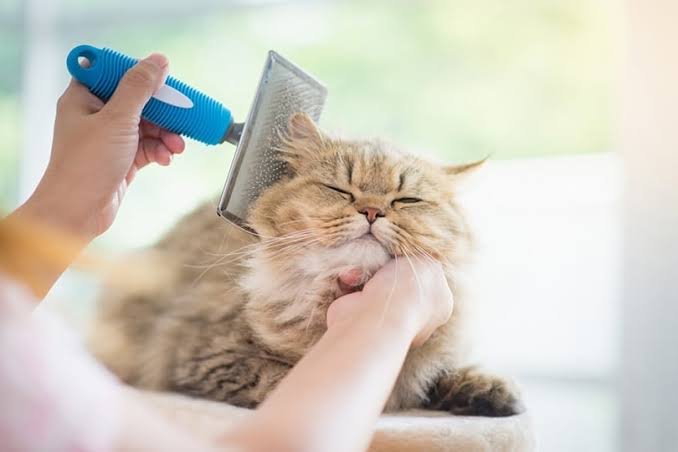
How to Choose the Best Cat Brush
There is no single best cat brush for every cat.
Start by considering your cat’s coat length and texture.
A short-haired cat may need a simple bristle brush or rubber grooming tool, while a long-haired cat may need a slicker brush, comb, or combination of grooming tools.
You should also consider your cat’s skin sensitivity and how comfortable it is with brushing.
A brush that works effectively but makes your cat uncomfortable is not a good long-term choice.
Types of Cat Brushes
Different brush designs are made for different grooming purposes.
The most common options include:
- Bristle brushes
- Slicker brushes
- Rubber brushes
- Grooming gloves
- Deshedding tools
- Undercoat rakes
- Wide-tooth combs
- Dematting tools
Understanding what each type does can help you choose the right grooming brush instead of buying one based only on appearance.
Bristle Cat Brush
A bristle brush is a simple option that can work well for many short-haired cats.
Its soft bristles help remove loose hair and surface dirt while distributing natural oils through the coat.
Bristle brushes are generally less aggressive than some metal grooming tools, making them useful for cats that prefer gentle brushing.
They may not be enough for cats with thick undercoats or serious tangles.
Slicker Cat Brush
A slicker brush has many fine pins designed to reach through the coat and remove loose hair and small tangles.
It can be particularly useful for medium- and long-haired cats.
Slicker brushes should be used gently because repeatedly pressing the pins against the skin can cause discomfort.
Chewy’s current grooming guidance lists slicker brushes as useful for removing loose hair, dirt, and tangles, while also noting that cats with sensitive skin may need a gentler option.
Rubber Cat Brush
Rubber brushes use soft rubber tips or nubs to collect loose hair.
They can be a comfortable option for cats that dislike harder bristles.
Some rubber brushes are designed to be used with gentle massage-like movements, which may make them useful for cats that are nervous about traditional brushes.
They are generally more suitable for loose hair and surface grooming than severe mats.
Cat Grooming Glove
A grooming glove fits over your hand and uses soft textured surfaces to collect loose hair.
Some cats tolerate grooming gloves because they feel more like being stroked than being brushed.
A glove can be useful for short-haired cats or cats that resist conventional brushes.
However, it may not remove deep tangles as effectively as a suitable comb or slicker brush.
Deshedding Brush
A deshedding brush is designed to remove loose undercoat or excess shedding hair.
These tools can be particularly useful for cats with dense coats or noticeable shedding.
However, a deshedding tool should not be confused with a dematting tool.
Deshedding removes loose hair, while detangling tools are designed to work through knots and mats. Tangle Teezer similarly distinguishes between tools designed for deshedding and those designed for detangling.
Cat Comb
A comb can be especially useful for long-haired cats.
Wide-tooth combs can help work through longer fur and identify tangles.
A comb can also be useful after brushing to check whether loose areas of the coat still contain knots.
Chewy recommends wide-tooth combs for removing tangles and mats in long-haired cats.
Dematting Tool
A dematting tool is designed for dealing with tangled or matted fur.
It should be used carefully because mats can pull on the skin and cause discomfort.
Small tangles may sometimes be handled gently, but severe mats should not be aggressively pulled or cut with household scissors.
For extensive matting, professional grooming or veterinary assistance may be safer.
Best Cat Brush for Short-Haired Cats
Short-haired cats generally do not require the same type of brush as long-haired cats.
A soft bristle brush, rubber brush, or grooming glove may be enough to remove loose hair and keep the coat looking neat.
Short-haired cats may only need brushing once or twice a week, although individual needs can vary. Chewy’s current guidance recommends less frequent brushing for many short-haired cats compared with long-haired cats.
If your cat sheds heavily, you may need a tool specifically designed to remove loose undercoat.
Best Cat Brush for Long-Haired Cats
Long-haired cats generally require more frequent grooming because their fur is more likely to develop tangles.
A slicker brush and wide-tooth comb can work well together.
Start with gentle brushing to loosen surface hair, then use a comb to check deeper sections of the coat.
Long-haired cats may need daily brushing to help prevent mats, depending on their coat.
Best Cat Brush for Kittens
Kittens should be introduced to brushing gradually.
A soft and gentle brush is usually a better starting point than a strong deshedding tool.
Let the kitten sniff the brush before touching it to the coat.
Keep early sessions very short and reward calm behavior.
The goal is to teach the kitten that a cat brush is a normal part of daily care rather than something to fear.
Best Cat Brush for Sensitive Skin
Cats with sensitive skin may not tolerate brushes with stiff or sharp-feeling pins.
A soft rubber brush or gentle grooming glove may be more comfortable.
Always use light pressure and avoid repeatedly brushing the same area.
If your cat develops redness, sores, bald patches, or obvious discomfort during brushing, stop and speak with a veterinarian.
Best Cat Brush for Shedding
The right brush for shedding depends on the type of hair your cat is losing.
A simple bristle or rubber brush may be sufficient for some short-haired cats.
Cats with dense undercoats may benefit from a deshedding brush designed to reach loose undercoat hair.
However, no brush can permanently stop a cat from shedding. Shedding is a normal biological process, and grooming mainly helps remove loose hair before it spreads around your home.
Cat Brush vs. Cat Comb
A brush and comb can perform different jobs.
A brush is often useful for removing loose surface hair and general coat maintenance.
A comb can reach deeper into longer fur and help identify or work through small tangles.
Long-haired cats may benefit from using both rather than relying on only one grooming tool.
Can You Use the Same Brush for Every Cat?
You can sometimes use the same general type of brush for multiple cats, but it may not be ideal for every coat.
A short-haired cat and a long-haired cat have different grooming requirements.
Similarly, a cat with sensitive skin may prefer a softer tool than another cat with a dense coat.
If you have multiple cats, choose grooming tools according to each cat’s individual coat and comfort.
What Makes a Good Cat Brush?
A good cat brush should have several qualities.
It should:
- Match the cat’s coat
- Remove hair effectively
- Be comfortable against the skin
- Be easy for the owner to hold
- Be easy to clean
- Allow controlled brushing
- Not require excessive pressure
Your cat’s reaction is also important.
If your cat repeatedly avoids or reacts negatively to a particular brush, try a gentler alternative rather than forcing the routine.
How to Use a Cat Brush Correctly
Choosing the right cat brush is only half of successful grooming. The way you use the brush matters just as much. Brushing should remove loose hair and small tangles without pulling the coat or scratching the skin.
A calm, gentle technique also helps your cat develop a positive association with grooming. Current grooming guidance recommends keeping sessions comfortable, using the brush in the direction of hair growth, and taking breaks when necessary.
How Often Should You Use a Cat Brush?
The ideal brushing frequency depends mainly on your cat’s coat.
Long-haired cats often benefit from daily brushing because their coats can develop mats and tangles quickly. Short-haired cats may only need brushing once or twice a week, although cats that shed heavily may need more frequent sessions.
A useful rule is to increase brushing when you notice more loose hair, tangles, or hairballs.
How to Brush a Cat Step by Step
A simple routine makes using a cat brush easier.
Step 1: Choose a Calm Location
Pick a quiet place where your cat already feels comfortable.
Avoid chasing your cat around the house with the brush. Instead, wait until your cat is relaxed and allow it to approach you.
Step 2: Let Your Cat Inspect the Brush
Before brushing, let your cat sniff the grooming tool.
You can place it near your cat without immediately touching the coat.
This helps make the brush less unfamiliar.
Step 3: Start With Gentle Strokes
Begin with a few gentle strokes in the direction of hair growth.
Do not immediately brush difficult areas such as the belly or heavily tangled fur.
Start with areas your cat normally enjoys being touched.
Step 4: Work in Small Sections
Instead of brushing the entire body quickly, divide the coat into smaller sections.
This is especially useful for long-haired cats because it allows you to notice tangles before they become larger problems.
Step 5: Check the Skin
As you brush, look beneath the fur.
Watch for redness, wounds, parasites, bald patches, lumps, or irritated areas.
Regular brushing can therefore serve as a simple health check as well as grooming.
Brush in the Direction of Hair Growth
For most cats, brushing with the direction of the coat is the most comfortable approach.
Use controlled, gentle strokes instead of repeatedly dragging the brush through the same area.
Some brushes can be used differently for particular coat types, but beginners should focus on gentle handling rather than trying complicated techniques.
How to Brush a Long-Haired Cat
Long-haired cats need more careful brushing because loose hair can become trapped deeper in the coat.
Start near the outer layer and gradually work through the coat.
A slicker brush can help remove loose hair and small tangles, while a wide-tooth comb can help check deeper areas. Chewy’s current grooming guidance recommends different tools according to coat type, including slicker brushes, wide-tooth combs, and deshedding tools.
Pay particular attention to:
- Behind the ears
- Around the neck
- Chest
- Under the front legs
- Belly
- Hind legs
- Base of the tail
These areas can develop tangles more easily.
How to Brush a Short-Haired Cat
Short-haired cats usually have a simpler grooming routine.
A soft bristle brush, rubber grooming tool, or grooming glove may be enough to remove loose hair.
Use short, gentle strokes and avoid pressing hard against the skin.
For many short-haired cats, brushing once or twice a week is enough for basic coat maintenance, although shedding levels can change this routine.
How to Use a Deshedding Brush
A deshedding brush is designed to remove loose undercoat hair.
It can be useful for cats with dense coats that shed heavily.
Use a deshedding tool according to its instructions and avoid repeatedly going over the same area.
More brushing is not always better. Excessive or aggressive use can irritate the skin and remove more hair than necessary.
A deshedding tool should also not be used as a replacement for a normal grooming brush when the cat has significant mats.
Cat Brush for Removing Tangles
Small tangles can sometimes be loosened carefully with an appropriate brush or comb.
Work from the outer portion of the tangle rather than pulling directly from the base.
Use short movements and stop if your cat becomes uncomfortable.
If the tangle is tightly attached to the skin, do not keep pulling.
Severe mats may require professional grooming or veterinary assistance.
How to Handle Mats
Mats can be painful because they pull on the skin.
Never yank a mat with a cat brush.
A comb or suitable dematting tool may help with small, loose tangles, but large mats are different.
Do not use ordinary scissors to cut close to the skin. Cats can move suddenly, and the skin underneath a mat can be pulled upward into the scissors.
For difficult mats, a professional groomer with feline experience is the safer choice.
How to Make Your Cat Like Brushing
Some cats immediately enjoy brushing, while others need time.
Start with very short sessions.
For the first few days, your goal may simply be to touch the brush to your cat without causing stress.
Gradually increase the number of strokes.
You can use treats, praise, or another reward your cat enjoys after calm behavior.
Short positive sessions are generally more useful than one long session that leaves your cat frightened.
What If Your Cat Hates the Cat Brush?
Do not assume your cat hates grooming permanently.
The problem may be the type of brush, the pressure, the location, or the length of the session.
Try changing one thing at a time.
For example, if a metal slicker brush seems uncomfortable, a soft rubber grooming tool may be worth trying.
Cats with sensitive skin may tolerate rubber grooming mitts better than some other tools.
Brushing Sensitive Areas
Some areas of a cat’s body are more sensitive than others.
The belly, legs, tail, and area around the ears may require extra care.
Do not force the brush into areas your cat is actively protecting.
If your cat repeatedly reacts painfully to being touched in one particular area, this may indicate more than grooming sensitivity.
A veterinarian should evaluate persistent pain or unusual sensitivity.
Cat Brush for Shedding Control
Regular brushing can reduce the amount of loose fur around your home.
It also removes hair before your cat swallows it during self-grooming.
This may help reduce hairballs in some cats.
However, a cat brush cannot completely stop shedding.
Shedding is a normal part of the feline hair cycle, so the goal is to manage loose hair rather than eliminate it.
Can a Cat Brush Remove Fleas?
A grooming brush may help you notice fleas or flea dirt, but ordinary brushing is not a complete flea-control method.
If you suspect an infestation, speak with a veterinarian about a cat-safe flea treatment.
Do not apply random flea products simply because they are marketed for pets. Some products made for other animals can be dangerous to cats.
How to Clean a Cat Brush
Cleaning the grooming tool helps keep it ready for the next session.
First, remove collected hair from the brush.
Then follow the manufacturer’s cleaning instructions. Many washable brushes can be cleaned with warm, soapy water, but the correct method depends on the material and design.
Allow the brush to dry completely before storing it.
When Should You Replace a Cat Brush?
A brush should be replaced when its bristles, pins, teeth, or handle become damaged.
Bent or broken pins can scratch the skin or make brushing uncomfortable.
Also replace a brush if it becomes difficult to clean properly.
A well-maintained grooming tool should remain comfortable for both you and your cat.
Common Cat Brush Mistakes
Even the best cat brush will not work well if it is used incorrectly.
Avoid these common mistakes:
- Brushing too aggressively
- Using the wrong brush for the coat
- Pulling hard on tangles
- Brushing a frightened cat
- Using a deshedding tool too aggressively
- Ignoring sensitive areas
- Cutting mats with household scissors
- Continuing after your cat shows strong stress signals
The goal is effective grooming without making the experience unpleasant.
How to Choose the Best Cat Brush for Your Cat
Before buying a grooming tool, ask yourself a few simple questions.
What type of coat does my cat have?
Short, medium, long, curly, and dense coats can require different tools.
Is my main problem shedding?
If excessive loose hair is the main issue, a suitable deshedding brush may help.
Does my cat have tangles?
A slicker brush or wide-tooth comb may be more useful for small tangles.
Does my cat have sensitive skin?
A soft rubber brush or grooming glove may provide a gentler option.
Does my cat tolerate brushing?
If your cat strongly dislikes brushing, comfort and handling should be prioritized over maximum hair removal.
The best cat brush is the one that performs the job you need while remaining comfortable for your cat.
Cat Brush Buying Checklist
Before purchasing a cat brush, check:
- Suitable for your cat’s coat length
- Appropriate for the type of grooming needed
- Comfortable against the skin
- Easy to hold
- Easy to clean
- Suitable for your cat’s sensitivity
- Strong enough for regular use
- No damaged or excessively sharp parts
You do not need a large collection of grooming tools. In many cases, one suitable brush plus a comb for specific needs is enough.
Cat Brush: Grooming Routine, Safety and Care
A cat brush is most useful when it becomes part of a regular, comfortable routine rather than an occasional tool used only when the coat looks messy.
The right grooming schedule depends on coat length, shedding, age, lifestyle, and individual tolerance. Regular brushing can help manage loose hair and give you an opportunity to notice changes in the skin or coat.
Cat Brush Routine by Coat Type
A simple routine can help you choose how often to brush.
| Cat coat | Suggested brush | Typical routine |
|---|---|---|
| Short-haired | Bristle or rubber brush | Once or twice weekly |
| Medium-haired | Slicker brush and comb | Several times weekly |
| Long-haired | Slicker brush and comb | Daily or frequent brushing |
| Dense undercoat | Suitable deshedding brush | As needed during shedding |
| Sensitive skin | Soft rubber grooming brush | Short, gentle sessions |
These are general guidelines rather than strict rules. Your cat may need more or less grooming depending on its individual coat.
Cat Brush for Different Grooming Problems
The right cat brush depends on what you are trying to accomplish.
For everyday brushing, a soft bristle or rubber brush may be sufficient for many cats.
For loose undercoat hair, a suitable deshedding brush may be more effective.
For longer coats with small tangles, a slicker brush and comb can provide better coverage.
For a cat that dislikes traditional brushes, a grooming glove or soft rubber tool may be easier to introduce.
Cat Brush and Hairballs
Cats swallow loose hair while grooming themselves.
Some of this hair passes naturally through the digestive system, while some cats may develop hairballs.
Regular brushing removes loose hair before your cat has the opportunity to swallow as much of it.
A deshedding brush can be useful for cats with dense coats during periods of heavy shedding, but it should be used carefully and according to the tool’s instructions.
If your cat frequently vomits, repeatedly coughs, stops eating, or shows other unusual symptoms, do not assume hairballs are the cause. A veterinarian should assess persistent symptoms.
Cat Brush and Matted Fur
Regular brushing is one of the simplest ways to prevent mats.
Mats form when loose hairs become tangled and compacted.
Long-haired cats are especially vulnerable, which is why frequent grooming is important for them.
If you find a small loose tangle, work gently from the outer portion.
If a mat is large, tight, or close to the skin, stop trying to remove it with a normal cat brush. Professional grooming or veterinary assistance may be safer.
Cat Brush Safety
Grooming should never cause significant pain.
Use light pressure and avoid repeatedly brushing one area.
Check the brush regularly for broken pins, sharp edges, or other damage.
Never use a grooming tool as a way to force a cat to remain still.
If your cat becomes highly stressed, stop the session and try again later.
Signs You Should Stop Brushing
Your cat may show several signs that it has had enough.
These can include:
- Tail flicking rapidly
- Flattened ears
- Growling
- Hissing
- Swatting
- Trying to escape
- Tense body posture
- Biting
- Sudden agitation
If these behaviors appear, give your cat space.
A short successful grooming session is better than forcing the cat through a long session.
Introducing a Cat Brush to a Nervous Cat
A nervous cat may need several days or weeks to become comfortable with grooming.
Start by placing the cat brush nearby without touching the cat.
Allow your cat to investigate it.
Later, touch the brush gently against the coat for one or two strokes.
Reward calm behavior and stop.
Gradually increase the number of strokes as your cat becomes more comfortable.
This process can be especially helpful for kittens, rescue cats, or cats that have previously had unpleasant grooming experiences.
Cat Brush for Older Cats
Older cats may need more help with coat maintenance.
Reduced flexibility, joint problems, dental issues, or other health changes can make self-grooming difficult.
You may notice mats developing in areas your cat previously kept clean.
A gentle grooming brush can help maintain the coat, but a sudden decline in grooming should also be discussed with a veterinarian.
The goal is to support the cat rather than simply treating the visible coat problem.
Cat Brush for Indoor Cats
Indoor cats still shed and need basic coat care.
They may have fewer environmental contaminants on their coats than outdoor cats, but loose hair, tangles, and mats can still develop.
Regular brushing also allows you to check the skin and coat.
For many short-haired indoor cats, a simple brush used once or twice a week may be sufficient.
Cat Brush for Outdoor Cats
Outdoor cats can benefit from regular coat inspections because they may encounter dirt, plant material, parasites, or other debris.
Check the coat and paws after outdoor activity when necessary.
A brush can help remove loose debris, but it should not replace flea prevention or veterinary care.
If you find something stuck deeply in the coat or skin, do not pull aggressively.
When a Cat Needs Professional Grooming
Some grooming situations are difficult to manage safely at home.
Professional grooming may be appropriate when your cat has:
- Severe mats
- Extremely thick fur
- A coat that requires specialist trimming
- Strong resistance to grooming
- Difficult nail-trimming needs
- A grooming problem you cannot safely manage
When choosing a professional, look for someone experienced specifically with cats.
A professional groomer can handle many coat-maintenance problems, while medical concerns should be addressed by a veterinarian.
Cat Brush vs Professional Grooming
A cat brush is useful for regular maintenance, but it cannot replace every professional service.
Routine brushing helps prevent loose hair and minor tangles.
Professional grooming may be useful for severe matting or specialized coat care.
Veterinary care is necessary when grooming problems are caused by illness, pain, parasites, skin disease, or another medical condition.
Knowing the difference can prevent you from trying to solve a medical problem with a brush.
How to Tell If Your Cat’s Coat Is Healthy
Regular brushing makes it easier to observe your cat’s coat.
A generally healthy coat should look reasonably clean and maintained for that individual cat.
Watch for sudden changes such as:
- Excessive dandruff
- Greasy fur
- Bald patches
- Persistent itching
- Red skin
- Scabs
- Unusual lumps
- Sudden matting
- Strong changes in coat texture
These changes may have different causes and should not automatically be treated by increasing brushing.
Best Cat Brush: Final Selection Guide
If you are still unsure which tool to choose, use your cat’s main grooming need as the starting point.
For basic short-hair grooming: choose a soft bristle or rubber brush.
For long hair: choose a slicker brush and suitable comb.
For heavy shedding: consider a suitable deshedding brush.
For small tangles: use a suitable slicker brush or comb carefully.
For sensitive cats: start with a soft rubber brush or grooming glove.
For severe mats: skip aggressive home brushing and seek professional help.
The best cat brush is not the one with the most features. It is the tool that matches your cat’s coat and can be used comfortably and safely.
Cat Brush FAQs
What is the best cat brush?
The best cat brush depends on your cat’s coat and grooming needs. Short-haired cats often do well with soft bristle or rubber brushes, while long-haired cats may need a slicker brush and comb.
Is a deshedding brush safe for cats?
A deshedding brush can be useful when used correctly and according to its instructions. Avoid excessive pressure or repeated brushing over the same area because this can irritate the skin.
How often should I brush my cat?
Short-haired cats often need brushing once or twice a week, while long-haired cats may need daily or frequent grooming. Heavy shedding may also require a more regular routine.
Can a cat brush remove mats?
A brush can help prevent and manage small tangles, but severe mats should not be forcefully brushed out. Tight mats can pull on the skin and may require professional grooming or veterinary assistance.
Should I use a grooming brush on a kitten?
Yes, kittens can be introduced to grooming with a soft, gentle brush. Keep sessions short and positive so the kitten gradually becomes comfortable with brushing.
Why does my cat hate being brushed?
Your cat may dislike the brush because of its texture, pressure, previous experiences, sensitive skin, or long grooming sessions. Try a gentler grooming brush, shorten the sessions, and reward calm behavior.