







Cat Grooming
Cat grooming is an important part of keeping your cat comfortable, clean, and healthy. Although cats naturally spend a lot of time grooming themselves, they still benefit from regular care at home. Brushing removes loose hair, helps prevent tangles, and allows you to check your cat’s skin and coat.
A good cat grooming guide should cover more than brushing. Nails, ears, teeth, paws, eyes, bathing, shedding, and coat condition all deserve attention. The amount of grooming a cat needs depends on its coat type, age, health, lifestyle, and ability to groom itself.
Why Is Cat Grooming Important?
Cats are naturally clean animals and use their tongues to remove dirt, loose hair, and debris from their coats. However, self-grooming cannot always remove every problem, especially in cats with long or thick coats.
Regular cat grooming helps remove loose fur and dead skin cells while keeping the coat cleaner and reducing the chance of mats and tangles. It also gives owners a chance to notice unusual lumps, bumps, parasites, wounds, or sensitive areas earlier. VCA recommends regular coat inspection because changes in the skin and coat can provide useful clues about a cat’s health.
Grooming can also become a positive bonding activity when it is introduced gradually and handled gently.
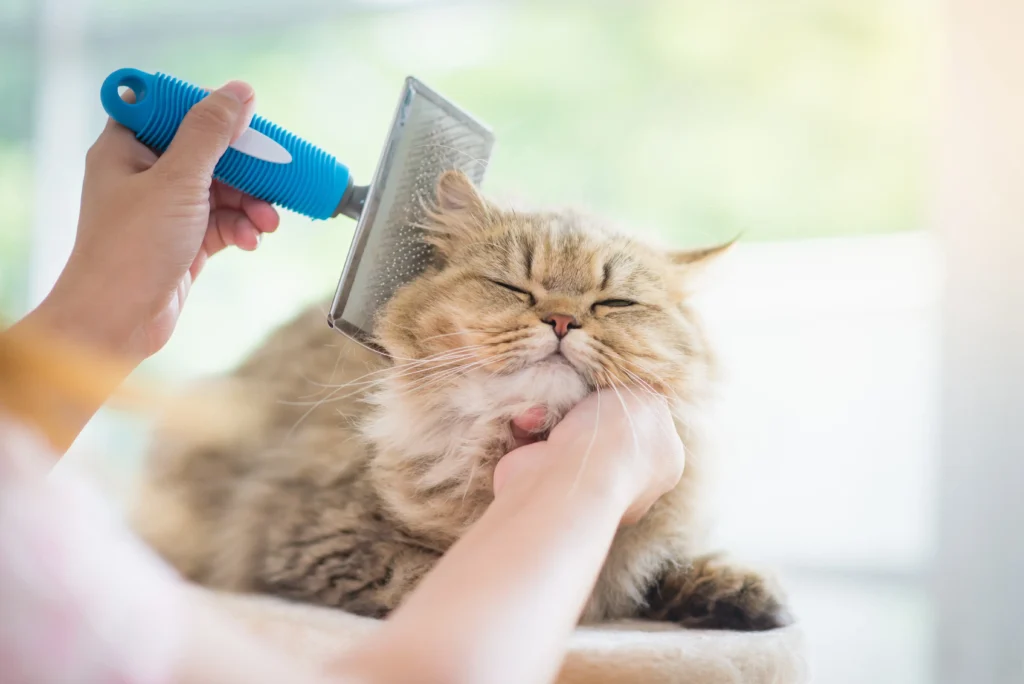
Cat Grooming Needs by Coat Type
Not every cat needs the same grooming routine.
Short-Haired Cats
Short-haired cats generally require less brushing than long-haired cats.
A regular brushing session can remove loose fur, dirt, and dead skin cells. ASPCA recommends one or two brushings per week for many cats, although individual grooming needs can vary.
Some short-haired cats may need more frequent brushing during periods of increased shedding.
A cat’s tail can reveal a lot about its mood and emotions, so check out our Cat Tail Meanings guide to understand what different tail positions and movements may indicate.
Long-Haired Cats
Long-haired cats usually require more frequent grooming because their fur is more likely to become tangled or matted.
Areas such as behind the ears, under the front legs, around the neck, and along the back legs can develop tangles quickly.
VCA notes that long, silky, or curly coats may require daily brushing to prevent mats, while short-haired cats generally need less frequent brushing.
Curly or Unusual Coats
Cats with curly or unusual coat textures can have different grooming requirements.
Their hair may behave differently from a typical short or long coat, so owners should follow a routine appropriate for the individual cat.
If you are unsure which tools or brushing schedule are suitable, ask a veterinarian or professional groomer.
How Often Should You Groom a Cat?
There is no single grooming schedule that works for every cat.
Short-haired cats may be comfortable with brushing once or twice a week, while long-haired cats may need brushing much more frequently.
Older cats may also need additional grooming support because mobility problems or other health issues can make self-grooming more difficult. Overweight cats may have trouble reaching certain areas of their body as well.
A useful routine is to check your cat’s coat regularly even when you are not doing a full grooming session.
Cat Grooming Tools You May Need
The right tools make cat grooming easier and more comfortable.
Common grooming supplies include:
- Soft-bristle brush
- Cat grooming comb
- Grooming mitt
- Wide-toothed comb for longer coats
- Cat nail clippers
- Cat-formulated shampoo
- Clean towels
- Cotton pads or gauze
- Cat toothbrush and toothpaste
- Vet-approved ear cleaner
You do not necessarily need every tool.
The best equipment depends on your cat’s coat, grooming needs, and tolerance.
Choosing the Right Cat Brush
The brush should match your cat’s coat.
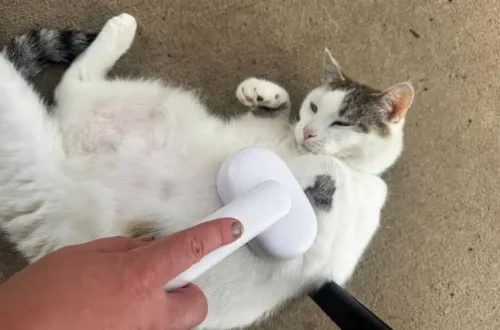
A soft brush or grooming mitt may work well for many short-haired cats.
Long-haired cats may need a combination of a brush and comb to reach through the coat and identify tangles.
Avoid brushing aggressively.
The goal is to remove loose hair without pulling or irritating the skin.
How to Start Cat Grooming
If your cat is not used to grooming, do not begin with a long session.
Start by allowing your cat to see and smell the brush.
Touch the brush gently to the coat for a short period and then stop.
You can reward calm behavior with praise or a suitable treat.
Gradually increase the length of the sessions as your cat becomes more comfortable.
Petlibro also recommends creating a calm environment and introducing grooming gradually, especially for short-haired cats that are not accustomed to the process.
Step-by-Step Cat Grooming Routine
A simple grooming routine can make regular care easier.
Step 1: Choose a Calm Time
Choose a quiet time when your cat is relaxed.
Avoid starting a grooming session immediately after your cat becomes excited or frightened.
A calm environment makes it easier for the cat to cooperate.
Step 2: Check the Coat
Before brushing, look through the fur.
Check for:
- Mats
- Tangles
- Fleas
- Flea dirt
- Redness
- Bald patches
- Wounds
- Lumps
- Unusual bumps
ASPCA recommends checking the condition of the coat and skin during grooming rather than simply brushing without looking.
Step 3: Brush Gently
Brush in the direction the fur naturally grows.
Use gentle strokes rather than pulling through knots.
Pay extra attention to areas where tangles commonly develop.
Step 4: Check the Skin
While brushing, look at the exposed skin.
Healthy skin should generally appear clear rather than significantly red, swollen, flaky, or irritated.
If you notice something unusual, do not automatically assume grooming will solve it.
A persistent skin problem may require veterinary evaluation.
Cat Grooming for Shedding
Shedding is a normal part of a cat’s hair cycle.
Indoor cats can shed throughout the year, while some cats experience more noticeable seasonal shedding.
Regular cat grooming can remove loose hair before it ends up on furniture, clothing, or inside the cat’s digestive tract during self-grooming.
VCA notes that regular brushing can also reduce the amount of hair swallowed during self-grooming and may help reduce hairballs.
Cat Grooming and Hairballs
Cats swallow some loose hair while grooming themselves.
Most of the time, hair passes through the digestive system, but some cats develop hairballs.
Regular brushing reduces the amount of loose hair available for your cat to swallow.
If your cat repeatedly vomits hairballs, coughs frequently, or shows other unusual symptoms despite regular grooming, speak with a veterinarian.
Cat Grooming for Matted Fur
Mats are tightly tangled areas of fur that can become uncomfortable and may pull on the skin.
Long-haired cats are particularly prone to mats.
Small tangles may sometimes be carefully worked out with an appropriate comb, but never pull forcefully.
If a mat is dense, close to the skin, or difficult to remove safely, professional help is a better option.
ASPCA notes that neglected grooming can result in painful mats, particularly in long-haired cats.
Grooming Tips for Sensitive Cats
Some cats dislike brushing, nail trimming, or being handled.
Do not force a struggling cat through a complete grooming session.
Instead, divide grooming into small steps.
For example, one day you might work on brushing, while another short session can focus on getting the cat comfortable with having its paws touched.
Reward calm behavior and stop when the cat becomes highly stressed.
Cat Grooming and Bonding
Grooming can become a positive part of your relationship with your cat.
Gentle brushing gives you regular physical contact while allowing you to check the coat and skin.
Cats that associate grooming with calm attention and rewards may become more comfortable with the routine over time.
The goal is not to complete the longest possible grooming session.
The goal is to make grooming safe, calm, and consistent.
Cat Grooming: Brushing, Bathing, Nails, Ears and Teeth
Regular cat grooming is not only about keeping your cat looking neat. It is also a useful way to check the skin, coat, paws, ears, nails, and mouth for changes that may need attention.
The best routine depends on your cat’s coat and individual needs. Long-haired cats generally need more frequent brushing than short-haired cats, while healthy adult cats usually do not need frequent baths.
How to Brush Your Cat
Brushing is one of the most important parts of a simple cat grooming routine.
Start by choosing a brush that suits your cat’s coat. Short-haired cats may do well with a soft or bristle brush, while medium- and long-haired cats may need a comb or longer-toothed brush.
Brush gently in the direction the hair grows. Work through one section at a time instead of repeatedly brushing the same area.
During brushing, check for mats, fleas, unusual bumps, wounds, bald areas, or irritated skin. Regular coat checks can help you notice changes earlier.
Cat Grooming for Long-Haired Cats
Long-haired cats usually need more attention because their coats can develop tangles and mats.
Areas behind the ears, under the front legs, around the neck, and along the back legs can be particularly prone to tangling.
A long-haired cat may benefit from brushing every day or every few days, depending on its coat.
Do not pull forcefully on a mat. Severe or extensive mats are safer to handle with professional help because cutting too close to the skin can cause injury. VCA specifically recommends clippers rather than scissors for removing difficult mats.
Cat Grooming for Short-Haired Cats
Short-haired cats generally need less frequent grooming than long-haired cats.
Regular brushing still helps remove loose hair, dirt, and dead skin cells.
For many cats, brushing once or twice a week can be a useful routine, although some cats may need more frequent brushing during heavier shedding periods.
Short-haired cats should still receive regular skin and coat checks.
How to Bathe a Cat
Most healthy adult cats are capable of keeping themselves clean and rarely need a bath.
Bathing may become necessary if your cat gets into something sticky, dirty, smelly, or potentially harmful. Some cats with particular skin conditions may also need bathing as part of veterinary treatment.
If a bath is necessary, prepare everything before bringing your cat into the bathroom.
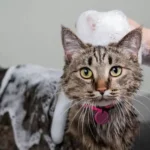
Use lukewarm water and a shampoo specifically formulated for cats. Human shampoos, including baby shampoo, can be too harsh for feline skin.
Keep water away from the eyes, ears, and nose, rinse the coat thoroughly, and dry your cat in a warm, draft-free area.
Cat Grooming Before a Bath
Brushing before bathing is important, especially for cats with longer coats.
Loose hair can be removed before the coat becomes wet, and small tangles can be easier to handle before bathing.
Water can make existing tangles harder to remove, so dealing with mats beforehand is preferable.
A calm grooming session before the bath can also make the entire process easier.
Cat Grooming and Nail Trimming
Nail care is another useful part of cat grooming.
Indoor cats may need their claws trimmed periodically, particularly when the nails become too sharp or overgrown.
Before trimming, help your cat become comfortable with having its paws touched.
Gently press the paw pad so the claw extends, then trim only the sharp tip. Avoid the pink area known as the quick because it contains blood vessels and nerves.
If your cat strongly resists nail trimming, do not force the procedure.
A veterinarian or professional groomer can help.
How Often Should Cat Nails Be Trimmed?
Nail growth varies between cats.
ASPCA recommends nail trimming approximately every 10 days to two weeks for cats that need regular trimming.
However, you should check the nails rather than relying only on a calendar.
If the claws are becoming excessively sharp, catching on fabric, or appearing overgrown, it may be time to trim them.
Cat Grooming and Paw Care
Your cat’s paws should be checked regularly.
Look between the toes and around the paw pads for dirt, foreign objects, cuts, swelling, or other abnormalities.
Outdoor cats can sometimes pick up debris on their feet, while long-haired cats may develop excess hair between their toes.
A damp cloth can be used for gentle cleaning when necessary. If you notice bleeding, pus, swelling, an unusual odor, persistent licking, or limping, contact a veterinarian.
Cat Grooming and Ear Care
Your cat’s ears should be checked during routine care.
Look for unusual dirt, discharge, redness, swelling, or a strong odor.
Do not insert objects deeply into the ear canal.
If your cat repeatedly scratches its ears, shakes its head, or seems uncomfortable, veterinary evaluation is more appropriate than trying to solve the problem through routine cleaning.
Cat Grooming and Dental Care
Dental care is often overlooked when people think about cat grooming.
Plaque can build up on a cat’s teeth and contribute to dental disease.
Getting a cat comfortable with gentle mouth handling from a young age can make dental care easier.
Use toothpaste made specifically for cats rather than human toothpaste. ASPCA recommends discussing appropriate dental-care supplies with your veterinarian.
If your cat has red or inflamed gums, bad breath, difficulty eating, excessive drooling, or obvious mouth discomfort, arrange a veterinary examination.
Cat Grooming Around the Eyes
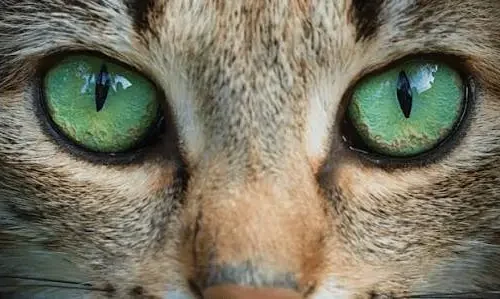
Most cats do not need routine eye cleaning when their eyes are healthy.
If there is a small amount of normal discharge around the eye, you can gently wipe the area with a clean, damp cloth.
Never use human eye products unless your veterinarian specifically recommends them.
Persistent discharge, redness, swelling, cloudiness, squinting, or changes in the appearance of an eye should be checked by a veterinarian.
Cat Grooming During Shedding Season
Shedding is normal, and indoor cats may shed throughout the year.
Some cats experience heavier shedding at certain times of the year.
Increasing brushing during these periods can help remove loose hair before it spreads around your home or is swallowed during self-grooming.
Regular brushing can also reduce the amount of loose hair and help reduce hairball formation.
Cat Grooming for Older Cats
Older cats may need additional grooming support.
Joint pain, reduced flexibility, weight gain, or other health problems can make it difficult for an older cat to reach certain areas of its body.
You may notice more tangles, greasy fur, dandruff, or a less tidy coat.
Regular gentle brushing can help, but a noticeable decline in grooming ability should not simply be blamed on age. VCA notes that coat condition can provide clues about underlying health problems.
Cat Grooming for Overweight Cats
Overweight cats may struggle to groom areas such as the lower back and hindquarters.
This can result in mats, greasy fur, or accumulated debris.
Gentle brushing can help maintain these areas, but improving the cat’s overall health and weight should also be discussed with a veterinarian.
A cat that suddenly stops grooming itself should also be evaluated because illness or pain may be involved.
When to Use Cat Grooming Near Me
Some grooming tasks are easy to handle at home, but others are better left to a professional.
Searching for cat grooming near me can be useful when your cat has severe mats, strongly resists grooming, needs a difficult coat trim, or becomes unsafe to handle at home.
ASPCA recommends professional grooming or veterinary assistance when a cat fights the grooming process and there is a risk of injury to the cat or owner.
Choose a groomer who has experience working with cats rather than assuming every pet groomer has the same feline-handling experience.
How to Make Cat Grooming Easier
Good grooming tips can make a major difference.
Keep sessions short, choose a quiet location, and begin when your cat is relaxed.
Let your cat inspect grooming tools before using them.
Reward calm behavior with praise or an appropriate treat.
If your cat becomes highly stressed, stop and try again later instead of forcing the session.
Over time, short positive sessions can help your cat become more comfortable with regular care.
Cat Grooming Mistakes to Avoid
Avoid common mistakes that can make grooming stressful or unsafe.
Do not:
- Pull hard on mats
- Use human shampoo
- Cut the nail quick
- Force an aggressive or frightened cat
- Use scissors close to the skin
- Ignore unusual skin changes
- Clean deep inside the ears without veterinary guidance
- Continue grooming when your cat is highly distressed
The purpose of a cat grooming routine is to keep your cat comfortable and healthy, not simply to make its coat look perfect.
Cat Grooming: Building a Simple Routine
A consistent cat grooming routine does not need to be complicated. The most important thing is to make grooming regular, gentle, and appropriate for your cat’s coat and individual needs.
Instead of trying to complete every task in one session, divide grooming into smaller activities. You might brush your cat on one day, check its paws another day, and work on dental care separately.
This approach can make grooming less stressful, particularly for cats that do not enjoy being handled.
Weekly Cat Grooming Checklist
A simple weekly cat grooming checklist can help you stay consistent.
Coat
Check for mats, tangles, loose hair, dirt, fleas, and unusual skin changes.
Eyes
Look for unusual discharge, redness, swelling, or cloudiness.
Ears
Check for excessive dirt, discharge, odor, redness, or repeated scratching.
Paws
Look between the toes and around the pads for debris, cuts, swelling, or irritation.
Nails
Check whether the claws are becoming too long or sharp.
Teeth and Gums
Look for plaque, red gums, bad breath, drooling, or difficulty eating.
You do not have to perform every grooming task every week. The checklist is mainly a reminder to regularly observe your cat.
Cat Grooming Tips for a Stress-Free Experience
The best grooming tips focus on making your cat feel safe.
Start slowly and avoid forcing your cat into a long grooming session.
Choose a quiet location where your cat already feels comfortable. Allow your cat to sniff and investigate brushes, combs, and other tools before using them.
Keep the first sessions short.
If your cat remains calm, gradually increase the amount of grooming.
Positive experiences can make future cat grooming much easier.
Cat Grooming for Kittens
Kittens can benefit from being introduced to grooming early.
Young cats can gradually become familiar with brushing, paw handling, nail trimming, and gentle mouth handling.
Start with very short sessions.
For example, gently touch the kitten’s paw for a few seconds and then stop. Later, you can introduce the nail clippers without actually trimming.
This gradual approach can make grooming a normal part of life rather than something the cat suddenly has to tolerate as an adult.
Cat Grooming for Rescue or Nervous Cats
A rescued or nervous cat may need additional time to become comfortable with grooming.
Do not assume that the cat will immediately tolerate brushing or nail trimming.
Begin by creating a safe environment and allowing the cat to approach you voluntarily.
You can introduce the grooming tool slowly and reward calm behavior.
If the cat becomes frightened, stop rather than pushing through the session.
For severe mats or neglected coats, professional cat grooming near me may be safer than attempting to remove everything yourself.
When a Cat Stops Grooming Itself
Cats normally spend considerable time maintaining their coats.
If a cat that previously groomed itself well suddenly stops, the change may be significant.
Pain, obesity, dental problems, arthritis, illness, or other health issues can make normal grooming difficult.
You may notice a greasy coat, mats, dandruff, or an unkempt appearance.
Do not treat the change as only a grooming problem. If the behavior continues, consult a veterinarian.
Cat Grooming and Skin Problems
Regular grooming gives you an opportunity to notice skin problems.
During brushing, look for:
- Redness
- Scabs
- Bald patches
- Swelling
- Lumps
- Fleas
- Excessive dandruff
- Persistent scratching
- Skin irritation
Grooming itself may not treat the underlying cause.
If a skin change persists or your cat seems uncomfortable, veterinary advice is appropriate.
Cat Grooming and Fleas
Fleas can sometimes be noticed while brushing or examining the coat.
You may see live fleas or small dark particles that resemble dirt.
However, simply brushing the cat does not eliminate a flea infestation.
If you suspect fleas, speak with a veterinarian about an appropriate cat-safe flea-control product.
Never use a flea treatment intended for dogs unless a veterinarian specifically confirms that it is safe for your cat. Some dog flea products contain ingredients that can be dangerous to cats.
Cat Grooming and Hair Mats
Preventing mats is easier than removing severe mats.
Regular brushing helps identify small tangles before they become tightly compacted.
If a mat has formed, do not pull aggressively because this can hurt the skin.
Never use ordinary scissors close to the skin. A cat can suddenly move, creating a risk of serious injury.
For large or tightly attached mats, professional grooming or veterinary assistance is safer.
Can You Shave a Cat?
Shaving is not normally necessary simply because a cat sheds.
A cat’s coat provides protection and contributes to temperature regulation.
There are situations where a veterinarian or experienced professional groomer may recommend clipping part of a coat, particularly when severe mats cannot otherwise be managed.
Do not shave your cat at home simply to reduce shedding.
Regular brushing is generally a better first approach.
Cat Grooming and Seasonal Changes
Your cat’s grooming needs can change during the year.
During heavier shedding periods, more frequent brushing may be helpful.
Cats with long coats can develop tangles more quickly when loose hair accumulates.
Indoor cats may shed throughout the year, so regular coat checks remain useful even outside traditional shedding seasons.
Adjust the grooming routine according to your cat rather than following a rigid schedule.
Cat Grooming for Indoor and Outdoor Cats
Indoor cats still need regular grooming.
They may have less exposure to dirt and debris, but they can still shed, develop mats, accumulate plaque, and grow overgrown nails.
Outdoor cats may need additional checks because they can encounter dirt, plant material, parasites, and other environmental debris.
After outdoor activity, checking the paws and coat can be particularly useful.
Cat Grooming and Professional Groomers
Professional grooming can be helpful when home grooming is difficult.
A professional may be able to safely handle difficult mats, coat trims, nail care, or cats that are difficult for owners to groom.
When searching for cat grooming near me, look for someone who specifically has experience handling cats.
Ask about their grooming methods, how they handle nervous cats, and what services are appropriate for your cat’s coat.
For medical skin problems, severe pain, or other health concerns, a veterinarian is more appropriate than a groomer.
When to Contact a Veterinarian
Grooming is not a substitute for veterinary care.
Contact a veterinarian if you notice:
- Sudden loss of grooming behavior
- Severe mats
- Persistent skin irritation
- Unexplained hair loss
- Repeated ear scratching
- Pain when being handled
- Bleeding
- Swelling
- Persistent bad breath
- Difficulty eating
- Significant changes in behavior
A veterinarian can determine whether the problem is caused by a grooming issue or an underlying health condition.
Cat Grooming FAQs
How often should I groom my cat?
The ideal schedule depends on the coat. Short-haired cats often need brushing once or twice a week, while long-haired cats may need daily or frequent brushing to prevent mats.
Do cats need baths?
Most healthy cats rarely need baths because they clean themselves. A bath may be necessary if the coat becomes heavily soiled or if a veterinarian recommends bathing for a particular skin condition.
What is the best brush for cat grooming?
The best brush depends on your cat’s coat. A soft brush or grooming mitt can work for many short-haired cats, while long-haired cats may need a combination of brushes and combs.
Can I cut my cat’s nails at home?
Yes, many cats can have their nails trimmed at home when they are comfortable with paw handling. Trim only the sharp tip and avoid the quick, which contains blood vessels and nerves.
Should I search for cat grooming near me?
Professional grooming can be useful when your cat has severe mats, needs a difficult coat trim, or strongly resists grooming. Choose a groomer with specific experience handling cats.
What should I do if my cat stops grooming itself?
A sudden reduction in self-grooming can sometimes be related to pain, illness, obesity, dental problems, or reduced mobility. If the change continues, contact a veterinarian rather than treating it as only a grooming issue.