






Cat Body Language
Cats communicate constantly, even when they are completely silent. They use their ears, eyes, whiskers, tails, facial expressions, and body posture to communicate their emotions and intentions. Learning cat body language can help you understand when your cat is relaxed, curious, frightened, stressed, playful, or ready for some space.
A cat may not be able to tell you what it wants with words, but its body can provide plenty of clues. The key is to look at several signals together rather than relying on one movement. By learning common cat signals, you can become better at understanding cat behavior and responding to your cat appropriately.
How Does Cat Body Language Work?
Cats communicate through a combination of physical movements, facial expressions, sounds, and scent.
Their ears may move toward a sound, their pupils may change size, and their tail may change position depending on what they are experiencing. A cat can also change its entire posture when it feels threatened or uncomfortable.
This means there is no single body-language signal that always has exactly one meaning.
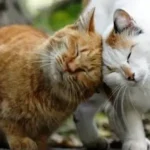
Cats use different behaviors to show affection and communicate, so check out our Cat Head Butting guide to learn why cats headbutt their owners and what this behavior means.
For example, large pupils can occur during play, excitement, fear, or in low light. Looking at the entire situation gives you a much better idea of what your cat is communicating.
Cat Ears and What They Mean
Your cat’s ears are highly mobile and can provide some of the easiest signals to notice.
Forward Ears
When a cat’s ears point forward, it is often paying attention to something in front of it.
Your cat may use this position while watching a bird through a window, listening to a toy, or calmly interacting with you.
Forward ears can therefore occur during both relaxed attention and excitement.
Relaxed or Neutral Ears
A comfortable cat usually keeps its ears in a natural position.
The ears may move slightly as the cat listens to different sounds around the room.
If the rest of the body is loose and relaxed, neutral ears generally indicate that there is no obvious threat.
Ears Turned Sideways
Ears held sideways can occur when a cat becomes uncertain, uncomfortable, or stressed.
The exact meaning depends on the other signals.
If the cat is also crouching, avoiding interaction, or moving its tail nervously, it may be feeling uncomfortable.
Flattened Ears
Ears pressed backward or close to the head are an important warning signal.
A cat may flatten its ears when frightened, irritated, or preparing to defend itself.
If flattened ears appear together with hissing, growling, swatting, or a tense body, give the cat plenty of space.
Cat Eyes and Eye Contact
A cat’s eyes can tell you a lot about its level of attention and emotional state.
Soft and Relaxed Eyes
A relaxed cat may have soft-looking eyes with partially closed eyelids.
You may see this when your cat is resting beside you or enjoying gentle interaction.
Soft eyes combined with relaxed posture are generally reassuring signs.
Slow Blinking
Cats sometimes slowly close and open their eyes during relaxed social interactions.
If your cat looks at you and slowly blinks, you can respond with a slow blink of your own.
Slow blinking is commonly interpreted as a friendly or relaxed signal, although it should still be considered together with the rest of the cat’s behavior.
Wide Eyes
A cat may open its eyes widely when it is highly alert, excited, surprised, or frightened.
For example, a cat watching a toy may have wide eyes because it is focused on play.
A frightened cat may also have wide eyes, but it will usually show other signs such as flattened ears, crouching, or a tucked tail.
Dilated Pupils
Large pupils can occur for several reasons.
Low light naturally causes the pupils to expand, while excitement, fear, and high arousal can also produce large pupils.
For this reason, pupil size should never be used by itself to determine how your cat feels.
Cat Tail Language
The tail is one of the most noticeable parts of feline body language.
However, tail movements need to be interpreted in context.
Tail Held Upright
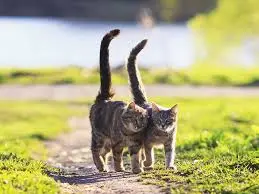
A cat walking toward you with an upright tail is often displaying a friendly social signal.
You may see this when your cat greets you or approaches someone it knows.
A relaxed upright tail is generally very different from a puffed-up tail.
Tail Curved at the Tip
Some cats walk around with their tails raised and slightly curved at the end.
This can occur during friendly or curious interactions.
You may notice it when your cat approaches you or explores an area of the home.
Tail Tucked Away
A tail tucked underneath or closely against the body can occur when a cat feels frightened or insecure.
Look for additional signs such as crouching, flattened ears, hiding, or wide eyes.
These signals together can indicate that your cat wants distance from whatever is making it uncomfortable.
Fast Tail Movement
A rapidly moving or strongly flicking tail can indicate excitement, irritation, frustration, or high arousal.
If your cat starts flicking its tail while you are petting it, consider stopping for a moment.
The movement may be your cat’s way of showing that it has had enough interaction.
Puffed-Up Tail
A puffed-up tail occurs when the fur stands out from the body.
This commonly happens when a cat is frightened, startled, or highly aroused.
You may also see an arched back and raised fur at the same time.
Cat Whiskers and Their Signals
Whiskers are important sensory tools that help cats gather information about their surroundings.
Their position can also change during different emotional states.
Relaxed whiskers usually sit naturally around the face.
Whiskers pushed forward may occur when a cat is focused on something interesting.
Whiskers pulled tightly backward can occur when a cat is frightened, stressed, or uncomfortable.
Whisker position should always be considered alongside other body signals.
Cat Body Posture
Your cat’s overall body posture can be one of the clearest clues to its emotional state.
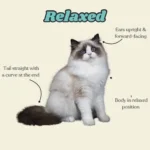
Relaxed Posture
A relaxed cat may:
- Lie on its side
- Stretch out
- Sit comfortably
- Groom itself
- Rest with loose muscles
- Sleep in an open position
The cat generally looks comfortable rather than stiff or prepared to escape.
Crouched Posture
A crouched cat may be frightened, uncertain, or preparing to react.
A cat that crouches low while keeping its body tense may be trying to make itself less noticeable.
Look at the ears, eyes, whiskers, and tail to understand the situation better.
Arched Back
An arched back can occur when a cat is frightened or defensive.
If the fur is also raised and the ears are flattened, the cat is likely experiencing strong emotional arousal.
Give the cat space instead of approaching it.
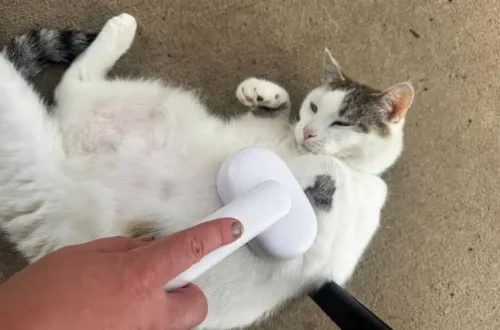
Rolling Onto the Back
An exposed belly does not always mean your cat wants a belly rub.
Some cats roll onto their backs when they feel relaxed, while others may do so as part of a defensive position.
Always watch the rest of the body before touching the belly.
Cat Body Language When Relaxed
A comfortable cat usually has a loose body and natural movements.
It may lie down, stretch, groom itself, or sit near you without appearing tense.
Its ears and whiskers may remain neutral, while its eyes may look soft.
If your cat chooses to rest close to you while showing these relaxed signals, it is generally comfortable with your presence.
Cat Body Language When Happy
Cats show positive emotions in different ways.
Common relaxed and friendly signals may include:
- Upright tail
- Soft eyes
- Relaxed ears
- Loose body
- Rubbing against you
- Purring
- Kneading
- Slow blinking
- Choosing to stay near you
No single behavior proves exactly what your cat feels.
A combination of relaxed signals gives you a much clearer picture.
Cat Body Language When Scared
A frightened cat may try to hide, escape, or make itself appear less noticeable.
You may notice:
- Crouching
- Flattened ears
- Wide eyes
- Dilated pupils
- Tucked tail
- Raised fur
- Hiding
- Hissing or growling
If your cat is frightened, do not force it to interact.
Give it a quiet and safe place where it can move away from the source of fear.
Cat Body Language When Angry or Defensive
A defensive cat may display several warning signals at once.
Its ears may flatten, its body may become tense, and its tail may move rapidly or puff up.
Hissing, growling, swatting, and biting can happen if the cat feels that its warnings are being ignored.
When you see these signals, stop approaching and give your cat space.
Understanding these warnings can help prevent scratches and bites.
Cat Body Language During Play
Play can make a cat’s body language look very different from its relaxed behavior. A playful cat may crouch low, stare at a toy, wiggle its body, pounce, chase, or suddenly run across the room.
These movements can sometimes look aggressive because cats naturally use hunting behaviors during play. However, a playful cat usually has more relaxed movements and may pause before returning to the game.
Using toys instead of hands is important. This teaches your cat that hands are for gentle interaction rather than biting or scratching.
Cat Body Language When Your Cat Wants Attention
Cats have different ways of asking for attention.
Your cat may walk toward you with its tail raised, rub against your legs, headbutt your hand, sit beside you, meow, or gently touch you with a paw.
Some cats are more demanding than others. One cat may quietly sit beside you, while another may repeatedly rub against your legs until you notice it.
Pay attention to what happens after the signal. If your cat moves closer when you pet it, it may want more interaction. If it walks away, let it leave.
Cat Body Language When Your Cat Wants to Be Petted
A cat that wants physical contact will usually approach voluntarily.
It may rub its cheeks against your hand, push its head toward your fingers, or sit close to you with a relaxed posture.
Some cats prefer being touched around the head, cheeks, and chin rather than other areas of the body.
If your cat becomes tense, moves away, flattens its ears, or starts flicking its tail strongly, stop petting and give it space.
Respecting these small signals helps your cat feel more comfortable around you.
Cat Body Language When Your Cat Does Not Want to Be Touched
Cats can communicate when they have had enough interaction.
Early signals may include turning the head away, moving away, becoming tense, or repeatedly moving the tail.
If the interaction continues, the cat may flatten its ears, hiss, growl, swat, or bite.
Learning these warning signs is an important part of understanding cat behavior.
Instead of holding your cat in place, allow it to leave. Giving your cat control over physical interaction can help reduce stress.
Cat Body Language Before Biting
A cat may show warning signals before it bites, although every cat is different.
Look for changes such as:
- Flattened ears
- Rapid tail movement
- Tense muscles
- Wide eyes
- Dilated pupils
- Crouching
- Hissing
- Growling
- Trying to move away
These signals can mean your cat is frightened, irritated, overstimulated, or defensive.
If you notice several of these signs together, stop the interaction.
Cat Body Language and Overstimulation
Some cats enjoy petting for a while and then suddenly become uncomfortable.
Your cat may initially purr and lean toward your hand but later begin flicking its tail, moving its ears backward, shifting its body, or trying to leave.
This can happen because the cat has become overstimulated.
Instead of waiting for a swat or bite, stop petting when you notice the earlier warning signals.
Shorter and calmer interactions can be more comfortable for cats that become overstimulated easily.
Cat Body Language With Other Cats
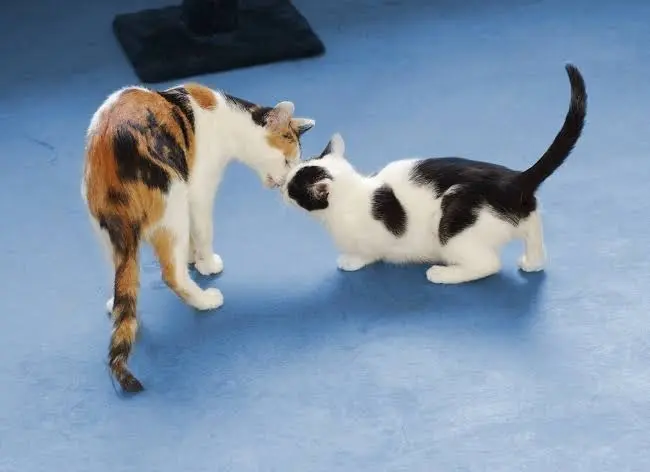
Cats communicate with other cats through posture, facial expressions, tails, ears, vocalizations, physical contact, and scent.
Friendly cats may approach each other with relaxed bodies and raised tails. Cats that have a social bond may also rub against each other, groom one another, or rest nearby.
Tension can look very different.
Staring, body blocking, flattened ears, hissing, growling, raised fur, and rapid tail movements may indicate that one or both cats feel uncomfortable.
Understanding these signals can help you notice conflict before it becomes a physical fight.
Cat Body Language With Humans
Cats use many of the same communication signals with people that they use during other social interactions.
A comfortable cat may approach you with an upright tail, rub against your legs, headbutt you, or sit beside you.
A nervous cat may instead hide, crouch, avoid contact, or move away.
The important thing is to allow the cat to choose whether it wants interaction.
Trying to force a shy cat to be held or petted can make it more fearful.
Cat Body Language When Meeting New People
Some cats confidently approach visitors, while others immediately hide.
A confident cat may walk toward a new person, sniff them, keep its tail upright, and eventually rub against them.
A nervous cat may stay at a distance with its ears turned backward or body lowered.
Visitors should allow the cat to approach rather than chasing or grabbing it.
This gives the cat more control and can make introductions less stressful.
Cat Body Language When Meeting a New Cat
A new cat can create uncertainty because cats are sensitive to unfamiliar scents and changes in their environment.
During an introduction, hissing, growling, staring, flattened ears, and tense posture can indicate that a cat feels threatened.
Cats should not be forced into immediate close contact.
Gradual introductions with separate spaces and controlled interaction can give cats time to become familiar with each other’s scent and presence.
Cat Body Language During Feeding
Mealtimes can produce strong signals because cats naturally become focused on food.
Your cat may follow you to its food bowl, vocalize, rub against your legs, raise its tail, or watch closely while you prepare the meal.
These behaviors can simply indicate anticipation.
However, a sudden change in appetite is different. If your cat stops eating, eats much less than usual, or shows other signs of illness, the change should not be dismissed as normal body language.
Cat Body Language While Sleeping
Cats sleep in many different positions, and their posture can provide some information about how comfortable they feel.
A cat that stretches out on its side may feel secure enough to relax fully.
A cat curled into a tight position may simply be conserving warmth or choosing a comfortable sleeping posture.
Cats may also sleep with their paws tucked underneath their bodies.
The sleeping position alone does not tell you everything. Consider where your cat chooses to sleep and whether its overall behavior is normal.
Cat Body Language When Being Held
Not every cat enjoys being picked up.
A comfortable cat may remain relaxed when held, while an uncomfortable cat may become stiff, push away, move its tail, flatten its ears, or try to escape.
If your cat repeatedly shows these signals, put it down safely.
Respecting your cat’s preference is better than forcing physical contact.
Cat Body Language and Vocal Signals
Body language is only one part of feline communication.
Cats also use different sounds, including:
- Meowing
- Purring
- Trilling
- Hissing
- Growling
- Yowling
The same vocalization can have different meanings depending on the situation.
For example, purring commonly occurs during relaxed interactions, but cats can also purr during stress or discomfort.
This is why sounds should be considered together with posture, eyes, ears, and tail movements.
Cat Body Language That May Show Stress
Stress is not always obvious.
A stressed cat may hide more than usual, crouch, keep its body tense, groom excessively, lick its lips, or become less interested in normal interaction.
Changes in litter-box habits, appetite, sleep, or social behavior can also occur.
The most useful comparison is your cat’s normal behavior.
If a behavior is new and continues, try to identify what changed in the environment.
Cat Body Language That May Indicate Pain
Cats can hide pain, which makes changes in body language especially important.
A cat experiencing discomfort may become less active, hide more, sit in a hunched position, squint, groom differently, or avoid being touched.
You may also notice changes in appetite, movement, sleeping habits, or social behavior.
Body language cannot diagnose the cause of pain.
If your cat suddenly behaves differently or appears uncomfortable, a veterinarian should assess the situation.
How to Read Cat Body Language Correctly
The best way to understand your cat is to look at several signals at the same time.
For example:
Relaxed body + soft eyes + natural ears + upright tail
creates a very different picture from:
Tense body + flattened ears + wide eyes + puffed tail.
You should also consider what happened immediately before the behavior.
A cat with large pupils while chasing a toy may be excited. A cat with large pupils while hiding under furniture may be frightened.
Context makes cat signals easier to understand.
Cat Body Language: Quick Reference
| Signal | Possible meaning |
|---|---|
| Upright tail | Friendly or confident interaction |
| Tucked tail | Fear or insecurity |
| Puffed tail | Fear or being startled |
| Forward ears | Interest or attention |
| Flattened ears | Fear, stress, or defensiveness |
| Soft eyes | Relaxation |
| Slow blinking | Relaxed social interaction |
| Crouched body | Fear or uncertainty |
| Loose body | Comfort |
| Arched back | Fear or defensive behavior |
| Rapid tail flicking | Irritation or high arousal |
| Rubbing against you | Social contact and scent communication |
| Hissing | Warning or defensive response |
These signals are useful guides, but they should not be treated as exact translations. Your cat’s personality, environment, and other body movements all matter.
How to Better Understand Your Cat’s Body Language
Learning cat body language becomes easier when you first learn what is normal for your individual cat.
Some cats are naturally very vocal and expressive, while others communicate quietly. One cat may enjoy being touched frequently, while another may prefer sitting nearby without physical contact.
Pay attention to your cat’s usual ears, eyes, tail position, posture, and daily routine. Once you know the normal pattern, unusual cat signals become much easier to notice.
Look at the Whole Body
Avoid deciding what your cat feels from one signal.
For example, a moving tail does not always mean anger. A cat may move its tail while playing, watching something closely, feeling excited, or becoming irritated.
Instead, check the ears, eyes, whiskers, body posture, tail, and movement together.
The situation also matters. What happened immediately before the behavior can provide an important clue.
Give Your Cat Space When Needed
Understanding body language is useful because it allows you to respond before your cat becomes overwhelmed.
If your cat turns away, moves its tail rapidly, becomes tense, or flattens its ears during interaction, stop and give it space.
Do not punish hissing, growling, or other warning signals. These behaviors are communication that the cat is uncomfortable.
Respecting these warnings can help prevent the situation from escalating.
When a Change in Cat Body Language May Be Concerning
A single unusual movement does not necessarily mean your cat has a health problem.
However, sudden or persistent changes in normal behavior deserve attention. This may include hiding more than usual, becoming unusually quiet, avoiding touch, changing eating habits, grooming less, or moving differently.
Cats can hide signs of illness, so changes in normal behavior can sometimes be important.
If your cat appears painful, weak, confused, or seriously unwell, contact a veterinarian rather than trying to interpret the behavior yourself.
Cat Body Language FAQs
How can I tell if my cat is happy?
A relaxed body, soft eyes, natural ears, and a comfortable tail position are common signs of a relaxed cat. Purring, rubbing, kneading, playing, and choosing to stay near you may also occur during positive interactions.
How can I tell if my cat is scared?
A scared cat may crouch, hide, tuck its tail, flatten its ears, widen its eyes, or raise its fur. Hissing or growling can appear when the cat feels especially threatened.
What does a cat’s tail tell you?
The tail can provide useful clues about your cat’s emotional state. An upright tail often occurs during friendly interactions, while a tucked or puffed tail can occur with fear or discomfort.
Why does my cat flatten its ears?
Flattened ears can happen when a cat is frightened, stressed, irritated, or feeling defensive. Look at the cat’s eyes, tail, posture, and surroundings to understand the situation.
How do I know if my cat wants to be petted?
A cat that approaches voluntarily with a relaxed body may be comfortable with interaction. Rubbing its head or cheeks against your hand can also be a sign that it wants contact.
Can changes in cat body language mean my cat is sick?
Yes. Sudden changes in activity, posture, appetite, grooming, movement, or social behavior can sometimes indicate pain or illness. If the change persists or your cat appears unwell, contact a veterinarian.