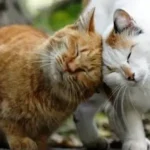



Cat Head Butting: What Does It Mean?
If your cat walks up to you, gently bumps its forehead against your hand, face, or legs, you may wonder, “Why does my cat headbutt me?”
This behavior is commonly called cat head butting or cat bunting, and it is usually a friendly form of feline communication. Cats may headbutt people they trust to show affection, greet them, seek attention, or leave their scent on them.
The behavior can look funny to humans, especially when a cat suddenly gives you a little forehead bump while you are working or relaxing.
But there is usually more behind the behavior than simply wanting a scratch.
Cats have scent glands around areas of the face, including the cheeks, forehead, and chin. When they rub or bump these areas against people or objects, they can leave behind chemical signals called pheromones.
So when your cat headbutts you, it may be communicating “you are familiar and safe,” “hello,” or “give me some attention.”
What Is Cat Head Butting?
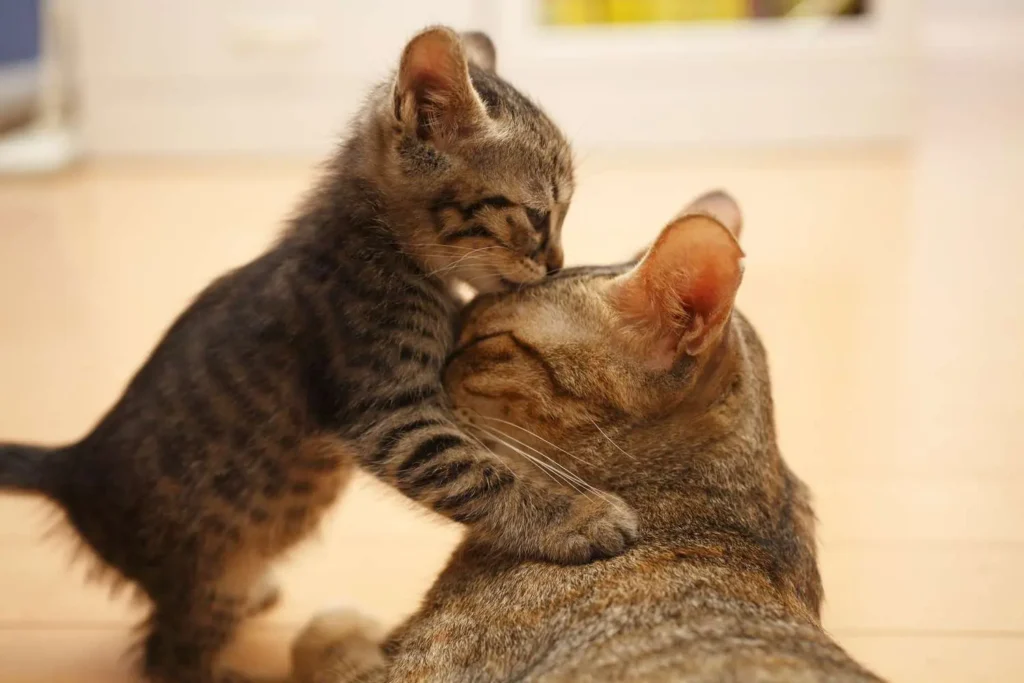
Cat head butting is when a cat deliberately bumps or presses its forehead against a person, another animal, or an object.
It can be a quick little bump or a slower movement where the cat presses its forehead against you and then rubs its cheeks along you.
This behavior is also called bunting.
Bunting is a normal social behavior in cats and can be used for communication, scent marking, greeting, and bonding.
For example, your cat may walk toward you when you sit on the sofa, look at you, raise its head, and gently bump your hand.
That is very different from a cat repeatedly pressing its head against a wall while appearing unwell.
Understanding that difference is important.
Why Does My Cat Headbutt Me?
There is more than one answer to why my cat headbutts me.
The most common reasons include:
- Showing affection
- Building trust
- Greeting you
- Marking you with scent
- Seeking attention
- Feeling comfortable
- Communicating socially
- Self-soothing
- Investigating someone familiar or new
The exact meaning depends on the situation and your cat’s body language.
A cat that headbutts you while purring, rubbing against your legs, and relaxing beside you is probably communicating very differently from a cat that repeatedly presses its head against objects while showing signs of illness.
This is why the behavior should always be interpreted in context.
Is Cat Head Butting a Sign of Affection?
Yes, cat head butting is often a sign of affection.
Cats do not express affection in the same way humans or dogs do.
Instead of giving hugs or kisses, a cat may communicate closeness by rubbing against you, grooming you, kneading, slow blinking, sleeping beside you, or headbutting you.
When your cat deliberately brings its face close to you and gives you a gentle forehead bump, it is allowing you into its personal space.
That can be a strong sign of familiarity and social connection.
Your cat may then stay beside you, purr, or ask for a chin scratch.
So if your cat regularly gives you little headbutts, you can usually take it as a positive interaction.
Cats often purr to communicate their feelings, so check out our Cat Purring guide to learn why cats purr and what this behavior may mean.
Why Does My Cat Headbutt My Face?
Your face is one of the places your cat may choose when showing affection or greeting you.
A cat may climb onto your lap, move close to your face, and gently bump its forehead against yours.
It may then rub its cheek against your face or settle down beside you.
Cats have scent glands around their face, so this behavior can help mix or transfer familiar scents.
It can also be a social greeting.
Your cat may simply have learned that being close to your face leads to affection, talking, or gentle petting.
If your cat approaches calmly and appears relaxed, there is generally no reason to discourage a gentle headbutt.
Why Does My Cat Headbutt My Legs?
Cats often headbutt or rub against their owner’s legs when they walk into a room.
This can happen when you:
- Come home
- Enter the kitchen
- Wake up
- Prepare food
- Sit down
- Walk past your cat
Your cat may be greeting you or trying to get your attention.
It may also be leaving its scent on you.
Cats use scent as an important part of communication, and facial rubbing can help create a familiar scent environment.
For example, your cat may weave around your legs, rub its cheek against you, and then look up at you.
That can be a combination of greeting, bonding, and asking for interaction.
Why Does My Cat Headbutt Me and Then Rub Against Me?
Headbutting and rubbing often appear together.
Your cat may first give you a forehead bump and then slide the side of its face along your hand or leg.
Both behaviors involve close contact with scent-producing areas of the face.
This can help your cat mark a familiar person or object with its scent while reinforcing a social connection.
The behavior can also be followed by purring, kneading, or asking for petting.
If your cat regularly does this when you return home, it may have become part of its normal greeting routine.
Why Do Cats Bunt?
Bunting is another word commonly used for cat headbutting.
Cats may bunt because they are communicating socially and leaving their scent on familiar individuals or objects.
This behavior is not simply about marking territory in an aggressive way.
Cats can use facial scent marking to create a familiar and reassuring environment.
They may bunt:
- Their owners
- Other cats
- Dogs they are comfortable with
- Furniture
- Cat trees
- Doorways
- Favorite objects
When your cat bunts you, it can be both a scent-marking behavior and a social interaction.
Why Does My Cat Mark Me With Its Head?
Cats have a highly developed sense of smell.
Facial scent glands allow cats to leave chemical signals on people and objects.
When your cat headbutts or rubs against you, it can deposit its scent.
To your cat, this helps identify you as part of its familiar social environment.
Humans cannot normally smell these feline pheromones, but cats can detect scent information that humans cannot.
So when your cat marks you with its face, it does not necessarily mean, “You belong to me” in the human sense.
It is better understood as part of normal feline scent communication and familiarity.
Does My Cat Headbutt Me Because It Trusts Me?
Often, yes.
A cat usually needs to feel comfortable before voluntarily bringing its face close to a person.
Headbutting can therefore be a sign that your cat feels safe around you.
Purina describes bunting as a behavior associated with trust, affection, familiarity, and emotional connection.
For a shy cat, this behavior can be especially meaningful.
Imagine adopting a nervous cat that spends its first few days hiding.
After several weeks, it finally walks over, gently bumps your hand, and stays beside you.
That small headbutt can be a sign that the cat is becoming comfortable with you.
Why Does My Cat Headbutt Me in the Morning?
Morning headbutting is common in cats that have developed a routine with their owners.
Your cat may wake you by:
- Headbutting your hand
- Rubbing against your face
- Walking across the bed
- Purring
- Meowing
- Sitting beside you
Sometimes this is affection.
Sometimes it is simply your cat’s way of saying, “Wake up, human.”
If breakfast normally follows your morning routine, your cat may also be anticipating food.
Headbutting can therefore combine affection and attention-seeking with a learned daily routine.
Why Does My Cat Headbutt Me Before Eating?
If your cat headbutts you whenever you prepare its food, the behavior may be connected to anticipation.
Cats quickly learn routines.
If you usually walk into the kitchen, prepare food, and then feed your cat, your cat may begin following you as soon as it realizes what is happening.
The headbutt may be part of its communication.
Your cat may also have learned that headbutting gets your attention.
This does not necessarily mean the behavior is only about food.
It can be both a social greeting and a request for something your cat wants.
Why Does My Cat Headbutt My Hand?
Your hand is often the easiest part of your body for a cat to approach.
A cat may walk toward your hand, sniff it, gently bump it, and then rub its cheek along your fingers.
This can be a request for attention or a way to exchange familiar scent.
If the cat then leans into your hand, you can usually offer gentle petting.
The head, cheeks, and chin are common areas many cats enjoy having scratched.
However, always watch the cat’s body language.
If it moves away, becomes tense, or shows signs of irritation, stop touching it.
Why Does My Cat Headbutt Me Then Purr?
This is usually a very positive combination.
If your cat:
- Walks toward you
- Gives you a gentle headbutt
- Rubs against you
- Starts purring
- Relaxes beside you
the overall behavior suggests comfort and social interaction.
Purring can occur for different reasons, but when it appears alongside relaxed body language and friendly behavior, it is often associated with contentment or social bonding.
Your cat may simply be enjoying being close to you.
Why Does My Cat Headbutt Me Then Walk Away?
Not every headbutt is an invitation for a long petting session.
Your cat may give you a quick headbutt and then continue walking.
This can simply be a greeting.
It may also be marking you with scent before returning to whatever it was doing.
Think of it like your cat stopping briefly to say hello.
There is no need to chase after the cat or force additional interaction.
Let your cat decide whether it wants to stay.
Why Does My Cat Headbutt My Phone?
If your cat headbutts your phone while you are using it, attention may be the main reason.
Cats quickly learn which objects are capturing their owner’s attention.
Your phone is often held directly in front of your face, making it an obvious competitor for your cat’s attention.
Your cat may therefore walk over, bump the phone, rub against your hand, or place its head between you and the screen.
PetMD specifically notes that cats may headbutt phones as a way of getting their owner’s attention.
Your cat may be communicating a very simple message:
“Stop looking at that thing and look at me.”
Why Does My Cat Headbutt Furniture?
Cats do not only headbutt people.
They may also rub their cheeks and forehead against furniture, cat trees, doorways, and other familiar objects.
This is a form of scent marking.
The behavior helps create a familiar scent environment and can make a space feel more recognizable to the cat.
You may notice your cat repeatedly rubbing against the same corners of furniture.
That is normal feline behavior.
It does not necessarily mean the cat is being territorial or aggressive.
It can simply be maintaining its familiar scent environment.
Why Does My Cat Headbutt Another Cat?
Cats can use headbutting and facial rubbing during social interactions with other cats.
When cats that live together are comfortable with one another, they may rub their faces together or bunt.
This can help mix their scents and reinforce their social relationship.
In group-living cats, shared scent can help create a familiar group identity.
If two cats approach each other calmly, rub heads, and remain relaxed, the interaction is generally different from an aggressive encounter.
Look for relaxed bodies and tails rather than hissing, growling, swatting, or attempts to escape.
Why Does My Cat Headbutt My Other Pet?
A cat may also headbutt a dog or another household pet if it feels comfortable with that animal.
The cat may be using the same social and scent-marking behavior it uses with familiar cats or people.
Not every pet will respond in the same way.
A dog might not understand the behavior at all.
The important thing is to make sure both animals appear comfortable.
Never force animals to interact simply because one of them wants to headbutt.
Give them space to move away when they choose.
Cat Head Butting, Trust, Attention and Head Pressing
Why Does My Cat Headbutt Me When I Come Home?
Your cat may headbutt you shortly after you return home because it recognizes you and wants to reconnect.
Cats use scent as an important part of communication. When your cat rubs its forehead or cheeks against you, it can leave familiar facial pheromones on you.
This behavior may also be a greeting.
For example, your cat might hear the door open, run toward you, rub around your legs, give you a little headbutt, and then follow you around the house.
If this happens with relaxed body language, purring, or slow blinking, it is usually a friendly interaction.
Your cat may essentially be re-establishing the familiar social connection after you have been away.
Why Does My Cat Headbutt Me More Than Other People?
Your cat may headbutt you more often because it has developed a stronger relationship with you.
Cats can have different relationships with different people in the same household.
One person may feed the cat, another may play with it, and another may spend the most time petting or relaxing with it.
If your cat frequently chooses you for headbutting, it may associate you with comfort, safety, attention, or positive interactions.
Scent is also important.
By rubbing against you, your cat can make your scent and its own scent more familiar to each other.
So if your cat ignores your brother but repeatedly headbutts you, it does not necessarily mean your cat dislikes your brother.
Your cat may simply have a different social relationship with each person.
Why Does My Cat Headbutt Me but Not My Partner?
Cats have individual preferences.
A cat may be more comfortable with one person because that person feeds it, plays with it, speaks gently, or gives it the type of touch it prefers.
Your cat may therefore headbutt one person frequently but only sit near another person.
This does not necessarily mean the cat dislikes the second person.
Some cats are also more selective about physical contact.
Allowing the cat to approach people voluntarily can help it build confidence.
If your cat headbutts your partner, that is generally a good opportunity for your partner to respond calmly rather than immediately picking the cat up.
Why Does My Cat Headbutt Me but Not Let Me Pet It?
A headbutt does not always mean, “Please pet me.”
Your cat may be greeting you or leaving its scent and then moving away.
It may also want attention but prefer a particular type of interaction.
For example, your cat may enjoy a brief forehead scratch but dislike long strokes along its back.
Watch what happens after the headbutt.
If your cat leans toward your hand, stays close, and relaxes, gentle petting may be welcome.
If it walks away, let it go.
Respecting these small signals can help your cat feel more secure around you.
Why Does My Cat Headbutt Me While Purring?
A headbutt followed by purring is commonly seen during relaxed social interactions.
Your cat may approach you, gently bump its forehead against your hand, rub its cheek against you, and begin purring.
The combination of behaviors is more informative than the purr or headbutt alone.
A relaxed body, soft eyes, normal ears, and voluntary closeness all support the idea that your cat is comfortable.
Purring can also happen in other emotional situations, so it should not be used as the only indicator of how your cat feels.
Why Does My Cat Headbutt Me Before Sleeping?
Your cat may headbutt you before settling down because it wants a final moment of social contact.
Cats often choose familiar, comfortable areas for sleeping.
If your cat climbs onto the bed, headbutts your hand, purrs, and then curls up beside you, the headbutt may simply be part of its bedtime routine.
The behavior can also help maintain a familiar scent environment.
Cats may rub their faces against people and objects they consider familiar and safe.
So your cat may be combining social contact with a behavior that makes its surroundings feel familiar.
Why Does My Cat Headbutt My Pillow?
Your pillow carries your scent, which may make it an interesting and familiar object for your cat.
Cats may rub their faces against objects in their environment as part of normal scent communication.
If your cat headbutts your pillow, blanket, sofa, or bed, it may simply be adding its own scent to an object that already smells familiar.
This can help create a consistent scent environment.
It is not necessarily a sign that something is wrong.
Why Does My Cat Headbutt the Wall?
This question needs some context.
If your cat briefly rubs its forehead or cheek against a wall and then continues walking normally, it may simply be scent-marking the area.
Cats commonly rub their faces against furniture and other objects as part of normal scent communication.
But repeatedly pressing the front of its head firmly against a wall or other hard surface is different.
That behavior is called head pressing, not normal headbutting.
Head pressing can be associated with serious neurological or other medical problems and requires veterinary attention.
Cat Headbutting vs. Head Pressing: What Is the Difference?
These two behaviors can look similar at first, but they are not the same.
Normal cat headbutting
Your cat may:
- Walk toward you
- Gently bump your forehead or hand
- Rub its cheeks against you
- Purr
- Relax its body
- Continue normal activities afterward
This is generally normal feline communication.
Head pressing
A cat may:
- Stand facing a wall or hard object
- Push its head against the surface
- Remain there unusually long
- Repeat the behavior
- Appear confused or abnormal
- Pace or walk in circles
- Show vision or coordination changes
This can indicate a serious medical problem and should not be treated as a cute version of headbutting.
If you are unsure which behavior you are seeing, it is safer to record a short video and show it to your veterinarian.
Is Head Pressing the Same as Cat Bunting?
No.
Cat bunting is a social behavior where a cat gently bumps or rubs its head and face against a person, animal, or object.
Head pressing involves sustained pressure of the head against a hard surface and can be a sign of neurological disease.
This distinction is especially important because an owner might see a cat putting its head against something and assume it is simply showing affection.
The surrounding behavior matters.
When Should I Worry About My Cat’s Head Behavior?
A normal headbutt is generally not concerning.
You should seek veterinary advice if your cat’s head behavior is unusual, repetitive, or accompanied by other signs of illness.
Pay particular attention if you notice:
- Repeated head pressing against walls
- Pacing
- Walking in circles
- Confusion
- Balance problems
- Unusual eye movements
- Vision changes
- Seizures
- Sudden behavior changes
- Weakness
- Loss of coordination
These signs can occur with neurological problems and should be assessed promptly.
Do not wait to see whether persistent head pressing disappears on its own.
Why Does My Cat Headbutt Me Hard?
Some cats are surprisingly enthusiastic about bunting.
One cat may give you a tiny gentle bump, while another may launch its forehead toward your face with enough force to make you wonder what happened.
The strength of a headbutt can vary between cats.
A strong bump is not automatically aggressive if the rest of the behavior is relaxed and friendly.
For example, if your cat approaches you with a relaxed body, purrs, rubs its cheeks against you, and then gives you a firm forehead bump, it may simply have a very enthusiastic bunting style.
If the behavior is accompanied by aggression, fear, hissing, flattened ears, or attempts to attack, however, the situation should be interpreted differently.
Why Does My Cat Headbutt Me Then Lick Me?
Some cats combine several social behaviors.
Your cat may headbutt you, rub its cheek against you, lick your hand, and then settle beside you.
Licking can be part of social grooming.
Cats that are socially bonded may groom each other, so licking you can sometimes be part of the relationship your cat has developed with you.
The headbutt may provide another form of social contact and scent communication.
If your cat is relaxed during the interaction, there is usually no reason to stop a gentle lick or headbutt.
Why Does My Cat Headbutt Me and Knead Me?
Headbutting and kneading can both appear when a cat feels comfortable.
Your cat may climb onto your lap, give you a forehead bump, start purring, and then knead your clothing or blanket.
Kneading is associated with kittenhood and may continue into adulthood as a comforting behavior.
When several relaxed behaviors happen together, they can give you a better picture of your cat’s emotional state.
Your cat may simply be enjoying a comfortable moment with you.
Why Does My Cat Headbutt Me When I Am Sitting Down?
Your cat may see you sitting down as an opportunity for interaction.
When you are standing or moving around, your cat may not have easy access to your hands or face.
Once you sit on the sofa or bed, your cat may approach you and start bunting.
It may then ask for petting, climb into your lap, or settle beside you.
If this happens regularly, your cat may have learned that sitting down means you are available for attention.
Why Does My Cat Headbutt Me During Petting?
Sometimes a cat headbutts because it wants you to continue petting it.
Your cat may move its forehead toward your hand and push into your fingers.
This can be a way of directing your attention toward its preferred areas.
Many cats enjoy gentle attention around the head, cheeks, and chin.
If your cat repeatedly moves back toward your hand after you stop, it may be asking for more.
If it turns away or leaves, respect the signal.
Why Does My Cat Headbutt My Chest?
A cat sitting on your chest may have easy access to your face and upper body.
It may headbutt your chest, chin, or face as part of a social interaction.
Your body also provides warmth and a familiar scent.
If your cat settles on your chest while purring and appears relaxed, it may simply enjoy being close to you.
This can become especially common during quiet moments when you are lying down.
Why Does My Cat Headbutt My Chin?
Your chin is close to your cat’s face when it is sitting on your lap or chest.
Some cats enjoy touching faces with people they trust.
A gentle chin-to-forehead bump can therefore be part of bunting and social contact.
Your cat may also follow it with cheek rubbing or purring.
As long as the interaction is gentle and your cat is relaxed, it is usually normal.
Why Does My Cat Headbutt My Feet?
Cats may headbutt feet for the same general reasons they rub against legs.
Your feet are close to the floor and easy for your cat to approach while walking around the house.
The cat may be greeting you, seeking attention, or leaving its scent.
You may notice this particularly when you walk into the kitchen or return home.
If your cat follows the headbutt by looking toward its food bowl, it may also be asking for dinner.
Does Cat Bunting Mean My Cat Loves Me?
It is reasonable to view bunting as a positive social behavior, but “love” is a human word that does not capture everything happening.
Cat bunting is associated with familiarity, social bonding, scent communication, and trust.
So when your cat repeatedly chooses to headbutt you while relaxed, it is fair to say that your cat is showing a positive social connection.
Think of it as your cat’s own way of saying that you are a familiar and trusted part of its world.
Does My Cat Headbutt Me Because It Thinks I Am Another Cat?
Your cat knows you are not literally another cat.
However, cats can use some of the same social behaviors with humans that they use with familiar cats.
Headbutting and facial rubbing are examples of these behaviors.
Cats use scent and physical contact to maintain social relationships, so your cat may include you in its familiar social group.
That is why your cat can bunt you even though you obviously do not look or smell like another cat to a human.
Why Does My Cat Headbutt New People?
Not every cat will headbutt a stranger.
But some confident cats may approach a new person, sniff them, rub against them, or even bunt them.
This may be a way of gathering information about the unfamiliar person.
PetMD notes that cats can headbutt unfamiliar people as part of investigating them.
If a cat you do not know approaches you, allow it to choose the pace.
Do not immediately grab or restrain the cat.
Let the cat sniff your hand and watch its body language before attempting to pet it.
Should I Headbutt My Cat Back?
You do not need to physically headbutt your cat to respond to the behavior.
Instead, you can respond in ways your cat is likely to understand as friendly.
Try:
- Offering your hand for a sniff
- Giving a gentle forehead or cheek scratch
- Speaking calmly
- Slow blinking
- Letting the cat stay close
- Allowing the cat to walk away when it wants
If your cat enjoys the interaction, it may repeat the headbutt.
The goal is not to copy every feline behavior but to respond in a way that respects your cat’s comfort.
How Should I Respond When My Cat Headbutts Me?
A simple response is enough.
If your cat approaches and gently bumps your hand, allow it to continue if it appears relaxed.
You can gently scratch the forehead, cheeks, or chin if your cat enjoys that type of touch.
Avoid grabbing the cat’s head or forcing its face toward you.
Cats generally communicate more comfortably when they have control over whether to approach or leave.
If your cat headbutts you and then walks away, let it go.
That is part of respecting your cat’s boundaries.
What If My Cat Suddenly Stops Headbutting Me?
A cat may stop headbutting for ordinary reasons.
Some cats naturally change how frequently they bunt, and not every cat is a frequent headbutter.
However, if your cat has always headbutted you and suddenly stops while also behaving differently, pay attention.
Ask yourself:
- Is my cat eating normally?
- Is it playing normally?
- Is it grooming normally?
- Is it hiding?
- Is it sleeping much more?
- Does it seem uncomfortable?
- Has anything changed at home?
A sudden behavior change accompanied by other symptoms can justify a veterinary check.
The absence of headbutting alone does not mean your cat is sick.
What If My Cat Never Headbutts Me?
Do not take it personally.
Some cats simply do not bunt frequently.
Cats have different personalities and different ways of showing social connection.
Your cat may prefer:
- Sitting beside you
- Sleeping near you
- Slow blinking
- Following you
- Purring
- Kneading
- Playing with you
- Rubbing against your legs
A cat that does not headbutt can still have a strong bond with its owner.
Can Kittens Headbutt?
Kittens can develop social behaviors involving rubbing and physical contact as they grow.
A young cat may eventually begin headbutting people, other cats, or objects.
However, individual cats develop different communication habits.
A kitten that does not headbutt is not automatically missing anything.
The most important thing is whether the kitten is developing normally, eating well, playing, grooming, and interacting appropriately.
Is Cat Head Butting Aggressive?
Normal cat headbutting is generally not an aggressive behavior.
A friendly headbutt usually involves controlled contact followed by rubbing or other relaxed behaviors.
Aggression has a different body-language pattern.
An aggressive or frightened cat may show:
- Hissing
- Growling
- Swatting
- Biting
- Flattened ears
- Tense muscles
- Arched back
- Rapid tail movement
If you see those signals, give the cat space.
Do not interpret every physical contact as affection simply because it involves the head.
Can Headbutting Be a Sign of Stress?
Headbutting itself is usually associated with normal social and scent behavior, but cats can show many behaviors differently depending on context.
A cat may also use familiar scent-related behaviors as part of self-soothing.
Cats may rub their faces against familiar objects when relaxed, and this can help maintain a familiar scent environment.
If your cat is stressed, however, you should look at the full picture.
Hiding, excessive vocalization, appetite changes, aggression, litter-box changes, or other sudden behavior changes are more useful warning signs than the headbutt itself.
Cat Head Butting: Common Situations and Meanings
| Situation | Possible meaning |
|---|---|
| Headbutts you while purring | Social bonding or comfort |
| Headbutts when you come home | Greeting and reconnection |
| Headbutts before food | Attention or food anticipation |
| Headbutts your hand | Social contact or request for attention |
| Headbutts furniture | Scent marking and familiarity |
| Headbutts another cat | Social bonding and scent exchange |
| Headbutts a new person | Investigation or social interaction |
| Headbutts then walks away | Brief greeting or scent marking |
| Repeatedly presses head against a wall | Possible head pressing; veterinary attention needed |
The same behavior can have different meanings depending on what happens around it.
That is why your cat’s body language, routine, and health should always be considered together.
Cat Head Butting FAQs
Why does my cat headbutt me?
Your cat may headbutt you to show affection, greet you, seek attention, or leave its scent on you. Headbutting, also called bunting, is generally a normal form of feline social communication.
What is cat bunting?
Cat bunting is when a cat gently bumps or rubs its forehead and face against a person, another animal, or an object. Cats can use this behavior for social interaction and scent communication.
Is cat headbutting a sign of affection?
Yes, it can be. When a relaxed cat voluntarily headbutts you, especially while purring or rubbing against you, it is commonly part of a positive social interaction.
Why does my cat headbutt my face?
Your cat may headbutt your face because it trusts you and wants close social contact. Your face is also near the areas where cats commonly use scent-marking behavior.
Why does my cat headbutt my legs?
Your legs are easy for your cat to approach while you are standing or walking. A cat may rub or headbutt your legs as a greeting, attention-seeking behavior, or form of scent marking.
Why does my cat headbutt me and purr?
The combination can indicate that your cat is comfortable and enjoying social contact. However, always consider the entire body language rather than using purring alone to determine how your cat feels.
Why does my cat headbutt me and then walk away?
The headbutt may simply be a brief greeting or scent-marking interaction. Your cat does not necessarily want to stay for petting after every headbutt.
Why does my cat headbutt me before eating?
Your cat may have learned that headbutting gets your attention before mealtime. It can also be part of the excitement or anticipation associated with its normal feeding routine.
Why does my cat headbutt me in the morning?
Morning headbutting may be your cat’s way of greeting you or asking for attention. If breakfast normally happens soon after you wake up, your cat may also associate your morning routine with food.
Why does my cat headbutt me at night?
Your cat may want attention, affection, play, or simply social contact before settling down. If nighttime headbutting is accompanied by unusual vocalization, restlessness, or other behavior changes, investigate the cause.
Why does my cat headbutt my hand?
Your cat may be inviting interaction, exchanging scent, or asking for attention. If it pushes its forehead into your fingers, you can offer gentle scratches if it appears relaxed.
Why does my cat headbutt my chin?
Your chin is close to your cat’s face during close interaction. A gentle bump against your chin can be part of normal bunting and social contact.
Why does my cat headbutt my chest?
A cat sitting on your chest may headbutt you because it enjoys being close to you. Your body also provides warmth and a familiar scent.
Why does my cat headbutt my phone?
Your phone may be competing for your attention. Some cats headbutt or rub against phones when their owners are focused on the screen because they want interaction.
Why does my cat headbutt furniture?
Cats may rub their faces and heads against furniture to leave familiar scent signals. This is a normal part of feline scent communication.
Why does my cat headbutt another cat?
Cats that are comfortable with each other may use headbutting and facial rubbing as social behavior. It can help reinforce their familiar shared scent.
Why does my cat headbutt my dog?
If your cat is comfortable with your dog, headbutting can be a friendly social interaction or scent exchange. Always make sure the dog also remains relaxed and allows the cat to approach.
Why does my cat headbutt strangers?
Some confident cats may approach unfamiliar people and use rubbing or bunting to investigate them. More cautious cats may avoid strangers completely.
Does my cat headbutt me because it loves me?
Headbutting is a positive social behavior that can indicate familiarity, trust, and bonding. While we cannot know exactly how cats experience human emotions, a relaxed cat that voluntarily seeks you out is showing a positive relationship.
Does my cat think I am another cat?
Your cat knows you are a different species, but it can use some of the same social behaviors with you that it uses with familiar cats. Bunting is one example of a feline behavior that can be directed toward both cats and humans.
Why does my cat headbutt me but not other people?
Your cat may have a stronger relationship with you or feel more comfortable with your particular style of interaction. Cats can develop different relationships with different members of a household.
Why does my cat headbutt me but not let me pet it?
The headbutt may be a greeting or scent-marking behavior rather than a request for extended petting. Allow your cat to decide whether it wants to continue the interaction.
Why does my cat headbutt me hard?
Some cats simply have a more enthusiastic bunting style. A firm bump is not necessarily aggressive if the cat remains relaxed and shows other friendly behaviors.
Why does my cat headbutt me and then lick me?
Headbutting and licking can both occur during social interactions. Licking may be a form of social grooming, while the headbutt can involve both social contact and scent communication.
Why does my cat headbutt me and knead?
Both behaviors can occur when a cat feels comfortable. If your cat headbutts you, purrs, and kneads a blanket or your clothing, it may be enjoying a familiar and relaxing interaction.
Why does my cat headbutt me when I sit down?
Your cat may recognize that you are now available for attention. Sitting on the sofa or bed makes it easier for your cat to approach your hands, lap, or face.
Why does my cat headbutt me while I pet it?
Your cat may be encouraging you to continue petting it or directing your hand toward an area it enjoys. If it repeatedly leans into your hand, that is a useful sign that it wants more interaction.
Why does my cat headbutt my pillow?
Your pillow contains your familiar scent, and cats may rub their faces against familiar objects. Your cat may be combining scent marking with comfortable resting behavior.
Why does my cat headbutt the wall?
If your cat briefly rubs against a wall and then behaves normally, it may simply be scent marking. If it repeatedly presses the front of its head against a wall or hard surface, that is different and can be a medical warning sign.
Is head pressing the same as headbutting?
No. Normal headbutting is a brief social interaction involving a gentle bump or rub. Head pressing involves persistent pressure of the head against a hard surface and may indicate a serious medical problem.
What does head pressing in cats look like?
A cat may stand facing a wall or other hard object and repeatedly or continuously press its forehead against it. It may also appear confused, walk abnormally, circle, or show other neurological changes.
Is head pressing in cats an emergency?
Head pressing can be associated with serious neurological or systemic disease. If your cat is persistently pressing its head against a wall or other hard surface, especially with abnormal behavior, contact a veterinarian promptly.
Should I worry if my cat headbutts me?
Normal, gentle headbutting is usually not concerning. It is commonly part of normal social and scent-related behavior.
Should I worry if my cat suddenly starts headbutting everything?
A sudden behavior change deserves attention, especially if it is accompanied by confusion, balance problems, appetite changes, hiding, or other unusual signs.
What should I do when my cat headbutts me?
You can calmly allow your cat to approach and offer gentle petting if it wants it. You can also slow blink, speak softly, or simply let your cat sit beside you.
Should I headbutt my cat back?
You do not need to physically headbutt your cat. A gentle forehead or cheek scratch, calm voice, slow blink, or allowing your cat to remain close can be a better response.
Can kittens headbutt?
Young cats can develop rubbing and bunting behaviors as they mature. Individual kittens differ, so not every kitten will headbutt frequently.
Do all cats headbutt?
No. Cats have different personalities and communication styles. A cat that does not headbutt can still show affection through purring, rubbing, sleeping near you, playing, kneading, or slow blinking.
Why did my cat stop headbutting me?
Changes in headbutting behavior can occur naturally, but a sudden change accompanied by appetite loss, hiding, lethargy, pain, or other unusual behavior should be discussed with a veterinarian.
Can cats headbutt when they are stressed?
Headbutting is generally a normal social behavior, but individual cats can behave differently during stressful situations. Look for the complete pattern of behavior rather than interpreting one action by itself.
Does cat headbutting mean my cat trusts me?
A cat that voluntarily approaches you and gently headbutts you is showing a level of comfort and social familiarity. It can be one sign that your cat feels safe around you.
Can cat headbutting be a way of asking for attention?
Yes. Some cats learn that headbutting gets a person’s attention. Your cat may use it when it wants petting, play, food, or simply interaction.
Why does my cat headbutt me after I ignore it?
Your cat may have learned that increasing physical contact gets a response from you. If a gentle headbutt is followed by petting or talking, the cat may repeat the behavior because it has learned that it works.
Why does my cat headbutt me when I am working?
Your cat may notice that your attention is focused elsewhere. Headbutting your hand, laptop, or phone can be a way of interrupting your activity and requesting attention.
Why does my cat headbutt my laptop?
Your laptop may be blocking access to you or receiving attention that your cat wants. Some cats will sit on keyboards, rub against laptops, or headbutt their owner’s hands for the same basic reason: they want interaction.
Why does my cat headbutt me after I pet another cat?
Your cat may be responding to a changed scent on your hands or clothing. Cats rely heavily on smell, so another animal’s scent can be noticeable to them.
Your cat may rub against you afterward to re-establish its familiar scent.
Why does my cat headbutt me after I shower?
Your scent changes after bathing, especially if you use scented soap, shampoo, or other products.
Your cat may investigate you afterward by sniffing, rubbing, or headbutting.
It may simply be responding to the unfamiliar smell.
Why does my cat headbutt me after I come back from outside?
Your clothing and body can carry unfamiliar scents from other people, animals, places, or outdoor environments.
Your cat may investigate these scents and then rub against you.
This can make your return-home routine a mixture of greeting and scent investigation.
Why does my cat headbutt me when I am lying down?
When you lie down, your face, hands, and upper body are easier for your cat to approach.
Your cat may use the opportunity for social contact, attention, warmth, or affection.
It may then settle beside you or walk away after the brief interaction.
Why does my cat headbutt me and then sleep beside me?
Your cat may be combining social contact with resting.
The headbutt can be a greeting or scent-related interaction, while sleeping beside you can indicate that the cat is comfortable in your presence.
A cat that chooses to rest close to you is voluntarily spending its vulnerable resting time near you.
Can headbutting help cats communicate?
Yes. Cats use physical contact, scent, vocalizations, facial expressions, and body posture to communicate.
Bunting is one of the behaviors that allows cats to exchange scent information while interacting socially.
It is therefore more than simply a random forehead bump.
Is cat bunting territorial behavior?
Bunting can involve scent marking, but it is not necessarily aggressive territorial behavior.
Cats may use facial rubbing with familiar people, cats, animals, and objects.
In a home environment, it can help maintain familiar scents and social relationships.
Why does my cat bunt me every day?
Your cat may have developed bunting as part of its regular social routine.
If the behavior is accompanied by relaxed body language and happens during greetings, petting, feeding, or quiet time, it may simply be one of your cat’s preferred ways of interacting with you.
Why does my cat headbutt me more when I talk to it?
Your cat may associate your voice with attention and positive interaction.
If talking to your cat usually leads to petting, play, food, or companionship, your cat may approach and headbutt you when it hears you.
Why does my cat headbutt me when I call its name?
Your cat may have learned that its name predicts interaction.
If calling your cat is normally followed by food, play, petting, or attention, it may approach you and respond with bunting or rubbing.
Why does my cat headbutt my face while sleeping?
Your cat may wake you because it wants attention, food, or companionship.
If this happens around the same time each day, it may have become part of your cat’s learned routine.
Why does my cat headbutt my forehead?
A forehead-to-forehead bump is a common form of close social contact.
Your cat may be responding to your proximity and using the same familiar bunting behavior it uses with other trusted individuals.
Why does my cat headbutt my nose?
Your nose is close to your cat’s face, making it an easy target during close interaction.
A gentle nose or forehead bump can be part of a friendly greeting.
Why does my cat headbutt my shoulder?
Your cat may choose your shoulder simply because it is accessible when it is sitting or climbing onto you.
The underlying behavior can still involve affection, greeting, scent exchange, or attention-seeking.
Why does my cat headbutt my back?
If your cat approaches you from behind, it may use your back as an accessible surface for rubbing.
The behavior can still be part of normal scent marking or social contact.
Why does my cat headbutt doors?
Cats may rub their faces against doorways as part of normal scent marking.
Doorways are also frequently used areas in the home, so leaving familiar scent there can be part of maintaining the cat’s familiar environment.
Why does my cat headbutt its cat tree?
A cat tree is a common place for rubbing and scent marking because cats spend a lot of time there.
Your cat may combine facial rubbing with scratching, climbing, sleeping, and other normal behaviors.
Why does my cat headbutt after waking up?
After sleeping, your cat may stretch, groom, walk around, and seek social contact.
A headbutt can simply be part of its transition from resting to interacting with you.
Why does my cat headbutt me when I stop petting it?
Your cat may be asking you to continue.
If it moves its forehead or cheek back toward your hand after you stop, it may be signaling that it wants more contact.
However, always watch for signs of overstimulation.
Why does my cat headbutt me and then bite?
A gentle bite can sometimes follow social interaction, but a stronger bite may indicate overstimulation.
Watch for tail flicking, flattened ears, tense muscles, dilated pupils, or other signs that your cat wants the interaction to stop.
Can a cat headbutt when it is happy?
Yes. Happy or relaxed cats may headbutt, rub, purr, knead, stretch, or settle near people they trust.
The important point is that headbutting should be considered together with the cat’s overall body language.
What does it mean when a cat headbutts you and slow blinks?
Headbutting combined with slow blinking is generally a reassuring combination.
Both behaviors can occur during relaxed social interaction.
You can respond with your own slow blink and allow the cat to choose whether it wants additional contact.
What does it mean when a cat headbutts you and kneads?
This combination often occurs when a cat is comfortable.
If your cat is also purring and has a relaxed posture, it may be enjoying the interaction and using familiar comfort behaviors.
What does it mean when a cat headbutts you and rubs its cheeks on you?
The cat is combining bunting with facial rubbing.
Both behaviors can involve scent communication and social interaction.
It is a common way for a cat to interact with people and other familiar individuals.
What is the biggest difference between a normal cat headbutt and a concerning head behavior?
A normal headbutt is generally brief, controlled, and social.
The cat usually remains aware of its surroundings and continues normal activities.
Persistent head pressing against hard surfaces, especially with confusion, abnormal walking, seizures, or other neurological signs, is different and requires veterinary attention.
When should I call a veterinarian about my cat’s head behavior?
Contact a veterinarian if you notice persistent head pressing, sudden confusion, balance problems, seizures, unusual eye movements, weakness, major behavior changes, or other signs that your cat is unwell.
A normal affectionate headbutt does not usually require veterinary treatment.
If you are unsure whether the behavior is bunting or head pressing, recording the behavior can help your veterinarian understand what you are seeing.