



Introduction
If you’ve ever seen a fluffy, powerful-looking cat with striking eyes, you may have wondered, “Is this a Siberian cat?” While Siberians have a distinctive appearance, identifying one isn’t always as simple as looking at its long fur. Several other breeds share similar features, and many mixed-breed cats can also resemble a Siberian.
Learning how to identify a Siberian cat involves examining more than just its coat. Body structure, head shape, eyes, ears, tail, personality, and even the way the cat moves all provide valuable clues. Although only pedigree records can confirm a purebred Siberian, understanding the breed’s characteristics can help you recognize whether a cat closely matches the Siberian standard.
In this guide, you’ll learn what a Siberian cat looks like, the key physical and behavioral traits that distinguish the breed, and how to tell the difference between a Siberian and similar long-haired cats.
Can You Identify a Siberian Cat by Appearance Alone?
The short answer is not always.
Many domestic long-haired cats share physical features with Siberians, including thick coats and bushy tails. Likewise, some mixed-breed cats inherit characteristics that closely resemble the Siberian breed.
Appearance can help you estimate whether a cat may be a Siberian, but it cannot guarantee that the cat is purebred.
To confidently identify a Siberian, consider several factors together, including:
- Overall body structure
- Coat texture
- Head shape
- Eye shape
- Ear placement
- Tail
- Personality
- Known family history or pedigree
Looking at only one feature often leads to incorrect identification.
What Does a Siberian Cat Look Like?
The Siberian cat has a naturally balanced appearance. Rather than looking extremely slender or unusually stocky, it combines strength, agility, and elegance.
Most Siberians have:
- A muscular body
- Medium to large size
- Broad chest
- Rounded head
- Medium-sized ears
- Large expressive eyes
- Thick triple coat
- Long bushy tail
- Strong legs
- Large rounded paws
Every feature contributes to the breed’s ability to survive in the cold climate where it originally developed.
Key Physical Characteristics of a Siberian Cat
1. Body Size
One of the easiest characteristics to notice is the Siberian’s strong, muscular body.
Unlike lightweight breeds, Siberians feel surprisingly solid when picked up. Their bodies are well-balanced, with powerful shoulders and hindquarters that support excellent jumping ability.
Although they appear large because of their thick coats, much of their impressive size also comes from strong muscles and sturdy bones.
Typical characteristics include:
- Medium to large body
- Muscular build
- Broad chest
- Strong shoulders
- Balanced proportions
The Siberian should appear athletic rather than overweight.
2. Head Shape
A Siberian’s head has a soft, rounded appearance.
Instead of sharp angles or an extremely flat face, the breed features gentle curves that create a natural expression.
Key features include:
- Rounded wedge shape
- Broad forehead
- Well-developed muzzle
- Rounded cheeks
- Strong chin
The overall look should appear balanced rather than exaggerated.
3. Eyes
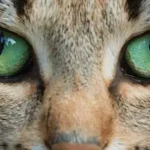
The eyes are one of the breed’s most striking features.
Siberian cats have:
- Large eyes
- Almost round shape
- Slightly angled placement
- Bright, alert expression
Eye colors vary depending on genetics and coat color.
Common eye colors include:
- Green
- Gold
- Amber
- Copper
Some Siberians, particularly colorpoint varieties, may have blue eyes.
The eyes should appear expressive and complement the rounded shape of the face.
4. Ears
The ears are medium in size and blend naturally with the rounded head.
Typical ear characteristics include:
- Medium height
- Rounded tips
- Wide base
- Slight forward tilt
Some Siberians also develop small ear furnishings or tufts that help protect against cold weather.
However, ear tufts alone do not confirm a Siberian, as many other breeds can have them as well.
5. Tail
A Siberian cat’s tail is one of its defining physical features.
The tail is:
- Long
- Thick
- Well-furred
- Bushy
- Balanced with the body
Historically, this full tail helped provide warmth during harsh winters by allowing the cat to wrap it around its body while resting.
6. Legs and Paws
Siberians have strong legs that support their athletic lifestyle.
Characteristics include:
- Medium-length legs
- Powerful hind legs
- Large rounded paws
- Strong bones
Their large paws originally helped them move more efficiently across snow-covered ground.
Today, these features still contribute to their excellent climbing and jumping abilities.
The Siberian’s Triple Coat
Perhaps the most recognizable feature is the Siberian’s luxurious triple coat.
Unlike many long-haired cats that have only one or two layers of fur, the Siberian developed three protective layers that helped it survive freezing Russian winters.
These layers include:
- A protective outer coat
- A middle insulating layer
- A soft, dense undercoat
Together, these layers create a weather-resistant coat that protects against cold temperatures, moisture, and snow.
Despite its thickness, the coat should not feel excessively cottony or matted. A healthy Siberian coat has texture, volume, and a natural shine.
Coat Texture
Texture is just as important as length.
A Siberian’s coat usually feels:
- Dense
- Soft
- Water-resistant
- Slightly coarse on the outer layer
- Plush underneath
Seasonal changes often affect coat thickness.
During winter, the coat becomes fuller and heavier, while in warmer months many Siberians shed part of their undercoat, giving them a lighter appearance.
This seasonal change is completely normal and should not be mistaken for poor coat quality.
Does Every Siberian Look the Same?
No.
Although all Siberians share the same general breed characteristics, individual cats can look surprisingly different from one another.
Differences may include:
- Coat color
- Coat pattern
- Eye color
- Facial expression
- Overall size
- Fur length
Young kittens also look quite different from fully mature adults.
Because Siberians develop slowly, many continue growing until they are three to five years old, meaning their full appearance may not become obvious during kittenhood.
Siberian Cat Coat Colors and Patterns
One feature that often catches people’s attention is the Siberian cat’s beautiful coat. While coat color alone cannot confirm whether a cat is a Siberian, understanding the breed’s accepted colors and patterns can help you make a more informed identification.
Siberian cats are known for their wide variety of coat colors. Unlike some breeds that are limited to only a few shades, Siberians can appear in many different color combinations.
Common coat colors include:
- Brown
- Black
- White
- Blue (gray)
- Cream
- Red (orange)
- Silver
- Golden
They may also display different patterns, such as:
- Tabby
- Solid
- Tortoiseshell
- Calico
- Bicolor
- Colorpoint (Neva Masquerade)
Because there is so much variety, coat color should always be considered alongside other identifying characteristics.
Can You Identify a Siberian Cat from Pictures?
Many people search online for Siberian cat pictures or Siberian cat images to compare with their own cat.
Photos can certainly help, but they should never be your only method of identification.
A picture may show:
- Coat length
- Tail shape
- Head structure
- Eye shape
- Ear placement
- Body proportions
However, a photograph cannot show personality, movement, coat texture, pedigree, or many other characteristics that help identify the breed.
Lighting, camera angle, grooming, and even the cat’s age can make different breeds appear very similar.
When comparing your cat with pictures, focus on the overall combination of features instead of one specific characteristic.
Personality Traits That Help Identify a Siberian Cat
Physical appearance tells only part of the story.
A Siberian cat’s personality often provides additional clues.
The breed is well known for being:
- Intelligent
- Curious
- Affectionate
- Gentle
- Confident
- Playful
- Adaptable
Many Siberians enjoy spending time with their families and like to follow their owners from room to room without being overly demanding.
Unlike some highly vocal breeds, Siberians generally communicate using soft chirps, trills, and gentle meows rather than constant loud vocalizations.
Activity Level
Siberian cats are naturally athletic.
Their history as forest hunters gave them excellent balance, coordination, and jumping ability.
Many Siberians enjoy:
- Climbing cat trees
- Jumping onto high shelves
- Chasing toys
- Solving puzzle feeders
- Exploring new environments
A cat that spends all day inactive isn’t necessarily not a Siberian, but healthy Siberians usually remain playful well into adulthood.
Growth and Development
Another identifying characteristic is the Siberian’s slow maturity.
Unlike many domestic cats that reach their full size within the first year or two, Siberians develop gradually.
Most continue filling out until they are around three to five years old.
Young kittens often appear leaner and less fluffy than fully mature adults, which sometimes leads owners to believe they have a different breed.
Patience is important when evaluating younger cats.
Siberian Cat vs Maine Coon
The Siberian and the Maine Coon are frequently confused because both have long coats and large bodies.
However, several differences can help distinguish them.
| Siberian Cat | Maine Coon |
|---|---|
| Rounded head | Longer, more rectangular head |
| Rounded facial features | Squarer muzzle |
| Medium-sized ears | Larger ears with prominent lynx tips |
| Compact, muscular body | Longer body frame |
| Rounded eyes | Slightly oval eyes |
| Thick triple coat | Shaggy double coat |
Both breeds are affectionate and intelligent, but their facial structure is often the easiest way to tell them apart.
Siberian Cat vs Norwegian Forest Cat
Another breed commonly mistaken for the Siberian is the Norwegian Forest Cat.
Although they share a similar history of adapting to cold climates, they have several noticeable differences.
| Siberian Cat | Norwegian Forest Cat |
|---|---|
| Rounded head | Triangular head |
| Rounded profile | Straighter facial profile |
| Rounded eyes | Almond-shaped eyes |
| Medium ears | Larger ears |
| Stocky muscular body | Longer, leaner body |
The Norwegian Forest Cat generally has a more angular appearance, while the Siberian looks softer and rounder overall.
Siberian Cat vs Domestic Longhair
Many people assume any fluffy cat is a Siberian.
In reality, thousands of domestic long-haired cats have no connection to the Siberian breed.
Domestic longhairs vary greatly because they don’t follow one specific breed standard.
Unlike a Siberian, a domestic longhair may have:
- Different body proportions
- Variable head shapes
- Inconsistent coat texture
- Different personality traits
- Unknown ancestry
Without pedigree documentation, it’s impossible to identify a domestic longhair as a purebred Siberian based solely on appearance.
How to Tell if Your Cat Is a Siberian Mix
Some cats display several Siberian characteristics but don’t match every breed standard.
This may indicate that the cat is a Siberian mix.
Possible signs include:
- Thick medium-to-long coat
- Bushy tail
- Muscular build
- Friendly personality
- Rounded facial features
- Strong climbing ability
However, inherited traits vary widely.
A mixed-breed cat may strongly resemble the Siberian parent while inheriting other features from the second breed.
Because of this variation, appearance alone cannot confirm mixed ancestry.
Common Mistakes When Identifying a Siberian Cat
Many first-time owners make the same identification mistakes.
Here are some of the most common:
Assuming Every Fluffy Cat Is a Siberian
Long fur alone doesn’t indicate breed.
Many domestic cats naturally have thick coats.
Judging by Eye Color Alone
Green, gold, amber, or blue eyes can appear in many breeds.
Eye color should always be evaluated alongside other characteristics.
Focusing Only on Coat Color
Siberians come in numerous colors and patterns.
Coat color alone provides very little evidence of breed identity.
Ignoring Body Structure
The Siberian’s muscular frame and balanced proportions are just as important as its coat.
Comparing Only One Photograph
One picture rarely provides enough information.
Evaluating multiple photos from different angles gives a much better understanding of a cat’s overall structure.
Can a DNA Test Confirm a Siberian Cat?
Many owners wonder whether a DNA test can determine if their cat is a purebred Siberian.
The answer is it depends.
Modern cat DNA tests can provide useful information about your cat’s genetic background and inherited traits. However, not all tests can accurately confirm a specific pedigree or prove that a cat is a purebred Siberian.
A DNA test may help identify:
- Genetic ancestry
- Breed similarities
- Inherited health markers
- Coat color genetics
- Certain hereditary conditions
Even if a DNA report shows Siberian ancestry, it doesn’t replace official pedigree documentation from a recognized breeder.
If your goal is to confirm that your cat is a registered purebred Siberian, pedigree records remain the most reliable source.
Is Pedigree More Reliable Than Appearance?
Yes.
A cat may look remarkably similar to a Siberian while having no documented connection to the breed.
Likewise, some genuine Siberian cats can appear slightly different because of natural variation within the breed.
A pedigree provides a documented family history showing that the cat comes from recognized Siberian breeding lines.
When identifying a cat, think of it this way:
- Appearance tells you what the cat looks like.
- Personality tells you how it behaves.
- Pedigree confirms its breed.
Using all three together gives the clearest understanding.
Siberian Cat Identification Checklist
If you’re wondering whether your cat might be a Siberian, use this checklist as a guide. Remember that no single characteristic confirms the breed—it’s the overall combination of traits that matters.
Body
✅ Medium to large size
✅ Muscular, sturdy build
✅ Broad chest
✅ Well-balanced proportions
Head
✅ Rounded wedge-shaped head
✅ Rounded cheeks
✅ Strong chin
✅ Broad forehead
Eyes
✅ Large and expressive
✅ Nearly round shape
✅ Green, gold, amber, copper, or sometimes blue
Ears
✅ Medium-sized ears
✅ Rounded tips
✅ Wide at the base
✅ Slight forward tilt
Coat
✅ Dense triple coat
✅ Soft undercoat
✅ Water-resistant outer guard hairs
✅ Seasonal changes in thickness
Tail
✅ Long
✅ Thick and bushy
✅ Well proportioned to the body
Personality
✅ Friendly and affectionate
✅ Intelligent and curious
✅ Confident but gentle
✅ Playful and active
✅ Enjoys climbing and exploring
If your cat matches many of these characteristics, it may resemble a Siberian or have Siberian ancestry. However, only pedigree records can confirm a purebred Siberian.
Myths vs Facts
Many misconceptions exist about identifying Siberian cats. Understanding the facts can help prevent confusion.
| Myth | Fact |
|---|---|
| Every fluffy cat is a Siberian. | Many breeds and mixed-breed cats have long coats. |
| Blue eyes always mean a Siberian. | Blue eyes occur in several breeds and color varieties. |
| Large size alone proves a cat is a Siberian. | Body structure, coat, head shape, and personality must also be considered. |
| DNA tests always confirm purebred status. | DNA tests can estimate ancestry but cannot replace pedigree documentation. |
| Coat color identifies the breed. | Siberians come in many colors, so color alone is not a reliable identifier. |
Tips for Identifying a Siberian Cat
If you’re trying to identify a cat in person or from photos, keep these practical tips in mind:
- Look at the cat as a whole rather than focusing on one feature.
- Compare several physical characteristics together.
- Observe the cat’s movement and posture.
- Pay attention to body shape instead of coat color.
- Consider the cat’s personality and behavior.
- Ask about its history if possible.
- Review pedigree papers if they are available.
Taking a careful, step-by-step approach is much more reliable than making a quick judgment based on appearance alone.
Final Thoughts
Learning how to identify a Siberian cat involves much more than recognizing a fluffy coat. While the breed is famous for its luxurious fur, a true Siberian is also distinguished by its muscular body, rounded head, expressive eyes, bushy tail, and confident yet affectionate personality.
If you’re wondering what a Siberian cat looks like, remember that no single feature provides a definite answer. The best approach is to evaluate the overall combination of physical characteristics, behavior, and—when available—pedigree records.
Photos and online comparisons can be helpful, but they should be used as a reference rather than proof. Many domestic long-haired cats and mixed breeds can closely resemble Siberians, making careful observation essential.
Whether you’re identifying a family pet, considering adoption, or simply learning more about this remarkable breed, understanding the Siberian’s unique characteristics will help you recognize one of the world’s most beautiful natural cat breeds.
Frequently Asked Questions
How can I identify a Siberian cat?
Look for a medium-to-large muscular body, rounded head, large expressive eyes, medium-sized ears, a dense triple coat, and a long bushy tail. Personality traits such as intelligence, curiosity, and affection can also provide helpful clues.
What does a Siberian cat look like?
A Siberian cat has a powerful yet balanced body, rounded facial features, a thick weather-resistant coat, expressive eyes, and a full, bushy tail. Despite its fluffy appearance, it is naturally athletic and well-muscled.
Can I identify a Siberian cat from pictures?
Pictures can help you compare physical features, but they cannot confirm a cat’s breed. Camera angles, grooming, lighting, and coat condition may affect appearance, so multiple characteristics should always be considered.
Are all long-haired cats Siberians?
No. Many domestic long-haired cats and other breeds have thick coats. Long fur alone is not enough to identify a Siberian cat.
What eye colors do Siberian cats have?
Most Siberian cats have green, gold, amber, or copper eyes. Some colorpoint Siberians, often called Neva Masquerades, have blue eyes.
How can I tell if my cat is a Siberian mix?
A Siberian mix may have a thick coat, muscular body, rounded features, and an affectionate personality. However, mixed-breed cats can inherit traits from either parent, so appearance alone cannot confirm ancestry.
Can a DNA test prove my cat is a Siberian?
DNA testing may indicate Siberian ancestry or genetic similarities, but it cannot replace official pedigree documentation when confirming a purebred Siberian.
At what age do Siberian cats reach their full size?
Unlike many other breeds, Siberian cats mature slowly and often reach their full size between three and five years of age.
What breed is most commonly confused with the Siberian cat?
The Maine Coon and the Norwegian Forest Cat are the breeds most often mistaken for Siberians because all three have long coats and large bodies. Comparing head shape, facial features, and body proportions can help distinguish them.
What is the most reliable way to confirm a purebred Siberian cat?
The most reliable confirmation comes from pedigree records issued by a reputable breeder or recognized cat registry. Physical appearance alone cannot guarantee that a cat is a purebred Siberian.