




Many people who suffer from cat allergies wonder whether they can safely own a cat without constantly dealing with sneezing, itchy eyes, or congestion. Among the breeds often recommended for allergy sufferers, the Siberian Cat stands out because of its reputation as a hypoallergenic breed. However, this claim can be confusing because no cat is completely allergy-free. Understanding why Siberian Cats are considered hypoallergenic, how they affect people with allergies, and what factors influence allergen production can help potential owners make an informed decision. This guide explains the science behind Siberian Cat allergies, common myths, and whether a Siberian Cat may be a suitable companion for allergy sufferers.
What Does Hypoallergenic Mean?
The term “hypoallergenic” does not mean completely free of allergens. Instead, it refers to something that is less likely to trigger allergic reactions compared to other alternatives.
When applied to cats, hypoallergenic means that a breed may produce fewer allergens than many other cat breeds. While some people experience fewer symptoms around these cats, allergic reactions can still occur. The severity of the reaction depends on both the individual and the specific cat.
Understanding this distinction is important because many people mistakenly assume that hypoallergenic cats are entirely safe for anyone with allergies. In reality, allergen levels vary from cat to cat, even within the same breed.
What Is a Siberian Cat?
The Siberian Cat, also known as the Siberian Forest Cat, is a natural breed that originated in Russia. These cats are known for their thick triple coat, muscular build, and friendly personality.
Despite having a long and dense coat, Siberian Cats are often recommended to allergy sufferers. This recommendation may seem surprising because many people associate more fur with more allergens. However, cat allergies are not primarily caused by fur itself.
Siberian Cats are intelligent, affectionate, and adaptable companions. Their popularity has grown worldwide, partly because of their reputation as a hypoallergenic cat breed.
Are Siberian Cats Hypoallergenic?
Siberian Cats are often considered hypoallergenic, but they are not completely allergy-free. They still produce allergens that can trigger reactions in sensitive individuals.
The reason they are called hypoallergenic is that many Siberians appear to produce lower levels of a specific allergen called Fel d1. Since Fel d1 is responsible for most cat allergy symptoms, reduced production may result in fewer reactions for some people.
However, not every Siberian Cat produces the same amount of allergens. Some individuals may trigger allergies more than others, which is why spending time with a cat before adoption is highly recommended.
Why Are Siberian Cats Considered Hypoallergenic?
The reputation of the Siberian Cat as a hypoallergenic breed comes primarily from studies and breeder observations related to allergen production.
Many allergy sufferers report experiencing fewer symptoms around Siberians compared to other breeds. Although research is still ongoing, evidence suggests that some Siberian Cats naturally produce lower levels of allergy-causing proteins.
This reduced allergen production is the main reason the breed is frequently recommended to people who love cats but struggle with allergies.
What is Fel d1?
Fel d1 is the primary allergen responsible for most cat-related allergic reactions. It is a protein produced mainly in a cat’s saliva and sebaceous glands.
When cats groom themselves, saliva containing Fel d1 spreads across their coat and skin. As the saliva dries, allergen particles become airborne and settle on furniture, clothing, carpets, and other surfaces.
People who are allergic to cats usually react to Fel d1 rather than the cat’s fur itself. This explains why hair length alone does not determine how allergenic a cat may be.
Do Siberian Cats Produce Less Fel d1?
Many Siberian Cats appear to produce lower levels of Fel d1 compared to other breeds. This is one of the main reasons they are often considered a good choice for allergy sufferers.
However, allergen production varies significantly between individual cats. Some Siberians may produce very low levels of Fel d1, while others may produce amounts similar to those found in other breeds.
Because of this variation, no breeder can honestly guarantee that every Siberian Cat will be suitable for every allergy sufferer.
Are Siberian Forest Cats Hypoallergenic?
Yes, Siberian Forest Cats are generally considered hypoallergenic for the same reasons as Siberian Cats. The terms “Siberian Cat” and “Siberian Forest Cat” refer to the same breed.
Many people assume that a forest cat with a thick coat would be highly allergenic. In reality, the amount of fur is less important than the amount of allergen proteins produced by the cat.
As a result, many allergy sufferers find Siberian Forest Cats easier to tolerate than several short-haired breeds.
Hypoallergenic Siberian Cats: Myth vs Reality
One of the biggest misconceptions about Siberians is that they are completely hypoallergenic. While they may produce fewer allergens, they still produce allergens.
The reality is that no cat breed is 100% hypoallergenic. Every cat produces proteins that can trigger allergic reactions in sensitive individuals.
The true advantage of Siberians is that many people experience milder symptoms around them. This makes them a potentially better choice for allergy sufferers, but not a guaranteed solution.
What Causes Siberian Cat Allergies?
Cat allergies are usually caused by proteins found in saliva, skin oils, and dander rather than fur. Dander consists of tiny flakes of skin that become airborne and spread throughout the home.
When a Siberian Cat grooms itself, allergen-containing saliva is transferred onto its coat. These allergens can then accumulate on furniture, bedding, carpets, and clothing.
People with sensitive immune systems may react when they inhale or come into contact with these proteins.
Siberian Cat Dander and Allergens
Cat dander plays a significant role in allergic reactions. Even if a Siberian produces lower levels of Fel d1, dander can still carry allergens throughout the environment.
Because dander particles are extremely small, they can remain airborne for long periods. This makes it possible for allergy sufferers to react even when they are not directly touching the cat.
Regular cleaning and proper ventilation can help reduce allergen levels inside the home.
Are Siberian Cats Good for Allergy Sufferers?
For many people, Siberian Cats are one of the better cat breeds for allergy management. Numerous allergy sufferers report fewer symptoms around Siberians compared to other breeds.
However, individual experiences vary considerably. Someone with mild allergies may tolerate a Siberian very well, while someone with severe allergies may still experience significant symptoms.
The only reliable way to determine compatibility is through direct exposure before adoption.
Male vs Female Siberian Cats for Allergies
Many prospective owners wonder whether gender affects allergen production. Research and breeder observations suggest that male cats often produce more Fel d1 than females.
This difference may become even more noticeable in intact, non-neutered males. Hormonal influences can contribute to increased allergen production.
Although gender can play a role, individual variation remains more important than sex alone.
Do Neutered Siberian Cats Produce Fewer Allergens?
Neutering may help reduce allergen production, particularly in male cats. Hormonal changes after neutering can decrease the amount of Fel d1 produced by some individuals.
Many breeders and allergy-sensitive owners report better tolerance with neutered cats. However, allergen levels do not disappear entirely.
Neutering should be viewed as one factor that may help reduce allergies rather than a complete solution.
Are Siberian Kittens Hypoallergenic?
Siberian kittens may produce different allergen levels than adult cats. In some cases, allergen production changes as kittens mature.
Because of this, a kitten that seems allergy-friendly initially may produce different allergen levels later in life. Likewise, some kittens may become easier to tolerate as they grow older.
Potential owners should understand that allergen levels can change over time and are not always predictable during kittenhood.
Does Coat Color Affect Allergies?
Some people believe that certain Siberian coat colors produce fewer allergens. While anecdotal reports exist, scientific evidence supporting coat color as a reliable predictor remains limited.
The same applies to the beautiful Neva Masquerade variety. Although some owners report fewer symptoms, allergen production still varies between individual cats.
A cat’s allergen levels are generally more important than its coat color or pattern.
How to Test Whether You Are Allergic to a Siberian Cat
Before bringing a Siberian Cat home, spending time with the breed is strongly recommended. Visiting breeders and interacting with adult cats can provide valuable insight into your potential reaction.
Multiple visits are often better than a single brief encounter. Allergic symptoms may take time to develop, making longer exposure more informative.
Some breeders also offer opportunities to spend extended periods with their cats before committing.
Living With a Siberian Cat If You Have Allergies
Even if a Siberian Cat is relatively allergy-friendly, managing allergens remains important. Small adjustments around the home can significantly reduce symptoms.
Combining proper grooming, cleaning routines, and air filtration often produces the best results. These practices help reduce allergen buildup and improve overall comfort.
Many allergy sufferers successfully live with Siberians by following a consistent allergen-management routine.
Regular Grooming
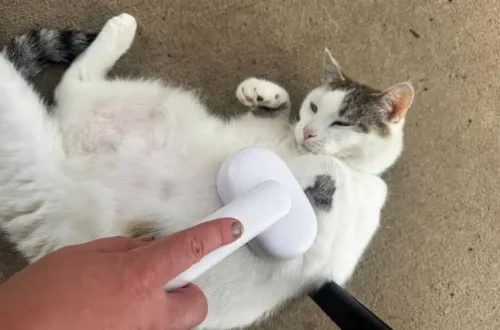
Regular grooming helps remove loose fur and reduce allergen accumulation within the coat. Brushing can also help minimize shedding around the home.
For allergy sufferers, grooming is often best performed by a non-allergic family member. This reduces direct exposure to allergens during the grooming process.
Consistent grooming can contribute to a cleaner indoor environment.
Using HEPA Filters
HEPA filters can capture many airborne allergen particles. Air purifiers equipped with HEPA filtration are commonly recommended for homes with pets.
These devices help reduce allergen concentrations in indoor spaces. While they cannot eliminate allergens, they may improve air quality significantly.
Many allergy sufferers find HEPA filtration beneficial as part of a broader management strategy.
Cleaning Cat Dander
Frequent cleaning helps reduce allergen buildup on surfaces throughout the home. Vacuuming carpets, washing bedding, and cleaning upholstery can make a noticeable difference.
Using vacuum cleaners designed to trap allergens may further improve effectiveness. Consistency is often more important than occasional deep cleaning.
Reducing environmental allergen levels can lessen allergy symptoms over time.
Creating Allergy-Free Zones
Establishing pet-free areas can provide relief for allergy sufferers. Bedrooms are commonly chosen because people spend many hours there each day.
Keeping the cat out of certain rooms helps create spaces with lower allergen exposure. This approach can be especially beneficial for individuals with moderate allergies.
A dedicated allergy-free zone often improves comfort and sleep quality.
Siberian Cat vs Other Hypoallergenic Cat Breeds
Several cat breeds are commonly recommended to allergy sufferers. While Siberians are among the most popular options, they are not the only choice.
Each breed has unique characteristics that may influence allergen production and owner preferences. Comparing options can help prospective owners make informed decisions.
Siberian vs Balinese
The Balinese breed is frequently called a hypoallergenic cat because it may produce lower levels of Fel d1. Like Siberians, Balinese cats are often tolerated better by some allergy sufferers.
Siberians tend to have a larger build and thicker coat, while Balinese cats have a more elegant appearance. Both breeds are known for their affectionate personalities.
Siberian vs Russian Blue
Russian Blue cats are another breed commonly associated with reduced allergen exposure. Their dense coat may help trap some allergens close to the skin.
Both breeds are intelligent and affectionate, though Siberians are often considered more outgoing and playful.
Siberian vs Devon Rex
Devon Rex cats have a unique coat structure and shed less than many other breeds. Their grooming requirements differ significantly from those of Siberians.
While both breeds may be suitable for some allergy sufferers, individual allergen levels remain the most important factor.
Siberian vs Sphynx
The Sphynx is often assumed to be allergy-free because it lacks fur. However, Sphynx cats still produce Fel d1 and can trigger allergies.
Siberians may actually be easier for some allergy sufferers to tolerate despite their thick coats. The key factor remains allergen production rather than hair length.
Pros and Cons of Owning a Hypoallergenic Siberian Cat
One major advantage of Siberian Cats is their potential for lower allergen production. Many allergy sufferers report fewer symptoms compared to other breeds.
Siberians are also affectionate, intelligent, adaptable, and family-oriented companions. Their friendly nature contributes to their popularity worldwide.
On the downside, they are not completely hypoallergenic. Prospective owners must still manage allergens and understand that individual reactions can vary significantly.
Should You Get a Siberian Cat If You Have Allergies?
A Siberian Cat may be a good option for people with mild to moderate cat allergies. Many allergy sufferers successfully share their homes with these cats while experiencing manageable symptoms.
However, severe allergy sufferers should proceed carefully and spend time with the breed before making a decision. Direct exposure remains the most reliable predictor of compatibility.
Ultimately, choosing a Siberian Cat should involve realistic expectations rather than assuming the breed is entirely allergy-free.
Final Thoughts
So, are Siberian Cats hypoallergenic? The answer is yes—but only to a degree. Siberian Cats are often considered hypoallergenic because many individuals produce lower levels of the Fel d1 protein that triggers most cat allergies. This can make them easier for some allergy sufferers to live with compared to many other breeds.
However, no Siberian Cat is completely allergen-free, and reactions vary from person to person. If you have allergies and are considering a Siberian Cat, the best approach is to spend time with the breed, evaluate your reaction, and take practical steps to manage allergens at home. With the right expectations and preparation, many allergy sufferers find that a Siberian Cat can become a wonderful and rewarding companion.
FAQS Related to Siberian Cats: Are Siberian Cats Hypoallergenic
Are Siberian Cats Hypoallergenic?
Siberian Cats are considered hypoallergenic because many produce lower levels of the Fel d1 protein that causes most cat allergies. However, they are not completely allergy-free.
Are Siberian Forest Cats Hypoallergenic?
Yes, Siberian Forest Cats are generally considered hypoallergenic. They may trigger fewer allergic reactions than many other cat breeds, but they still produce allergens.
Why Are Siberian Cats Hypoallergenic?
Siberian Cats are often called hypoallergenic because many of them produce lower levels of Fel d1, the protein responsible for most cat allergy symptoms.
How Hypoallergenic Are Siberian Cats?
Siberian Cats are moderately hypoallergenic compared to many other breeds. Some allergy sufferers tolerate them well, while others may still experience symptoms.
Are Siberian Cats Really Hypoallergenic?
Yes, Siberian Cats are considered hypoallergenic, but no cat is completely allergen-free. Individual allergen levels can vary from one Siberian Cat to another.